






A seized wheel nut can stop a tyre job before it starts. When an impact wrench has reached its limit, or there is no airline or mains power nearby, a geared multiplier gives you controlled force without resorting to pipe extensions and damaged studs. This torque multiplier review looks at where these tools earn their place, what specifications matter, and when another solution is the better buy.
What a Torque Multiplier Actually Does
A torque multiplier is a hand-operated gearbox designed to increase turning force. The operator applies torque through a long input handle, and the internal planetary gears multiply that force at the output square drive. A 1:58 model, for example, is designed to multiply the input torque by roughly 58 times, before normal mechanical losses are taken into account.
That makes it especially useful for commercial vehicle wheel nuts, agricultural machinery, plant equipment and heavily tightened automotive fasteners. It is not a shortcut for poor practice. It is a controlled way to remove stubborn fixings where leverage alone would be unsafe or impractical.
Most kits include the multiplier body, a reaction bar or reaction foot, a winding handle, and one or more impact sockets. The reaction bar braces against a nearby wheel nut, hub feature or solid part of the assembly. This stops the casing from rotating while the geared output turns the target nut.
The gearbox does the hard work, but it does it slowly. Expect many turns of the input handle for a small movement at the output. That is the trade-off for high force and the reason these tools are best kept for seized or high-torque fasteners rather than every routine wheel change.
Torque Multiplier Review: Where It Performs Best
For roadside commercial work and a busy garage, a multiplier is a strong backup tool. Unlike an air impact wrench, it needs no compressor, hose, battery or charging time. It can sit in a lorry tool locker or workshop cabinet until a difficult job appears, then work reliably with no setup beyond selecting the right socket and positioning the reaction bar.
It is particularly effective on wheel nuts that were fitted at a high torque, have corrosion around the seating face, or have not moved for several seasons. The slow gearing gives the operator better feel than a high-powered impact gun. If the nut begins to move, you will notice it. If the setup is slipping or the socket is not fully seated, you can stop before rounding the nut or loading the stud unnecessarily.
A typical heavy-duty multiplier with a 1-inch output drive suits large impact sockets and commercial wheel applications. Smaller versions with a 3/4-inch drive can make more sense for vans, 4x4s and workshop use where access is tighter and the required output is lower. Bigger is not automatically better. An oversized, heavy tool can be awkward around recessed alloy wheels or confined hub areas.
The main limitation is speed. Breaking a tight nut free is where a multiplier shines. Winding every wheel nut fully off through the gearbox is slow work. Once the fixing cracks loose, remove the multiplier and run the nut off with a ratchet, breaker bar or impact wrench. The same applies during refitting: use the multiplier only where appropriate, then finish with a calibrated torque wrench to the vehicle manufacturer’s specification.
Build Quality and Specifications That Matter
The stated maximum output torque attracts attention, but it should not be the only figure you use to judge a tool. Look at the full working setup. A sound torque multiplier should have a solid steel gearbox housing, cleanly machined drive squares, a substantial reaction arm and impact-rated sockets that fit the supplied drive correctly.
Gear ratio affects both force and speed. A higher ratio gives more mechanical advantage, but requires more input turns. For common HGV and plant wheel work, a ratio around 1:56 to 1:68 is practical. It gives serious loosening force without making the tool excessively slow. If the product only advertises a large torque number and gives no ratio, output drive size or socket details, treat that as a warning sign.
Socket fit is equally important. Six-point impact sockets grip the flat sides of a wheel nut better than twelve-point types and are less likely to slip under heavy load. Check the socket sizes supplied against the vehicles you actually service. A kit that includes 32 mm and 33 mm sockets may suit many commercial wheel applications, but it will not cover every vehicle, trailer or agricultural machine.
The reaction bar deserves close inspection. It must be thick enough to resist bending and shaped to brace securely. A loose or badly positioned reaction point can jump under load. That is dangerous for the operator and can mark a wheel, damage a hub component or bend the bar. A longer bar is not always preferable either. It needs enough clearance to sit solidly without fouling the wheel rim, tyre or brake components.
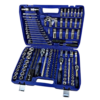
The carrying case is not just packaging on a tool this heavy. A proper moulded case keeps the gearbox, handle, reaction bar and sockets together, protects the gears from workshop dirt, and makes it practical to carry out to a stranded vehicle. Check that the latches and hinges feel capable of handling the kit’s weight.
How Much Torque Is Enough?
Do not choose a multiplier by chasing the highest printed output figure. First identify the loosening torque likely to be required, then allow a sensible margin for corrosion and overtightening. Wheel fixings are normally tightened to a manufacturer-specified torque, but removal torque can be much higher when rust, heat cycles and poor previous fitting are involved.
As a rough guide, passenger vehicle wheel bolts are usually better handled with a breaker bar or impact wrench. A multiplier may be useful for awkward seized bolts, but it is rarely the fastest everyday option. Vans, HGVs, trailers, tractors and plant equipment are where a high-ratio multiplier becomes a more sensible investment.
Remember that multiplication works both ways. Applying too much input force can produce enough output torque to stretch or damage a stud. Never use a torque multiplier as the final tightening tool unless the manufacturer specifically provides a reliable, suitable method for that application. Even then, final wheel-nut tightening should be checked with the correct calibrated torque wrench wherever possible.
Safe Use in the Workshop or at the Roadside
Set the vehicle securely before starting. Use level ground, apply the parking brake, chock wheels where required and support any raised vehicle correctly with rated lifting equipment and axle stands. Do not depend on a trolley jack alone while applying high torque to wheel fixings.
Fit the impact socket fully over the nut. Position the reaction bar against a solid, approved point and make sure the multiplier body is stable before loading the handle. Keep hands clear of the reaction bar and socket area. A sudden release can move the tool sharply, particularly if the nut has been heavily seized.
Turn the handle smoothly rather than jerking it. The internal gears are built for high load, but shock loading is not good practice and makes the setup more likely to shift. If the reaction bar starts to creep, stop immediately and reposition it. Never extend the input handle with scaffold tube or a long pipe. The multiplier is already providing the designed mechanical advantage; extra leverage can overload the gearbox, drive square or wheel stud.
After loosening, inspect the wheel fixing. Replace damaged nuts, bolts or studs rather than forcing them back into service. Clean excessive corrosion from the mating surfaces, follow the vehicle manufacturer’s instructions on lubrication, and torque the wheel correctly after refitting.
Torque Multiplier or Impact Wrench?
These are not competing tools in every situation. An impact wrench is quicker for routine wheel work and repeated removal jobs. In a workshop with a capable compressor or high-output cordless impact gun, it will save considerable time. It is the first choice for productivity.
A torque multiplier is the dependable answer when power is unavailable, an impact wrench cannot shift the fixing, or you need quiet, controlled force. It also avoids the weight and cost of carrying a large compressor or extra battery platform in a service vehicle. For many professional users, the sensible choice is both: an impact wrench for speed and a multiplier for the jobs that refuse to cooperate.
Is a Torque Multiplier Worth Buying?
For someone changing wheels on one family car, probably not. A good breaker bar, correct socket and torque wrench are more useful purchases. For a mechanic, mobile tyre fitter, farm operator, haulage business or serious DIY owner working on larger vehicles, a torque multiplier can prevent expensive downtime and save a great deal of frustration.
Buy for the vehicles in front of you, not for the largest number on the box. Check the ratio, output drive, supplied socket sizes, reaction-bar design and case quality. A well-built kit used correctly is affordable insurance when a stubborn wheel nut is holding up the job. Keep it clean, store it in its case and use it as the heavy-duty backup it is designed to be – ready when ordinary leverage is no longer enough.
