






A compressor that cannot keep up with a 1/2-inch impact wrench is not a bargain, however low the ticket price looks. The right air compressors save time on wheel work, tyre inflation, cleaning and paint preparation, while the wrong one spends its day running hot and waiting to recover. For a working garage or serious home workshop, the specification matters more than the sticker on the tank.
Start with the air demand, not the tank
The first number to check is free air delivery, usually shown as FAD in litres per minute or CFM. This is the amount of usable air the compressor can actually supply at working pressure. It is more useful than piston displacement, which can look impressive but does not tell you what reaches the air tool.
Check the air consumption of the tool you use most often, then choose a compressor with comfortably more FAD than that figure. A sensible margin is at least 25 per cent for occasional use and more for tools used continuously. Air leaks, hose length, couplings and pressure drops all take their share.
A tyre inflator, blow gun and nail gun use little air in short bursts. A ratchet, small impact wrench or air drill needs more. A 1/2-inch impact wrench used for wheel nuts can work well with a capable direct-drive unit, but it needs enough delivery to hit hard repeatedly. DA sanders, die grinders, spray guns and tyre machines are the real test because they consume air for longer periods. These jobs demand higher FAD and usually a larger receiver tank.
Do not size a compressor around a tool you may use for ten seconds once a week if your main job is tyre work. Equally, do not buy a small portable unit for panel sanding because it is cheaper upfront. The motor will run constantly, the pressure will fall, and both the finish and the compressor’s working life will suffer.
Air compressors: choose pressure that matches the job
Most workshop air tools are designed to run around 90 PSI, or roughly 6.2 bar. A compressor with a maximum pressure of 8 bar is therefore suitable for general garage use, provided its FAD is sufficient. Higher maximum pressure can give more stored air in the receiver, but it does not replace proper air delivery.
Set the regulator at the tool’s recommended operating pressure. Turning the regulator up beyond the tool rating does not make every job faster. It can damage seals, waste air and make an impact tool harder to control. A quality regulator and clear gauge are basic requirements, particularly where several people use the same airline.
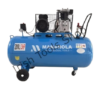
For occasional mobile repairs, a compact 24-litre or 50-litre compressor can cover inflation, cleaning and light fastening work. A 100-litre receiver is a stronger all-round choice for a busy home garage. Workshops regularly using impacts, spraying equipment or multiple air points should look at 150-litre, 200-litre or larger belt-driven machines with higher output.
The receiver size affects how long you can work before the pump cuts in. It does not increase the compressor’s continuous air production. A large tank paired with low FAD may feel adequate for a few wheel nuts, then quickly run out of breath on sanding or spraying. Buy capacity and delivery as a matched package.
Direct drive or belt drive?
Direct-drive compressors are compact, affordable and easy to move. They suit tyre inflation, blow-off work, nail guns and light-duty tools, especially where the compressor is only needed intermittently. They are a practical option for a domestic garage where storage space and budget are tight.
The trade-off is noise and duty cycle. Direct-drive pumps run at higher speed and can be loud. Long, uninterrupted use is not their strongest point. If you are fitting tyres all day, removing wheels repeatedly or preparing bodywork, a belt-driven compressor is usually the better investment.
Belt-driven models run more slowly, tend to be quieter in operation and are generally better suited to sustained work. They often offer larger tanks, improved FAD and serviceable components. They cost more and take up more room, but daily use soon exposes the difference between a light-use machine and one built for a working environment.
For a fixed professional installation, consider whether single-phase power is enough. Standard 230V supply is convenient for many garages and workshops. Larger three-phase machines can provide serious output for high-demand use, but they require the right electrical supply and should be installed correctly. There is no benefit in buying a bigger machine if the site cannot safely power it.
Match the compressor to the work you actually do
A practical way to buy is to start with the heaviest regular job, then consider how often it happens. A mechanic changing tyres and carrying out routine servicing needs a different machine from a body shop operator spraying panels or a joiner using nailers on site.
For general vehicle maintenance, look for a compressor that can support a 1/2-inch impact wrench, tyre inflator and blow gun without lengthy pauses. For wheel bays or fast-moving repair work, extra FAD pays for itself in reduced waiting time. If two technicians may use air at once, add their requirements together rather than buying for one person.
Spray work needs special attention. Consistent pressure is only part of the picture. Moisture in the airline can ruin a paint finish, so fit a water separator close to the compressor and a fine filter at the point of use. An air dryer may be worthwhile for regular professional spraying. Keep a dedicated, clean hose for paint work rather than using the same hose that sees oily airline tools.
For mobile work, weight and portability matter. A smaller wheeled unit is easier to load, move around a driveway or carry to a job, but its performance ceiling is lower. A larger stationary compressor offers better output and recovery but needs a permanent location, proper ventilation and enough access for servicing.
The details that protect your investment
A compressor is only as useful as its air system. Use correctly sized hoses and good-quality quick-release couplings. Narrow, excessively long hoses restrict airflow, which can make a powerful impact wrench feel weak at the wheel. A larger-bore hose is often worthwhile where high-consumption tools are involved.
Drain the receiver regularly. Compressing air creates water, and that moisture settles in the tank. Left there, it encourages internal corrosion and can travel through the airline to tools and paint. Daily draining is sensible in a busy workshop, while occasional users should drain the tank after use or follow the manufacturer’s guidance.
Oil-lubricated compressors generally suit heavier workshop duties and need routine oil checks. Oil-free models are simpler and cleaner for light work, but they can be noisier and may not be the first choice for demanding, continuous use. Neither design is automatically better. The right choice depends on workload, maintenance habits and the type of air required.
Keep the pump area clear, clean filters as specified and never trap the unit in a cramped cupboard. Compressors need airflow to manage heat. Also check the duty cycle, especially on lower-priced machines. A unit designed for short bursts should be allowed to rest. Forcing it through continuous sanding, blasting or spraying is a quick route to reduced performance and costly replacement.
Buy for productive work, not just maximum numbers
The cheapest compressor can be the most expensive choice if it holds up a job every day. At the same time, a large industrial unit is wasted money for someone who only inflates tyres and occasionally uses an air ratchet. The best value is the model that delivers the air your regular tools need, has a sensible tank size and fits the power supply and space available.
Irish Tools Shop focuses on affordable professional-grade workshop equipment because garages need dependable kit without distributor-level pricing. When comparing specifications, look beyond promotional horsepower figures and put FAD, working pressure, receiver size, drive type and duty cycle first.
Choose with a little headroom, keep the airline dry and give the compressor the maintenance it deserves. You will get faster wheel changes, cleaner work areas and an air supply that is ready when the next job comes through the door.
