







A BMW N47 timing job is not where guesswork pays. One tooth out can mean poor running, fault codes, piston-to-valve contact and an expensive comeback. The right n47 timing tool holds the crankshaft and camshafts in their specified positions, giving you a controlled starting point for chain replacement, cylinder-head work or timing-related diagnosis.
For working garages and serious DIY mechanics, the aim is simple: buy a kit that matches the engine in front of you, use it with the correct repair data, and do not confuse a locking kit with a complete timing repair. Affordable tooling is good business. Incorrect tooling is not.
Why the N47 engine needs dedicated timing tools
BMW’s N47 diesel family was fitted across a wide range of 1 Series, 3 Series, 5 Series, X1, X3 and MINI applications. It is known for strong fuel economy and useful torque, but it is also well known in the trade for timing-chain concerns, particularly on earlier engines. The chain arrangement is positioned at the gearbox end of the engine, which can turn a job that looks straightforward on paper into a major workshop operation.
The engine uses precisely timed crankshaft, camshaft and fuel-system components. A universal locking pin or painted chain marks are not a dependable substitute for the correct alignment equipment. Wear, chain stretch, previous repair work and poor access all make assumptions risky.
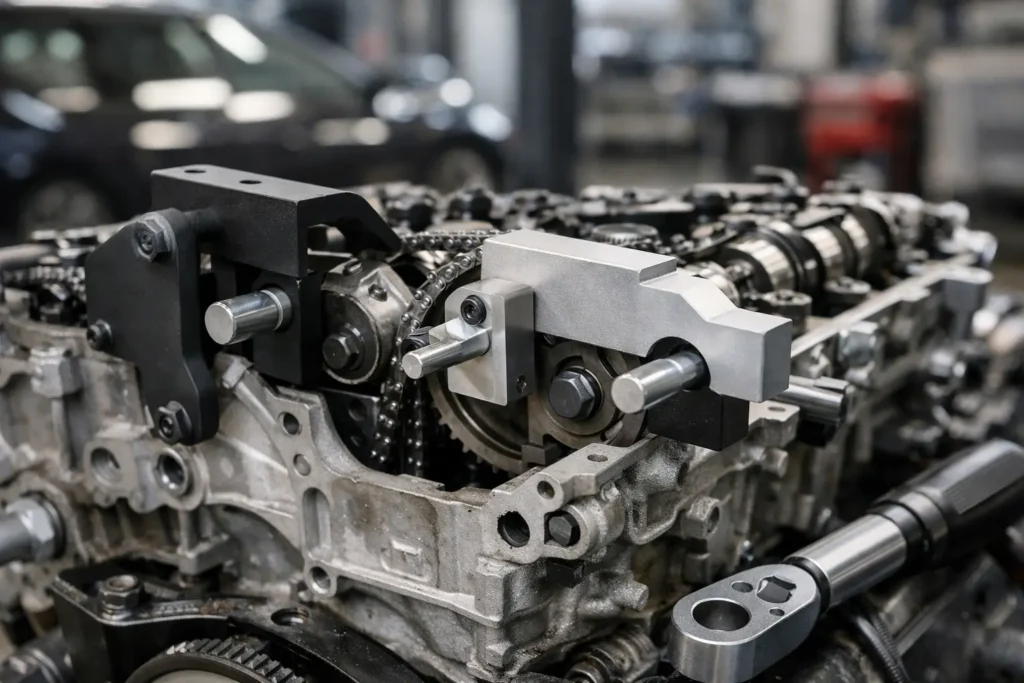
A proper kit is designed to locate the relevant shafts at top dead centre according to the manufacturer procedure. It helps you verify base timing before strip-down and maintain it while components are removed and refitted. That matters whether you are replacing a stretched chain, fitting guides and tensioners, or carrying out repair work that has disturbed valve timing.
What an N47 timing tool kit should include
Kit contents vary, so never buy solely from a photograph or a vague description such as “BMW diesel timing kit”. Check the listed engine codes and applications before ordering. A useful N47 timing tool set commonly includes the crankshaft locking pin, camshaft alignment or locking plate, and fixtures for holding or positioning relevant timing components. Some larger kits cover several BMW diesel engines, while others are specific to N47 applications.
The best value is not always the lowest ticket price. A low-cost kit that does not fit your engine code, misses a required locking adaptor or arrives with unclear application information can stop a job halfway through. For a garage, that means a vehicle taking up a ramp or bay while another tool is sourced.
Look for solid, accurately machined parts with a durable finish and clear identification where provided. The locking pieces must sit positively without forcing them into place. Sloppy fit is a warning sign. Timing tools are locating equipment, so accuracy matters more than decorative packaging.
Before buying, establish whether the kit covers the engine actually fitted, not just the vehicle badge. BMW engine changes can occur within a model range, and a 2.0-litre diesel does not automatically mean every N47 tool is suitable. Check the VIN, engine code, production date and the repair information available for that vehicle.
Match the tool to the engine, not the advert title
N47 engines include different capacities and revisions, including 1.6-litre and 2.0-litre versions. The vehicle layout also affects access and the scope of work. A tool kit may physically resemble another BMW diesel kit but still use a different crankshaft location, camshaft fixture or procedure.
Confirm these details before the vehicle is stripped:
- Engine code and production date
- Exact vehicle model and model year
- Whether the job involves timing-chain replacement, cylinder-head removal or timing inspection
- The repair procedure’s specified locking points and special tools
- Whether your chosen kit includes every required fixture
This short check saves real money. It also prevents the common mistake of trying to adapt a similar pin or plate because it is already on the bench. If the specified tool does not locate correctly, stop. Do not drill, grind, force or improvise around the engine.
The N47 timing procedure: where the tool fits in
A timing kit does not replace workshop information, torque settings or mechanical judgement. Use the manufacturer procedure or trusted technical data for the exact engine. The broad process is controlled, but the detail is variant-specific.
First, diagnose the fault properly. Rattle on start-up, metallic noise from the transmission end of the engine, correlation faults, difficult starting and poor running can point towards timing-chain issues, but they do not prove them. Read fault codes, inspect service history and assess the engine before committing to a major strip-down.
Once the relevant covers and access components are removed, rotate the engine only in the approved direction to the specified timing position. Fit the crank and cam locking tools exactly as instructed. The tools should install without loading the components. If they do not, the engine is not in the correct position or the kit is not correct for the application.
At this point, inspect the entire timing system. Replacing only one visibly worn part can be false economy. Depending on the repair specification and condition found, the job may require chains, guides, tensioners, sprockets, fasteners and seals. A timing tool holds position. It cannot correct worn sprockets, damaged guide rails or a tired hydraulic tensioner.
During reassembly, follow the specified tightening sequence and torque-angle settings. Use new bolts where required, particularly on torque-to-yield fasteners. Once the procedure permits removal of the locks, rotate the engine by hand through the prescribed number of revolutions and recheck timing. Never use the starter motor as a timing check.
Mistakes that cost more than the tool
The most expensive N47 timing failures after repair are usually process failures. Mechanics sometimes rely on chain paint marks, fit locks after the engine has already moved, or use locking fixtures to hold parts against tightening torque. None is good practice.
Locking pins and plates locate components. They are not designed to resist breaker-bar force, impact-gun force or crankshaft bolt tightening unless the repair procedure specifically states otherwise. Use the correct counterhold tool where one is required. Forcing a lock can bend the tool, damage a locating point or give a false impression that timing is correct.
Another avoidable problem is mixing components on the bench. Keep new and removed parts organised by position, especially where multiple chains, guides and bolts are involved. Photograph routing before removal if it supports your normal workshop process, but rely on approved repair data rather than photographs alone.
Finally, do not overlook the reason the vehicle came in. If chain debris, poor oil condition or long service intervals have contributed to wear, address the wider issue. Cleanliness, correct oil specification and sensible servicing matter after the repair as much as accurate timing during it.
Build a timing job around the right workshop equipment
An N47 chain repair is rarely a one-tool job. Good access, clean parts handling and safe vehicle support make the work quicker and reduce the chance of damage. Depending on the vehicle and repair route, a workshop may need axle stands, a trolley jack, engine support equipment, a transmission jack, socket sets, torque wrenches, pullers and suitable lighting.
For garages working on BMW diesels regularly, buying the timing kit alongside the supporting equipment makes commercial sense. A dependable engine support bar and transmission jack can be used across many jobs, while a model-specific timing kit prevents delays on a specialist repair. For DIY users, be realistic about access, lifting equipment and the time involved before starting. This is not a repair to rush over a weekend without the right space and data.
Irish Tools Shop focuses on affordable, reliable workshop equipment for mechanics and serious home users, from timing tools and hand tools to lifting equipment and storage. The practical purchase is the one that fits the vehicle, does the job accurately and is ready when the repair is booked in.
A correctly matched N47 timing kit is a small part of a demanding repair, but it is the part that protects the engine’s timing reference. Check the engine code first, confirm the kit contents second, and keep the correct technical procedure on the bench before a single bolt comes out.
