









Getting valve timing wrong by one tooth can turn a straightforward repair into an expensive comeback. On a 1.2 TSI engine, the correct 1.2 tsi timing tools keep the crankshaft and camshaft in their specified positions while you replace timing components, carry out cylinder-head work or check timing after a fault.
This is not a job for paint marks, improvised pins or a socket wedged against a pulley. VAG petrol engines use precise timing positions, and the correct locking kit saves time, prevents guesswork and helps protect valves, pistons and your reputation.
Why 1.2 TSI timing tools are not one-size-fits-all
The 1.2 TSI badge covers more than one engine design. Earlier applications are commonly associated with timing-chain arrangements, while later engines use a toothed timing belt. They may share vehicle badges and similar capacities, but their timing procedures, locking points and required tools can differ significantly.
That is why engine code matters more than the name on the tailgate. Before ordering a timing kit, confirm the vehicle registration, model year, engine code and whether the engine has a chain or belt drive. The engine code is usually found on the vehicle data sticker, service records or engine identification label. If the engine is already stripped, verify the timing layout before buying tools based on a catalogue description alone.
A kit advertised for a broad range of Volkswagen Group petrol engines may be useful, but only where its stated application includes your exact engine family. Forcing a tool because it looks close is a fast route to damaged threads, incorrect cam position or a false timing setting.
What a proper timing kit should include
A useful 1.2 TSI timing kit is built around the components needed to establish top dead centre and hold the engine securely during the procedure. The exact contents vary by engine, but a worthwhile set will normally include the relevant camshaft locking tool and crankshaft locking pin or positioning tool.
Depending on the engine design, the kit may also contain a tensioner retaining pin, chain tensioner locking device, camshaft alignment plate, pulley holding tool or a bracket for holding a component while bolts are tightened. These are not extras added to make the case look full. Each one has a specific role in maintaining the manufacturer’s timing relationship while components are removed or refitted.
For belt-driven engines, the camshaft lock and crankshaft position tool are usually the core items. A tensioner tool may also be required to set belt tension correctly. On chain-driven versions, tools for controlling the chain tensioner and locking the camshaft position are particularly important because chain slack can alter the relationship between the crank and cam during assembly.
Buy a kit supplied in a fitted case where possible. In a busy garage, loose pins and plates get separated quickly. A marked case helps the technician confirm that all pieces are present before starting the job and keeps the kit ready for the next booking.
Timing-chain and timing-belt jobs need different checks
A timing-chain complaint often starts with rattle on cold start, a stored correlation fault, difficult starting or an engine management warning. A worn chain, guide or tensioner can allow timing to drift. Before dismantling, use suitable diagnostic equipment to read fault codes and check live data where the vehicle supports it. Mechanical timing tools confirm physical alignment, but they do not replace diagnosis.
A timing-belt service is more planned, but the standard must be just as high. Check the belt condition, tensioner, idler pulleys and water pump where applicable. Replacing only the belt when a tensioner or pump is near the end of its service life can mean doing the same labour twice. For workshop efficiency, it normally makes sense to fit a matched timing service kit when the manufacturer procedure calls for component replacement.
In both cases, rotate the engine by hand after reassembly, following the specified direction and number of revolutions. Recheck that locking positions align as required. Never use the starter motor to find out whether timing is correct.
How to choose the right kit before buying
Start with the engine code and application list, then look at the actual tools shown or specified. A vague listing that says only “fits 1.2 TSI” is not enough for a professional repair. Good product information should identify engine families, vehicle applications and the locking tools included.
Also consider how often the kit will be used. A serious DIY owner carrying out one planned belt job may need an affordable, vehicle-specific kit. An independent garage dealing with Volkswagen, Audi, SEAT and Škoda vehicles every week is better served by a stronger multi-application set with clearly marked components and a durable storage case.
Material and machining quality matter. Locking pins should fit accurately without excessive play, and plates should sit squarely on their intended locating points. Cheap tooling that bends, wears or has poor tolerances creates more risk than saving. Affordable does not mean disposable. The best value comes from a kit that fits correctly, survives repeat use and avoids downtime halfway through a repair.
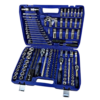
Check whether the job also requires ordinary workshop equipment. You may need a torque wrench for critical fasteners, breaker bar, puller, socket set, engine support beam or jack, trim tools and a suitable diagnostic scanner. Timing tools lock and align components, but they do not replace the rest of the equipment needed to complete the repair safely.
Correct use of 1.2 TSI timing tools in the workshop
Follow the manufacturer repair procedure for the specific engine. The basic principle is simple: set the engine to the specified position, fit the locking tools without force, carry out the repair, tension components correctly and verify the timing before starting. The detail is where costly mistakes happen.
Remove any covers and ancillary parts carefully, then turn the engine manually to the required timing position. Fit the crankshaft and camshaft locking devices only when they engage naturally. If a locking pin will not enter, stop and check the engine position. Do not turn the crankshaft against a fitted locking tool and do not use it as a lever to resist high tightening torque unless the procedure specifically permits it.
Where bolts are specified as torque-to-yield, fit new bolts. Reusing stretch bolts on crank pulleys, engine mounts or camshaft components can compromise clamping force. Follow the stated torque and angle settings, use the correct tightening sequence and keep oil or coolant off the belt and pulleys.
Once the locks are removed, rotate the engine manually through the prescribed turns. Bring it back to the timing position and confirm the tools can be refitted as intended. This final check takes minutes and can prevent hours of fault-finding.
Common buying mistakes that cost time
The most common mistake is ordering by vehicle model only. A 1.2 TSI fitted to one model year may not use the same timing arrangement as a later version of the same car. Engine code confirmation removes that uncertainty.
Another mistake is buying a universal set and assuming it covers every VAG petrol engine. Universal kits are useful for broad workshop coverage, but only if the included tools match the procedure. Read the specification, not just the headline.
Finally, avoid treating timing tools as the entire repair package. A locking kit cannot compensate for a worn tensioner, damaged pulley, incorrect belt routing or inaccurate torque settings. Good tools support good process. They do not replace it.
For mechanics and serious DIY users, a correctly matched timing kit is a small investment beside the cost of engine damage or repeat labour. Irish Tools Shop supplies affordable workshop tooling for buyers who need dependable kit without premium distributor pricing. Check fitment carefully, keep the timing procedure to hand and make sure every locking tool is seated correctly before the spanners come out.
