






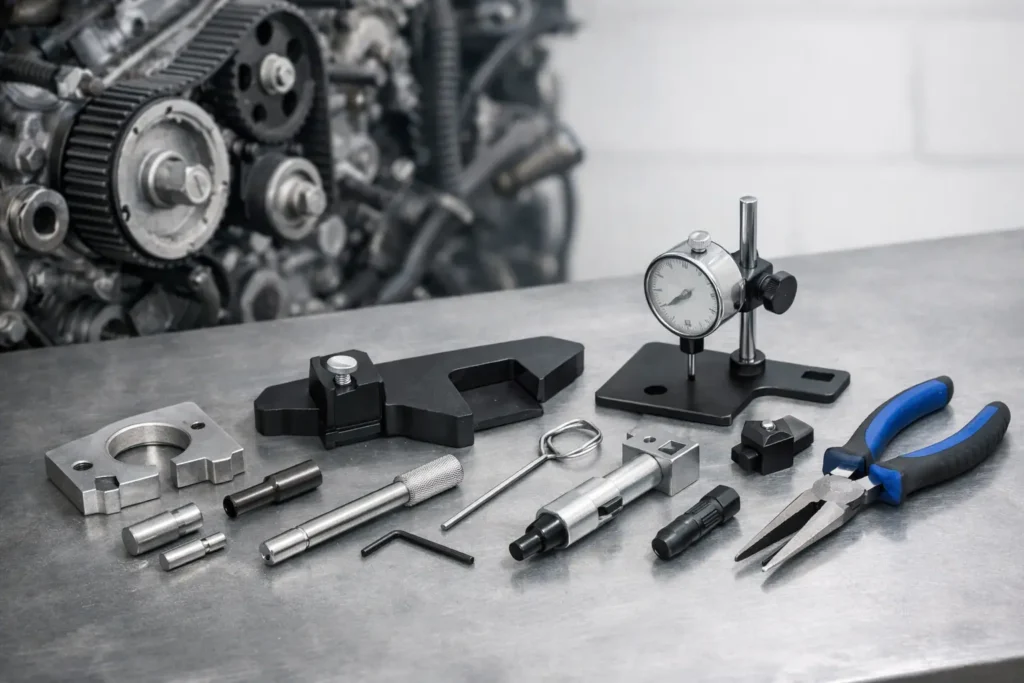
A timing belt job on a common-rail VAG diesel is not a place for improvised locking. The VAG diesel engine timing kit for 1.4 – 1.6 – 2.0 Audi, SEAT, Skoda & VW TDI CR engines from 2012 is designed to hold the engine in its correct timed position while the belt drive is serviced. For a working garage or capable home mechanic, it is the difference between a controlled repair and an expensive risk.
These engines are fitted across a huge range of vehicles, from Audi A1 and A3 models to VW Golf, Passat, Caddy and Tiguan applications, plus popular SEAT and Skoda diesels. That does not mean one timing kit suits every engine. Correct engine identification, correct locking points and the right repair information still matter.
Why a dedicated VAG diesel timing kit matters
Modern TDI CR engines use precise camshaft, crankshaft and fuel-system timing positions. During a timing belt replacement, components must be locked at the specified setting before tension is released. Marking the old belt and transferring marks to the new belt is not a professional substitute for engine locking tools.
A purpose-made kit normally includes the key locking and setting tools needed to secure the crankshaft and camshaft during the job. Depending on the kit and application, it may also include tensioner retaining pins, camshaft setting plates, crank locking pins or retaining bolts. Each tool is shaped and sized for a particular VAG engine family, helping prevent movement while the belt, tensioner and idler pulleys are removed.
This matters because even a small timing error can lead to poor starting, fault codes, rough running or internal engine damage. Most 1.4, 1.6 and 2.0 TDI common-rail engines are interference engines. If valve and piston timing is lost, the repair bill can quickly exceed the value of the original vehicle.
VAG diesel engine timing kit fitment for 2012-on TDI CR engines
The 2012 date is a useful starting point, not a complete fitment confirmation. VAG used several engine generations, power outputs and timing arrangements across Audi, SEAT, Skoda and VW vehicles. A 2.0 TDI badge alone does not tell you which locking tools are required.
Before buying or starting work, check the engine code from the vehicle data label, service book or diagnostic information. Also confirm the model year, engine capacity, power output and whether the engine uses a belt-driven or chain-driven component in the area being serviced. A kit described for common-rail TDI engines is typically intended for later diesel applications, but the engine code is the detail that protects against ordering the wrong tool.
Common applications, but not automatic compatibility
A suitable VAG timing tool set may cover a wide mix of 1.4, 1.6 and 2.0 litre TDI CR engines found in Audi, SEAT, Skoda and Volkswagen vehicles. Broad coverage is valuable for independent workshops servicing several brands from the same group.
However, there can be differences in camshaft locking arrangements, crankshaft locations and tensioner procedures between engine codes. Facelift years and revised engine families can introduce changes that are not visible from the registration plate alone. Treat the application list as a guide and match the supplied tools against the engine code and workshop procedure before fitting.
For garages, a comprehensive kit saves time because the required tools are together in one case rather than borrowed, substituted or searched for halfway through the job. For occasional users, it gives a more dependable route than trying to make universal tools fit an engine they were never designed for.
What to check before timing belt work starts
Timing belt replacement is a service operation, not simply a belt swap. The correct locking kit is only one part of the job. Inspect the full belt drive and replace wear items in line with the vehicle manufacturer’s schedule and repair method.
Check the condition of the tensioner and idler pulleys, and look for coolant staining around the water pump. Where the water pump is driven by the timing belt, replacing it at the same time is often sensible. It avoids paying for the same strip-down twice if the pump starts leaking or bearing noise develops later.
You should also have the correct torque wrench, sockets, engine support equipment and access to the specified torque settings. Many VAG engines use stretch bolts on engine mounts or related components. These should not be casually reused where the repair data calls for replacement.
Keep the work area clean. Oil, coolant or debris on a new belt can shorten its service life. Once the engine is locked, follow the specified sequence rather than turning camshafts or the crankshaft independently. After belt installation and tensioning, rotate the engine manually in the correct direction by the stated number of revolutions, then re-check the locking positions. If a locking tool will not refit correctly, stop and correct the timing before attempting to start the engine.
Choosing a kit for workshop use
A low purchase price is useful, but a timing kit must also be accurate enough to locate securely without forcing. Poorly made pins, plates or retainers can be difficult to install, may wear quickly and can create uncertainty at exactly the stage where precision is needed.
Look for a kit supplied in a moulded storage case with each component held in its own position. This makes it easier to see whether a tool is missing and protects the tools between jobs. Clear application references are equally useful, particularly in a busy workshop where more than one technician may use the set.
For regular VAG servicing, choose a kit with coverage that suits the engine codes most commonly coming through your doors. A broad 1.4, 1.6 and 2.0 TDI CR kit is a practical starting point, but specialist engines may need additional tools. Buying the right set once is normally better value than losing hours on a job because one critical locking component is absent.
At Irish Tools Shop, the focus is on affordable, reliable workshop equipment for technicians and serious DIY users who need tools that earn their space in the garage. A proper engine timing kit is one of those tools: it may not be used every day, but when it is needed, shortcuts are not worth the gamble.
Avoid the shortcuts that cause repeat repairs
Do not use drill bits, bolts or improvised bars in place of dedicated timing pins and locking tools. Even where a substitute appears to fit, its diameter, length and seating depth may be wrong. That can leave the engine only partly located or damage the locking point.
Do not rely solely on paint marks either. Existing belt timing can already be incorrect, and belt stretch or pulley movement can make transferred marks misleading. The vehicle repair procedure and correct locking kit should always take priority.
It is also worth remembering that locking tools locate components – they do not always hold them against tightening torque. Follow the specified method for counter-holding pulleys and tightening fasteners. Using a timing pin as a reaction bar can bend the tool or damage the engine.
A tool that protects the job and your reputation
For garages, correct timing equipment protects labour time, reduces avoidable comebacks and gives technicians confidence when working on high-volume VAG diesel vehicles. For experienced DIY mechanics, it provides the same essential control without paying premium dealer tooling prices.
Check the engine code, match the kit to the exact application and use the manufacturer procedure from start to finish. A correctly selected VAG diesel timing kit turns a high-risk belt service into the methodical, repeatable repair it should be.
