






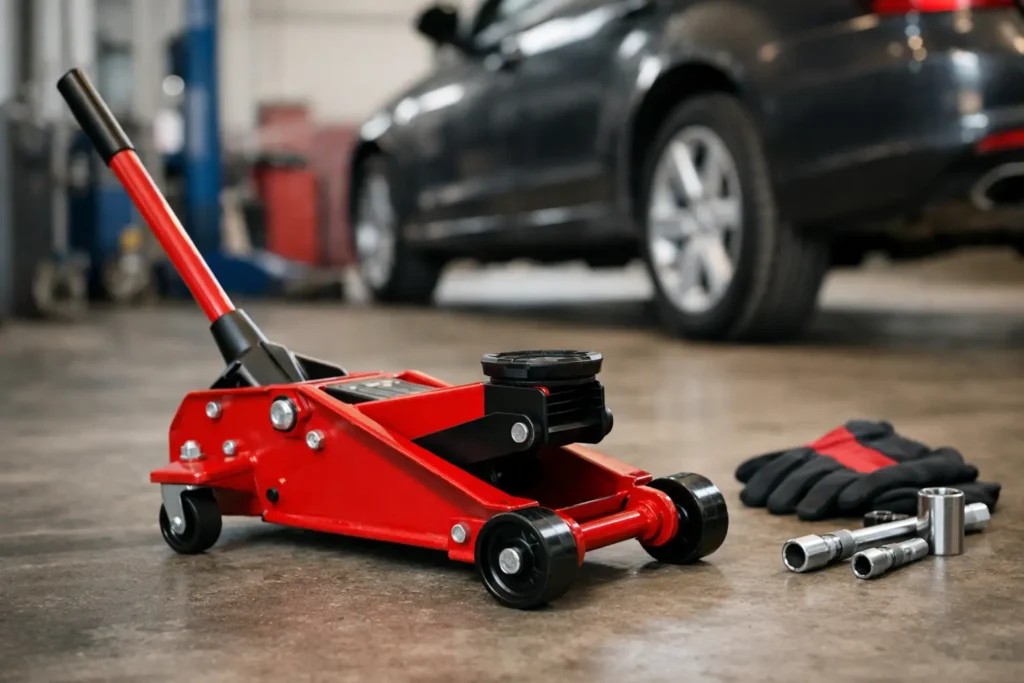
A cheap trolley jack that will not reach the proper lifting point is no bargain. Neither is an oversized workshop jack that takes up half a home garage. When searching for a trolley jack Ireland for sale, the right choice comes down to the vehicles you work on, the clearance available underneath them and how often the jack will earn its keep.
For tyre changes and occasional servicing, a compact hydraulic jack can be a sensible, affordable buy. For a busy garage, regular brake work or heavier SUVs and vans, a low-profile, quick-lift model with a stronger chassis is the better investment. Buy for the job in front of you, but leave enough capacity for the next vehicle that rolls in.
Choosing a trolley jack Ireland for sale
The first specification to check is lifting capacity. A 2-tonne trolley jack is the standard choice for many cars and is suitable for a great deal of everyday DIY work. It offers enough headroom for most hatchbacks, saloons and smaller crossovers when lifting one end or one corner at a time.
A 2.5-tonne or 3-tonne jack is a stronger all-round option for mechanics, larger family cars, SUVs and light commercial vehicles. The extra capacity is not just about the vehicle’s total kerb weight. It gives a useful safety margin and normally comes with a broader frame, larger saddle and more stable feel under load.
For heavier vans, 4x4s and regular workshop use, consider a 3-tonne heavy-duty trolley jack. Check the manufacturer’s stated capacity rather than relying on appearance. A heavy steel body can look convincing, but the rated load, hydraulic construction and safety valve are what matter.
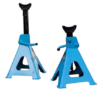
Remember that a trolley jack is designed to lift, not support a vehicle while you work beneath it. Once the vehicle is raised, lower it securely onto correctly rated axle stands placed at approved support points. Never get under a vehicle held up only by a hydraulic jack.
Low-profile or standard-height: clearance decides
Modern cars often sit lower than older models, particularly sports models, lowered cars and vehicles fitted with deep undertrays. A standard trolley jack may have the capacity you need but still fail at the first hurdle if its minimum saddle height is too high to roll under the car.
Low-profile trolley jacks are built for this problem. Their low entry height lets them reach factory jacking points on cars with restricted ground clearance. This makes them popular with tyre shops, detailing businesses, performance-car owners and anyone who services newer vehicles at home.
Do not focus only on the minimum height. Maximum lift height matters just as much. A jack that gets under a low car but does not raise it high enough for axle stands, wheel removal or underbody access will soon become frustrating. Compare both figures against the vehicle and the work you plan to carry out.
A long-reach low-profile model is particularly useful when jacking from a central lifting point set further under the vehicle. It costs more and needs more storage space, but it can save time on regular workshop jobs and reduce the need to reposition the jack repeatedly.
Features worth paying for
The best trolley jack is not necessarily the one with the largest printed capacity. Build quality and usable features make a real difference in a working garage. A solid steel frame handles daily knocks well and suits fixed workshop use. Aluminium models are lighter to move and easier to transport in a service vehicle, although they usually command a higher price.
A twin-piston or dual-pump system is worth considering if you lift vehicles frequently. It raises the saddle faster, reducing the number of handle strokes needed before the jack reaches the lifting point. For a garage completing several tyre, brake or suspension jobs each day, that time soon adds up.
Look for a wide, stable wheelbase and strong castors. The jack needs to roll slightly as the suspension geometry changes during lifting. Poor castors, rough floors or a twisted frame can make lifting less controlled. A rubber saddle pad is another useful feature because it helps protect painted seams and designated jacking points, though it does not replace correct positioning.
Other practical details include a two-piece handle for easier storage, a protected release valve for controlled lowering, and a carry handle if the jack will be moved between bays or taken on call-outs. These are small details, but they affect how often a tool is actually used.
Match the jack to the work
For occasional wheel changes, a good 2-tonne trolley jack, matching axle stands and a wheel brace are a sensible starting point. Choose a model with a lift range suitable for your vehicle rather than buying the lowest-priced unit available.
For the serious DIY user working on family cars, brakes, suspension and servicing, a low-profile 2.5-tonne or 3-tonne jack offers more flexibility. It is especially worthwhile if your household includes an SUV, electric vehicle or a car with low ground clearance. Electric vehicles can be heavy, so always check vehicle-specific lifting instructions and use any required lifting pads or adapters.
For garage owners and technicians, speed, repeatability and durability take priority. A professional-style 3-tonne trolley jack with quick lift, a wide saddle and reliable hydraulics is built for regular use. Pair it with rated axle stands, a transmission jack where required and a clear lifting procedure for each model of vehicle.
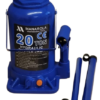
If you work on vans, check both capacity and lifting height. A jack can be rated for the load yet still lack the travel needed to get the wheels clear, particularly on taller vehicles. In some cases, a bottle jack, air hydraulic jack or vehicle lift may be more suitable than a conventional trolley jack.
Safety checks before every lift
A trolley jack should always be used on solid, level ground. Smooth concrete is ideal. Avoid soft tarmac, gravel, sloped driveways and uneven paving, where the jack can sink, shift or roll unpredictably. Apply the handbrake, select park or engage a gear as appropriate, and chock wheels that will remain on the ground.
Before lifting, identify the approved jacking points in the vehicle handbook or workshop information. Incorrect placement can damage sills, floor pans, battery protection trays and suspension components. This is particularly relevant on modern cars with plastic undertrays and electric vehicles with protected battery packs.
Check the jack itself before use. Look for hydraulic oil leaks, damaged wheels, bent handles, cracked welds and a saddle that does not sit square. Raise and lower it without a load if it has been stored for a long period. If the jack drops, feels spongy or will not hold pressure, take it out of service until it has been inspected or repaired.
Once the vehicle is at working height, position axle stands under approved structural points and lower the vehicle gently onto them. Give the vehicle a careful stability check before removing a wheel or starting work. Keep the trolley jack in light contact as an added precaution where space allows, but treat the stands as the load-bearing support.
Getting value without buying twice
Price matters, especially when you are equipping a new garage or replacing several essential tools. But a trolley jack is a safety-critical purchase, so value means more than the lowest checkout price. Choose clear load ratings, sensible lifting dimensions, dependable construction and a warranty that gives you confidence if the tool develops a fault.
Also factor in the equipment needed to use it properly. A quality jack and suitable axle stands are a working pair. Add wheel chocks, a torque wrench for refitting wheels and protective pads where your vehicle needs them. Buying compatible workshop essentials together can prevent delays when a job is already underway.
Irish Tools Shop supplies affordable, reliable garage equipment for mechanics and serious DIY users who need tools that are ready to work. Check the product specifications carefully, compare capacity and lift range, and choose the jack that fits the vehicles you see most often. The right trolley jack will make routine lifting quicker, safer and far less of a struggle.
