






A drawer that jams when you need a 13 mm socket, a cabinet that rocks on an uneven floor, or a top chest with no room for your diagnostic kit costs time every day. A Snap-on tool box has a strong reputation in professional garages, but the badge alone should not decide the purchase. The right storage needs to suit the tools you own, the work you do and the budget available for the rest of the workshop.
For mechanics and serious DIY users, the real question is not whether Snap-on storage is well made. It is whether its price is justified for your workload, or whether a heavy-duty alternative gives you the drawer space, strength and reliability you need for less.
What You Pay for With a Snap-on Tool Box
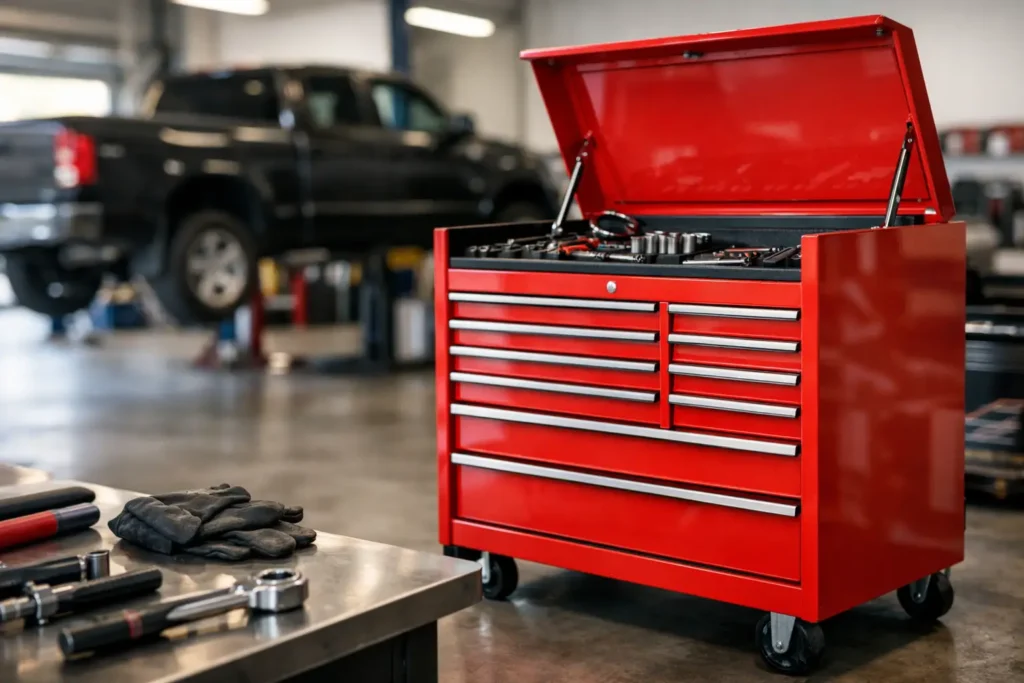
Snap-on tool storage is positioned at the premium end of the market. Its cabinets are known for solid construction, smooth drawer action, strong locking systems and finishes designed to stand up to busy workshop use. In a professional setting where the box is opened hundreds of times each week, those details matter.
The cost also reflects brand reputation, dealer support and a product range built around professional technicians. A large roll cab can be configured with matching top chests, side lockers, worktops and power accessories. For a technician who wants a long-term, coordinated storage system and has the budget, that can be a genuine advantage.
However, premium does not automatically mean best value for every buyer. A mobile mechanic, independent garage or home user may get more practical benefit from spending less on storage and putting the saving towards an impact gun, compressor, lifting equipment or specialist brake tools. Storage should protect and organise your equipment, not consume the budget needed to do the job.
Cabinet strength is more than thick-looking steel
When comparing tool boxes, look past the paint finish and brand name. The important details are the steel gauge, cabinet reinforcement, drawer runner design, drawer load rating and overall unit weight. A heavier cabinet is not always better, but a very light unit with wide, heavily loaded drawers is unlikely to stay straight for years of workshop use.
Good drawer runners should support the full drawer length and operate properly when loaded with sockets, spanners and power tools. Ball-bearing slides are common, but their quoted load capacity matters. Deep lower drawers need more strength than shallow top drawers because they tend to carry impact sockets, cordless tools, pullers and other heavy kit.
Check how the cabinet is braced around the wheel area and at the drawer openings. This is where cheaper storage can flex when moved across rough concrete. A decent roll cab should feel planted, with castors that turn freely and brakes that hold it in place while you work.
Choose the Right Tool Box Size Before Comparing Brands
The biggest mistake is buying a cabinet that looks impressive but does not fit the working routine. Measure the available floor space, including clearance for fully opened drawers. A long, wide roll cab may offer excellent capacity but can become an obstacle in a compact garage bay.
Start with the tools that cause the most clutter. Socket sets, combination spanners, pliers, screwdrivers, air tools, cordless tools, diagnostic equipment and consumables all need different drawer depths. Shallow drawers are ideal for neatly arranged hand tools. Medium drawers work well for ratchets, sockets and electrical testing equipment. Deep drawers should be reserved for bulky tools rather than becoming a dumping ground.
If you work on vehicles daily, choose more capacity than you currently need. Tool collections grow quickly once you add service kits, specialist sockets and repair equipment. A cabinet that is already full on day one forces you to stack cases on top, defeating the point of organised storage.
For smaller workshops, a compact roll cab with a matching top chest can make better use of vertical space. For a fixed work area, a wide low cabinet can double as a workbench base when fitted with a strong worktop. The best layout depends on how you move around the vehicle and where you carry out most of your repair work.
Snap-on Tool Box Features Worth Comparing
A fair comparison between a Snap-on cabinet and a more affordable professional-grade tool chest should focus on specifications that affect daily use. Do not compare only the number of drawers. Ten narrow drawers can be less useful than six well-planned drawers with proper depth.
Pay close attention to the internal dimensions, not just the outside width. Drawer liners, dividers and socket organisers take up some room, so a drawer that appears large in a product image may not accommodate the tool cases you already own. Measure your longest breaker bar, torque wrench and socket rails before ordering.
The locking arrangement is another practical point. Central locking is useful for security and for keeping drawers shut when the cabinet is moved. Anti-tilt systems, which prevent multiple drawers opening at once, add safety on taller cabinets. They can be restrictive for some users, but they reduce the risk of a loaded chest tipping forward.
Castors deserve the same attention as drawers. Look for a sensible wheel diameter, a stated load capacity and reliable brakes. Small, hard wheels can struggle with cracked concrete, thresholds and workshop debris. If the cabinet will stay in one place, fixed feet or a static tool chest may offer better value than paying for mobility you will not use.
When the Premium Makes Sense
A Snap-on cabinet can make sense for a full-time technician who uses it constantly, values the particular layout and wants the confidence of a recognised professional storage system. It may also appeal to buyers building a long-term workshop around matching equipment, particularly where presentation matters to customers.
It is less compelling when the cabinet will see occasional use, when the tool collection is still developing or when funds are tight. In those cases, a heavy-duty tool chest with sound drawer runners, locking castors and sufficient load capacity can deliver the function that matters most: fast access to protected tools.
There is also a middle ground. Some mechanics buy a premium cabinet used, then add new affordable storage for overflow tools, consumables or mobile service work. Others choose a capable new roll cab and spend the difference on quality hand tools. Neither approach is wrong. The priority is avoiding weak storage that fails under the weight of the equipment it is meant to hold.
Build a Storage Setup That Works Harder
The cabinet is only part of the system. A well-organised tool box saves time because every commonly used item has a fixed position. Arrange tools by task rather than by where they happen to fit. Keep service sockets and ratchets together, brake tools in one area, electrical tools in another, and diagnostic equipment protected from dirty heavy tools.
Drawer liners help stop tools sliding and reduce damage to painted drawer bases. Foam organisers give a cleaner layout for frequently used hand tools, although they take space and can be expensive to replace as the collection changes. Socket rails and labelled trays are often the more flexible choice for a working garage.
Avoid overloading the top drawers simply because they are easiest to reach. Heavy items belong low down to keep the cabinet stable. Keep the tools used every day between waist and knee height where possible, and store infrequent specialist equipment in deeper lower drawers or a separate side cabinet.
Buy for Specification, Not Badge Alone
A tool box is workshop equipment, not a display piece. The right purchase has drawers that open cleanly under load, enough usable capacity for your current kit and room to grow, wheels that cope with your floor and a price that leaves budget for the tools that earn their keep.
At Irish Tools Shop, workshop buyers can compare affordable, reliable tool chests and garage storage built for real equipment rather than light household use. Check dimensions, drawer ratings, locking details and delivery times before buying. A properly chosen cabinet keeps your tools protected, your workspace clear and the next job moving without delay.
