







A Car Jack is one of those tools that earns its keep quickly. Whether you are changing wheels, replacing brake components or carrying out regular servicing, the wrong jack wastes time and creates a serious safety risk. The right one lifts cleanly, sits securely and has the capacity and height your vehicle actually needs.
Cheap lifting equipment can look like a saving until a seal fails, a handle bends or the saddle will not reach a proper jacking point. For a working garage, a mechanic’s driveway setup or a serious DIY workshop, choose lifting gear by specification first and price second. Good value means dependable equipment that is fit for repeated use.
What Makes a Good Car Jack?
The three figures that matter most are lifting capacity, minimum height and maximum lifting height. Capacity tells you how much the jack can safely raise. Minimum height determines whether it will fit beneath the vehicle. Maximum height affects whether you can get wheels clear, fit axle stands correctly and work with enough room.
Build quality matters just as much. A workshop trolley jack should have a solid steel chassis, a stable wheelbase, smooth castors and a reliable hydraulic system. The release valve needs to give controlled lowering, not a sudden drop. A broad saddle and a strong handle also make day-to-day work safer and less awkward.
Do not buy on tonnage alone. A 3-tonne jack is not automatically the better choice if it is too tall to roll under a lowered car, or if its lifting range is poor for the job. Match the jack to the vehicles you service most often.
Car Jack Types for Garage and Workshop Use
Trolley jacks
For most garages, a hydraulic trolley jack is the practical first choice. It rolls under the vehicle, lifts with less effort than a screw jack and is easy to position beneath approved central lifting points. A 2.5-tonne or 3-tonne trolley jack suits many cars, SUVs and light commercial vehicles, provided its lifting range is suitable.
Trolley jacks are especially useful for tyre, brake and suspension work because they are quick to move between corners of the vehicle. A low-profile model is the better option for cars with reduced ground clearance, sport suspension or low sills. Look for a low entry height if you work on modern saloons, coupes and performance cars.
The trade-off is size and storage. Heavy-duty trolley jacks take up more floor space and are less convenient to carry in a vehicle. That is normally a fair compromise for the speed and stability they bring to regular workshop work.
Bottle jacks
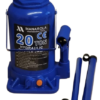
Bottle jacks are compact, powerful and often excellent value for higher-capacity jobs. They are common for vans, 4x4s, trailers and machinery where there is plenty of clearance beneath the chassis. Their upright design allows a high lifting capacity without the footprint of a large trolley jack.
They are less suitable for low cars and can be less stable on uneven ground due to their smaller base. A bottle jack also needs a strong, flat contact point. Never use one against a thin floor pan, plastic sill trim or an unsuitable suspension component simply because it is the nearest point within reach.
Scissor jacks
The scissor jack supplied with many cars is primarily an emergency roadside tool. It is compact enough to live in the boot and can be adequate for a wheel change on firm, level ground. It is not the best choice for regular servicing, repeated lifting or under-vehicle work.
For a home garage, a proper trolley jack and axle stands are a far safer and more efficient combination. Keep the vehicle scissor jack for emergencies, but do not expect it to perform like workshop equipment.
Choosing the Right Lifting Capacity
Start with the vehicle’s gross vehicle weight, then allow a sensible margin. You are normally lifting one end or one corner rather than the complete vehicle, but real-world conditions are not always ideal. The jack can be angled slightly as the suspension moves, load distribution varies, and a vehicle may be carrying tools or equipment.
A 2-tonne trolley jack can suit smaller cars, but a 2.5-tonne model is often a stronger all-round choice for domestic garage use. A 3-tonne jack gives more headroom for heavier SUVs, electric vehicles and light vans. Larger vehicles may require dedicated heavy-duty lifting equipment with a suitable lift range, not simply a higher-tonnage jack.
Check the rating on every item in the lifting setup. The axle stands, ramps and any lifting pad must be suitable too. Do not combine a high-capacity jack with light-duty stands and assume the system is safe. The lowest-rated component sets the limit.
Lifting Height and Vehicle Access Matter
A jack’s lifting range can make the difference between an easy job and an unusable tool. Low-profile trolley jacks may start around 75 mm to 90 mm, which helps them reach under lowered vehicles. Standard models can begin higher, so check the clearance before buying.
At the other end of the range, make sure the jack can lift high enough for your intended work. Changing a wheel needs only modest clearance, but fitting axle stands under chassis points or working on suspension often needs more. SUVs and vans may need a higher lift, while some cars need a rubber lifting pad to protect pinch welds and prevent the saddle slipping.
Always use the manufacturer’s specified jacking points. The strongest-looking part of the underside is not necessarily designed to take a concentrated lifting load.
Safe Car Jack Use: No Shortcuts
A hydraulic jack lifts the vehicle. It does not support it safely while you work underneath. Once the vehicle is raised to the required height, lower it carefully on to correctly rated axle stands positioned at approved support points. Leave the jack in place as an additional precaution where practical, but never rely on hydraulic pressure alone.
Before lifting, follow these basic checks:
- Park on level, solid ground. A concrete garage floor is ideal. Avoid gravel, soft tarmac, slopes and damaged paving.
- Apply the handbrake, select Park or first gear, and chock the wheels that remain on the ground.
- Inspect the jack for oil leaks, damaged wheels, bent parts, loose fittings or a saddle that is worn or unstable.
- Raise the vehicle slowly, checking that the saddle remains centred on the proper lifting point before continuing.
Keep hands, feet and tools clear of the area beneath the vehicle while it is being raised or lowered. Never crawl under a vehicle held only by a jack, and never improvise with timber blocks, bricks or unstable supports. Bricks can crack without warning; stacked timber can shift. Proper axle stands cost far less than the consequences of a failed support.
If you are lifting an electric or hybrid vehicle, take extra care around battery trays and underbody covers. The extra weight of battery packs also makes capacity and correct lifting points more critical. Follow the vehicle maker’s workshop information where available.
Build a Better Lifting Setup
A capable garage setup is usually more than one product. A heavy-duty trolley jack, a matched pair of axle stands, wheel chocks and a lifting pad cover most servicing work. Add ramps for inspections and oil changes where wheels do not need to come off. For frequent commercial work, a vehicle lift can improve access, speed and safety far beyond what floor-based equipment can offer.
Think about the work you do repeatedly. If tyre changes are frequent, a trolley jack with fast lift action saves time. If you service vans, check that the saddle reaches the chassis safely and that the maximum lift clears the wheels. If storage is tight, choose equipment that is manageable to move rather than buying oversized gear that stays unused at the back of the workshop.
Irish Tools Shop stocks affordable, reliable lifting equipment for everyday mechanic work through to heavier garage demands, with specifications that make comparison straightforward.
When to Replace a Jack
Replace a jack if it leaks hydraulic oil, lowers by itself, has a bent handle or lifting arm, damaged castors, a cracked weld, or a saddle that no longer holds its position securely. Do not repair structural damage with welding or attempt to compensate for a fault by adding blocks beneath the vehicle.
A jack that has been overloaded or dropped should be inspected before it goes back into service. Clean off road grit, store it dry and keep moving parts maintained according to the manufacturer’s instructions. Reliable lifting starts with the right equipment, but it stays reliable only when that equipment is treated as essential workshop safety gear.
