






A broken ratchet, a tired trolley jack or a missing impact socket can stop a paid job faster than most garage owners would like to admit. Screwfix is often one of the first names buyers consider when they need tools quickly, but it is not automatically the best place for every workshop purchase. The right choice depends on what you are buying, how hard it will be used and whether you need it in your hands today or delivered at the right price.
For everyday repairs, site work and general maintenance, Screwfix has a familiar, broad appeal. For mechanics and serious DIY users building out a garage, however, the buying decision needs to go further than the headline price.
What Screwfix Does Well
Screwfix is strong when you need common tools, consumables and trade essentials without spending hours comparing suppliers. Hand tools, fixings, sealants, electrical items, workwear, drill bits, blades and general power tools are all the type of products that suit a quick, practical purchase. If a tradesperson needs a replacement item between jobs, a wide catalogue and local collection options can be a real advantage.
It is also useful for buyers who know exactly what they want. A mechanic replacing a worn wire brush, a plumber needing fittings, or a DIY user picking up a basic drill can shop by product type and specification without being pushed towards complicated workshop packages.
The trade-off is that broad retail ranges are designed to serve many customers at once. That does not make the tools unsuitable, but it means a buyer setting up a professional garage should look closely at the detail. A socket set is not just a socket set when it will be used daily with an impact wrench. A jack is not just a jack when it will support vehicles of different weights week after week.
Where a General Tool Retailer May Fall Short
The difference becomes clearer with automotive and heavy-duty workshop equipment. Garage buyers frequently need products with very specific requirements: a low-entry trolley jack for lowered cars, axle stands with a stated safe working load, deep impact sockets for wheel and suspension work, or an engine crane with adequate lift range and folded storage dimensions.
These are not products to choose on appearance alone. You need clear specifications, sensible load ratings, compatible accessories and a supplier that understands how the equipment is used. If you are comparing tool chests, for example, drawer capacity, locking quality, castor strength and top load matter more than the number of drawers in a product photograph.
There is also the practical issue of range depth. A general retailer may stock a capable selection of core products, but specialist suppliers are more likely to carry the variations a working garage needs. That could mean longer breaker bars, 1-inch drive sockets, air line fittings, brake rewind kits, transmission jacks, engine support bars or workshop lifting equipment. When one supplier can cover both the major purchase and the smaller supporting items, it saves time, avoids compatibility problems and reduces delivery delays.
Screwfix Versus a Specialist Workshop Supplier
This is not simply a question of one retailer being better than another. Screwfix can be a sensible option for urgent everyday needs, particularly if you can collect locally and the product specification fits the job. It is less straightforward when the purchase is central to your workshop operation.
A specialist workshop supplier earns its place by focusing on the equipment mechanics and tradespeople rely on. Instead of treating a trolley jack as a general-purpose item, it should provide the information that helps you buy with confidence: lifting height, minimum saddle height, rated capacity, wheel design and intended use. The same standard applies to air compressors, tool storage and vehicle lifting equipment.
Price also needs to be viewed properly. The cheapest single item is not always the lowest-cost purchase. A low-priced compressor that cannot maintain the air demand of your impact wrench will slow work down. A lightweight tool chest that twists under a full load will become a daily annoyance. Buying a stronger product first can cost less than replacing an unsuitable one six months later.
For buyers across Ireland, Northern Ireland and the UK, delivery matters just as much as price. Heavy equipment is awkward to source locally and expensive to move without a specialist logistics setup. Irish Tools Shop is built around affordable professional-grade workshop equipment, with fast delivery across these areas and free shipping on qualifying orders above €50. That is particularly useful when your order includes both a large item and the smaller tools needed to put it straight to work.
Buy Tools by the Job, Not the Product Name
The quickest way to waste money is to shop by a vague product label. Before buying, work backwards from the work you actually carry out. If you service family cars at home, your requirements will be different from a tyre bay, independent repair garage or agricultural workshop.
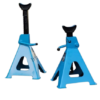
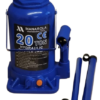
For vehicle lifting, start with the heaviest vehicle you expect to work on, then choose equipment with an appropriate rated capacity. Never rely on a hydraulic jack alone while working underneath a vehicle. Use correctly rated axle stands on firm, level ground, follow the manufacturer guidance and inspect lifting equipment regularly for leaks, damage and worn moving parts. Safety equipment is not where a false saving makes sense.
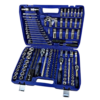
For socket sets, check the drive size and the work involved. A 3/8-inch set is excellent for general automotive work and tighter spaces, while 1/2-inch drive is the usual workhorse for wheel bolts, suspension and heavier fasteners. Impact sockets should be used with impact tools, not standard chrome sockets. If you regularly tackle larger commercial or agricultural equipment, 3/4-inch or 1-inch drive may be the better long-term choice.
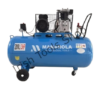
Air tools need the same level of checking. Look at the compressor’s usable air delivery, tank size and duty cycle rather than relying only on the motor rating. An air impact wrench, tyre inflator and blow gun may work comfortably from a modest setup. Continuous sanding, spraying or extended air-tool use needs more air supply and better moisture control. A compressor that is too small will run constantly, lose pressure and shorten its working life.
Tool storage should be sized for the tools you own now plus the tools you will buy over the next year. Consider whether you need a static chest, a roll cab, a mobile trolley or a combination. Deep drawers are valuable for impact tools and larger sets; shallow drawers keep spanners, pliers and measuring tools organised. Strong slides, secure locks and stable castors matter in a busy garage far more than a glossy finish.
Check the Real Cost Before You Order
Sale prices are worth taking seriously, but compare like for like. Check whether VAT is included where relevant, whether accessories are supplied, the warranty offered, delivery charges and the product’s actual specification. A jack advertised at a good price may not include rubber pads. An air tool may need fittings bought separately. A tool cabinet may arrive assembled, part-assembled or flat-packed.
Stock status is equally important when equipment is needed for a booked job. A bargain that is unavailable for weeks is no bargain if you have a vehicle occupying a ramp bay or driveway. Confirm availability and delivery arrangements before promising a completion date to a customer.
For larger items, measure your route from the delivery point to the workshop. Check doorway widths, ramps, floor condition and storage space. Engine cranes, car lifts, large compressors and loaded tool chests are not products you want to manoeuvre twice because the first location was poorly planned.
Make the Workshop Purchase Pay for Itself
A good tool should either save time, improve safety or let you complete work you would otherwise turn away. Ideally, it does all three. That is the test to apply when comparing Screwfix with a dedicated garage equipment supplier.
Use a general tool retailer for the quick replacement or everyday consumable when the specification is right and availability is the priority. For the equipment that carries vehicles, powers daily work or keeps an entire workshop organised, buy on capacity, build quality, warranty and total cost. Check the figures, buy for the jobs ahead and choose tools that can keep earning their space in the garage.
