
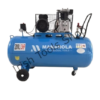
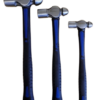


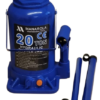




A seized fastener does not care about a polished badge. It cares whether the socket grips properly, the ratchet survives the load and the tool in your hand is made for repeat use. That is why buyers looking at Manarola Tools – The Italian Made range should look beyond the country-of-origin claim and assess the details that matter in a working garage: material, fit, serviceability, warranty and price.
Italian-made tools can carry a strong reputation for engineering and finish, particularly among mechanics who want dependable kit without paying solely for a name. But no tool range should be bought on reputation alone. The right choice depends on the work being done, how often the tool will be used and what failure would cost in lost time.
What “Italian Made” Should Mean in a Workshop Tool
For a professional mechanic or serious DIY user, Italian manufacture is not simply a marketing line. At its best, it points to controlled production, consistent machining and practical design built around the needs of tradespeople. Good hand tools should feel accurate and deliberate: sockets should seat cleanly, ratchets should engage positively and spanners should hold their shape under sensible working loads.
That said, “Italian made” is not a specification by itself. A manufacturer may make some product lines in Italy while sourcing other components elsewhere. Packaging can be vague, and a country name does not automatically confirm the grade of steel, the heat treatment or the quality control applied to every item. Check the individual product description, marking and warranty terms before treating origin as proof of performance.
For daily garage use, the more useful question is simple: will this tool do the job repeatedly without rounding fixings, flexing excessively or becoming difficult to use? That is where a well-made range earns its place.
Where Manarola Tools Can Make Sense
Manarola tools are most relevant to buyers who want a step up from throwaway DIY sets but do not need to pay premium-brand pricing for every single item. A mechanic fitting brakes, servicing suspension, carrying out routine repairs or maintaining a small fleet needs tools that are dependable, correctly sized and easy to replace or expand.
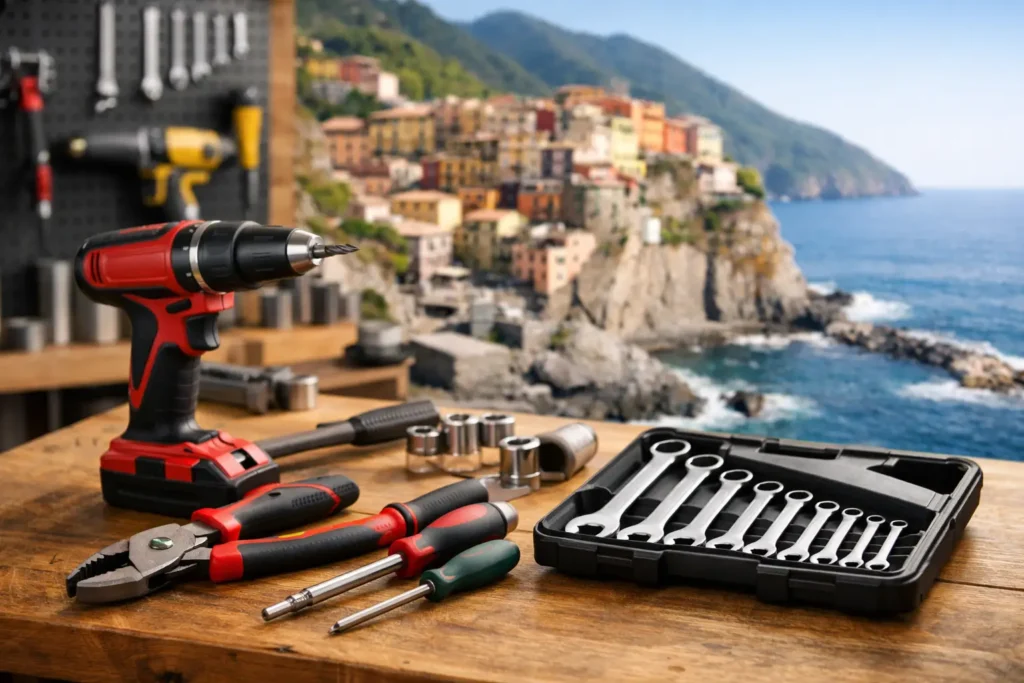
Start with the tools that work hardest. Socket sets, combination spanners, ratchets, pliers and screwdrivers are handled every day in most workshops. Their quality affects speed as much as durability. A poorly fitting socket can damage a fastener. A rough ratchet can slow work in tight engine bays. A spanner with imprecise jaws can turn a straightforward repair into a rounded-bolt problem.
Italian-made hand tools can be a sensible purchase when the machining is clean, the finish resists workshop grime and the design suits real access constraints. Fine-tooth ratchets, for example, are useful around cramped components where there is little room for swing. Six-point sockets are generally the safer choice for stubborn hex fasteners, while twelve-point sockets offer faster engagement where access is clear. Neither is automatically better – the job decides.
Check the Specification Before the Badge
A tool listing should give enough information to let you buy with confidence. If it does not, treat that as a reason to ask more questions rather than assuming the product is suitable. For Manarola tools or any comparable range, focus on the working specification first.
Drive Size and Socket Profile
A 1/4-inch drive set suits light trim work, small fasteners and confined areas. A 3/8-inch drive is one of the most useful all-round formats for service work. A 1/2-inch drive handles heavier suspension, wheel and chassis tasks, especially when paired with a breaker bar or impact wrench rated for the job.
Do not use a standard chrome socket on an impact gun unless it is specifically rated for impact use. Impact sockets are designed to tolerate repeated shock loading and normally have a darker, more durable finish. Using the wrong socket is false economy, particularly when wheel bolts or corroded suspension fixings are involved.
Steel, Finish and Heat Treatment
Chrome vanadium steel is common in quality hand tools because it balances strength, toughness and corrosion resistance. Chrome molybdenum steel is often used for impact sockets and heavier-duty applications. These names are useful, but they do not tell the whole story. Heat treatment and manufacturing consistency are what determine whether a tool stays reliable under load.
Look for clean forging, crisp markings and even plating or coating. A bright finish makes tools easier to wipe down and inspect, while a satin finish can offer better grip with oily hands. Neither finish replaces proper care. Wipe tools after use, keep them dry and do not leave them loose in the bottom of a damp van.
Fit, Tolerance and Ergonomics
The best tool is not always the heaviest one. Excess bulk can make a spanner awkward around pipework, while an oversized ratchet head may not fit behind an engine mount or under a dashboard. Good tools combine strength with sensible proportions.
Test fit matters. Sockets should sit squarely on the fastener. Spanners should engage without excessive movement. Pliers should close evenly and cut cleanly. When tools are bought for paid work, small improvements in access and grip quickly add up over hundreds of jobs.
Build a Working Set Before Buying Specialist Pieces
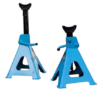
It is easy to overspend on specialist tools that only come out once a year. A better approach is to build a core kit that covers regular work, then add application-specific equipment when it has a clear purpose. For most automotive users, that core will include metric sockets, combination spanners, extensions, universal joints, pliers, screwdrivers, hex keys, torque tools and a dependable trolley jack with correctly rated axle stands.
Specialist brake rewind kits, ball joint splitters, bearing tools and diagnostic equipment can then be added around the type of vehicles and repairs you actually handle. If you mainly service modern European cars, metric coverage and Torx bits deserve priority. If you work on older vehicles, agricultural machinery or imported equipment, you may also need imperial sizes and more heavy-duty pullers.
Storage is part of tool value too. A decent tool chest or roller cabinet protects the kit, prevents wasted time and makes missing tools obvious. Loose tools get damaged, lost or borrowed indefinitely. A properly organised drawer system lets a technician reach for the right size first time.
Price, Warranty and Replacement Value
Affordable professional-grade equipment is about total value, not the cheapest price on the page. A lower-cost tool that fails during a job can cost more than a better one bought once. On the other hand, paying top-tier prices for occasional-use equipment can tie up cash that would be better spent on lifting gear, air tools or stock parts.
This is where Manarola tools should be judged honestly. Compare the specification against the price, not just against a famous logo. Check whether the warranty is clearly stated, whether individual parts can be replaced and whether the supplier has stock available when you need an extra socket or replacement ratchet. A set that cannot be expanded may be fine for home use but less attractive for a busy workshop.
For professional users, keep proof of purchase and inspect high-load tools regularly. Retire damaged sockets, cracked handles and worn ratchets before they cause an injury or damage a vehicle. No warranty makes unsafe use acceptable.
Buying Manarola Tools – The Italian Made Range Wisely
The strongest buying decision comes from matching the tool to the workload. A home mechanic carrying out weekend servicing may value a complete, neatly stored set at a sharp price. A garage technician will place more weight on repeatability, access, replacement availability and the ability to withstand daily use. Both buyers should avoid paying for features they will never use.
Before ordering, confirm the sizes included, drive type, material, warranty and whether the tool is suitable for hand or impact operation. Check load ratings carefully on workshop equipment such as jacks, stands, cranes and lifts. Never assume that a heavy-looking product is safely rated for the vehicle in front of you.
Irish Tools Shop customers tend to buy with one eye on the job and one eye on the bill. That is the right approach. Choose the Manarola pieces that solve regular workshop problems, protect them properly and add specialist kit only when the work demands it. A tool that fits well, lasts well and arrives ready for work is value you can use every day.
