







A 2-post lift for sale is not a small workshop purchase. It changes how quickly you can carry out servicing, suspension work, exhaust repairs, brake jobs and underbody inspections. Choose the right model and it earns its floor space every day. Choose the wrong one and you may be left with clearance problems, limited vehicle coverage or an installation bill that wipes out the saving.
For busy garages, mobile mechanics moving into a fixed premises and serious home workshops, a two-post lift is often the best balance of access, lifting capacity and price. The key is to buy for the vehicles you work on now, while allowing enough headroom for the work you expect to take on next year.
Why a 2 Post Lift Makes Commercial Sense
A trolley jack and axle stands still have their place, but they slow down repetitive workshop work. A two-post lift gives open access to the wheels, brakes, suspension, drivetrain and underside of the vehicle without working around stands or trying to position a jack under crowded lifting points.
That extra access matters when jobs are booked back-to-back. Wheel changes, brake servicing and inspections can be completed with less bending, crawling and repositioning. It also gives customers a clearer view of worn components when approval is needed for additional repair work.
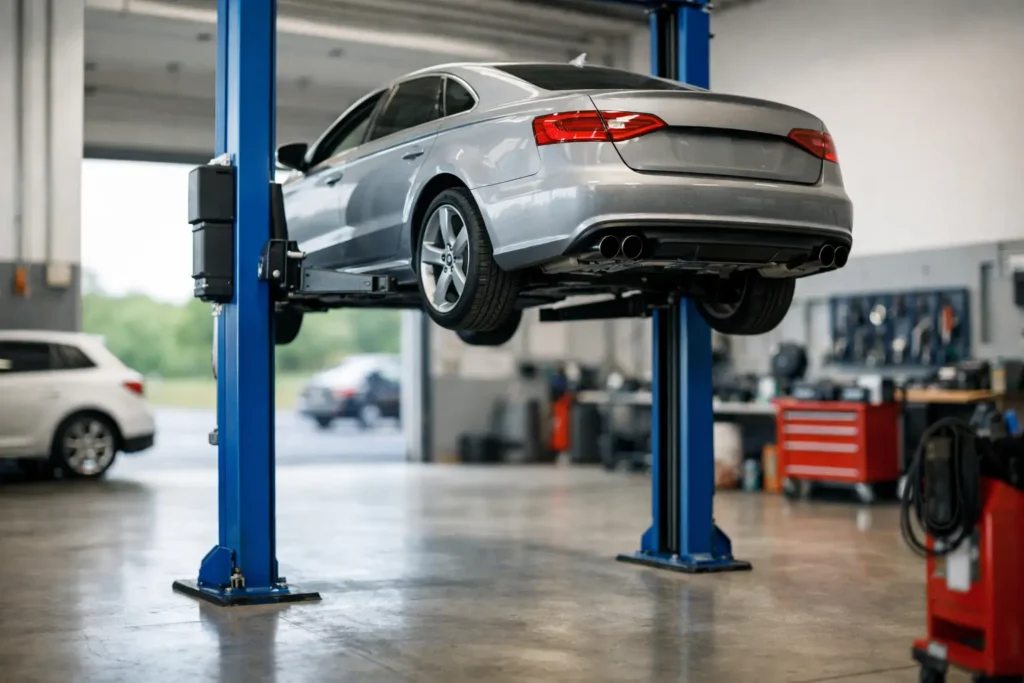
Two-post lifts are particularly suited to garages where floor space matters. Unlike a four-post lift, the vehicle is lifted by its designated chassis or sill points rather than sitting on runways. This leaves the wheels free and keeps the centre of the vehicle accessible. The trade-off is that correct arm placement and a sound installation are non-negotiable.
Choosing the Right 2 Post Lift for Sale
The cheapest lift is only good value if it suits the building, the vehicles and the workload. Before comparing sale prices, check the following practical points.
Start With Safe Lifting Capacity
A 4-tonne lift is a popular choice because it handles the majority of cars, crossovers, SUVs and light commercial vehicles seen in independent garages. However, do not rely on a vehicle’s kerb weight alone. Consider loaded weight, long-wheelbase models and the regular work you carry out on vans.
For a workshop dealing mainly with compact cars and standard saloons, a lower-capacity model may be enough. For garages servicing heavier SUVs, electric vehicles with substantial battery packs, pickups or commercial vans, extra capacity provides a more useful safety margin. Never exceed the rated capacity, even for a short inspection.
Capacity is only one part of the decision. The lift must also have arms that reach the correct factory lifting points without forcing an unsafe vehicle position. Adjustable and telescopic arms are useful when your customer base includes a wide mix of vehicle sizes.
Measure Ceiling Height and Vehicle Height
A lift that fits on paper can still be a poor fit in a real garage. Measure your clear internal ceiling height, not just the height to the lowest point of the roof. Steel beams, lights, cable trays, roller-shutter rails and ventilation equipment can all reduce usable clearance.
A clear-floor two-post lift has an overhead crossbeam and equalising cables above the vehicle. It keeps the floor clear between the posts, which is ideal for transmission work, tool trolleys and cleaning. It does, however, require enough ceiling height. A baseplate model routes the equalisation system across the floor, making it an option for lower buildings, although the floor plate can be less convenient in a busy bay.
Also consider the tallest vehicles likely to enter the workshop. The aim is not simply to get the vehicle off the ground. You need enough working height underneath it for the technician to stand comfortably, use tools safely and move components without striking the roof or overhead structure.
Check Your Concrete Floor Properly
A two-post lift transfers substantial force into the floor through its anchor points. The concrete must meet the lift manufacturer’s stated thickness, strength and condition requirements. A level-looking workshop floor is not automatically suitable.
Old concrete, cracked slabs, recent screed, underfloor heating, drainage channels and unknown foundations all deserve attention before purchase. Do not guess. If there is any doubt, have the slab assessed by a qualified installer or building professional. Anchoring a lift into unsuitable concrete is a serious safety risk and can invalidate warranty support.
The working area also needs room around the posts. Check the width between posts, the overall footprint, door opening clearance and the route vehicles take into the bay. A lift positioned too close to a wall may make it difficult to open doors or use the arms correctly.
Clear-Floor or Baseplate: Which Layout Fits Your Garage?
For most professional workshops with sufficient roof height, clear-floor lifts are the more convenient choice. There is no plate to step over, sweep around or roll a transmission jack across. They suit frequent service work and keep the bay feeling less restricted.
Baseplate lifts are not a second-rate option. They can be the practical answer where ceiling height prevents installation of an overhead bar. For a lower-roofed unit or a serious home garage, that compromise may be worthwhile. The best choice depends on the building first, then preference.
Symmetrical and asymmetrical arm layouts are another consideration. A symmetrical lift places the vehicle more centrally between the posts and can work well for larger, heavier vehicles. Asymmetrical designs position the vehicle slightly further back, often improving door clearance for passenger cars. If your workshop sees both cars and vans, assess the arm reach and vehicle fit rather than buying based on the label alone.
Safety Features Worth Paying For
A workshop lift should be selected on more than headline capacity. Look for a dependable mechanical safety-lock system, clear lock engagement positions and a straightforward release mechanism. Mechanical locks are there to support the raised vehicle rather than leaving the hydraulic system under constant load.
Quality lifting pads and suitable height adaptors are equally important. Modern vehicles can have awkward or protected lifting points, and electric vehicles may have specific requirements around battery trays and jacking locations. The right pads help prevent sill damage and improve stability.
Pay attention to column construction, carriage design, chain or cable arrangement, hydraulic hoses and the quality of the power unit. These are working components, not decorative specifications. A lift used several times a day needs parts that can cope with regular cycles, along with clear maintenance instructions and available replacement items.
Safe use also relies on procedure. Technicians should identify the correct lifting points, position all arms evenly, raise the vehicle slightly, check balance and pad contact, then continue to working height before engaging the safety locks. No customer vehicle should be left raised without the locks properly engaged.
Installation Is Part of the Purchase
The lift price is not the whole project cost. Budget for delivery access, unloading, electrical work, concrete checks and professional installation where required. A two-post lift is heavy equipment, and the delivery vehicle may need suitable access to the premises. Check this before ordering, especially at tight industrial units or rural workshop locations.
Electrical supply requirements vary by model. Confirm whether the lift needs a standard single-phase supply or three-phase power, and arrange installation by a competent electrician. Avoid extensions, improvised connections and overloaded workshop circuits.
Once installed, make inspection and maintenance part of your normal workshop routine. Keep arms, pads and moving areas clean; check anchors, cables, chains, hoses and locks at the recommended intervals; and follow the manufacturer’s service schedule. Small issues are cheaper to correct before they become downtime.
Buying for a Home Garage Versus a Working Workshop
A home user may prioritise lower ceiling requirements, single-phase power and occasional-use value. A working garage needs faster cycle times, a lift that suits varied vehicle sizes and confidence that the equipment will stand up to daily use. Neither buyer should compromise on floor suitability or safety devices.
For a professional bay, spending a little more on suitable capacity, arm flexibility and dependable construction can be better value than replacing an underspecified lift later. For a home workshop, a well-matched baseplate lift may be more useful than a clear-floor model that barely fits beneath the roof.
Irish Tools Shop focuses on affordable, reliable workshop equipment for mechanics and serious DIY users who need professional-grade tools without inflated distributor pricing. Check the specifications carefully, measure the space twice and choose the lift that works with your premises rather than against it.
A properly matched two-post lift does more than raise vehicles. It gives your workshop a safer, faster way to take on the jobs that keep coming through the door.
