






A seized brake caliper, a flat tyre or a failed suspension component can stop a job before it starts – especially when the right equipment is missing. For dependable Garage Tools In Castleblaney, the priority is not buying the biggest catalogue of tools. It is buying equipment with the strength, capacity and build quality to earn its place in a working garage.
Whether you run a small repair business, maintain agricultural vehicles, work on cars at home or need to keep a van on the road, poor tools cost more than their ticket price. They slow down every job, create safety risks and usually need replacing when the pressure is on. A properly chosen set of workshop essentials gives you faster repairs, safer lifting and fewer expensive hold-ups.
Build a garage around the jobs you actually do
The best starting point is the work in front of you. A technician carrying out brakes, suspension and servicing needs a different set-up from someone repairing engines, preparing cars for sale or working on larger commercial vehicles. Buying at random often leaves garages with duplicate hand tools but no safe way to lift a vehicle or no storage for the kit already owned.
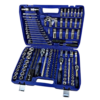
For general vehicle maintenance, start with quality socket sets, combination spanners, screwdrivers, pliers, breaker bars and torque tools. These are daily-use items, so poor finishes, weak ratchets and undersized handles soon become frustrating. Impact socket sets are a worthwhile addition where an impact wrench is used regularly. Standard chrome sockets are not designed to take repeated impact loads and can crack under pressure.
Brake work demands its own equipment. A brake caliper wind-back kit, brake bleeder, flare spanners and a solid selection of sockets can turn a difficult job into a routine one. If you regularly work on modern vehicles, make sure your kit covers different piston designs rather than relying on makeshift methods that damage seals, dust boots or calipers.
For suspension, wheel and drivetrain jobs, heavier tools matter. A long breaker bar, ball joint separator, hub puller, bearing press kit and correctly rated jack are far more useful than a collection of light-duty tools that flex when real force is needed. Match the tool to the task and check the stated load or drive rating before buying.
Safe lifting equipment is not optional
A trolley jack may be one of the most used items in a garage, but it is not a substitute for axle stands. The jack lifts the vehicle; properly rated axle stands support it while work is carried out underneath. That distinction should never be ignored.
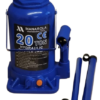
Choose a trolley jack based on the vehicles you service, not simply the cheapest price. Low-profile models suit cars with reduced ground clearance, while larger garage jacks offer greater lifting range and stability for heavier vehicles. A 2-tonne capacity can suit many passenger cars, but it may not be enough for vans, SUVs or vehicles loaded with tools and equipment. Always consider the actual lifting point and axle weight, not only the vehicle’s headline kerb weight.
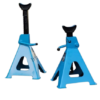
Axle stands need a wide, stable base, positive locking mechanism and a capacity appropriate to the work. Use them as a matched pair on level, hard ground, and support the vehicle only at approved lifting points. Wheel chocks are a low-cost addition that prevent unnecessary movement while a vehicle is being raised.
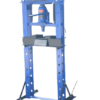
For garages handling regular repairs or larger jobs, a vehicle lift can transform output. Two-post lifts provide clear access to wheels, brakes and underbody components, while scissor lifts are useful where floor space is limited. This is a serious equipment purchase, so check ceiling height, concrete condition, electrical requirements, lifting capacity and installation needs before placing an order. The right lift pays for itself through faster, safer work; the wrong one becomes an expensive obstacle.
Air tools and compressors for faster workshop work
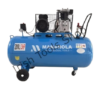
An air compressor is only as useful as its air delivery. Buyers often look at tank size first, but litres per minute and operating pressure are what determine whether the compressor can keep up with the tool. An impact wrench used intermittently has different requirements from a spray gun, tyre machine or air-powered grinder running for extended periods.
For routine wheel removal and general garage use, pair an air compressor with a reliable impact wrench, air hose and suitable couplings. Ensure the compressor supplies enough free air delivery at the pressure your wrench requires. A unit that constantly runs to catch up will slow work down and suffer more wear.
If paint preparation or spraying is part of the workload, air quality matters as much as volume. Water and oil in the airline can ruin a finish, so filtration, drainage and correct hose management are necessary. This is one area where buying a little more capacity than the minimum requirement is often the sensible decision.
Cordless power tools are also a strong option for mobile work, quick repairs and garages without a fixed airline system. Cordless impact wrenches are convenient, but battery capacity, torque rating and access to spare batteries should be considered. They are not always a full replacement for air tools in high-volume workshops, though they can save considerable time on call-outs and tight spaces.
Garage tool storage saves time on every repair
A tool chest is not just a place to hide clutter. It protects tools from moisture, prevents lost sockets and keeps frequently used equipment within reach. In a busy workshop, time spent searching for a 13 mm socket or brake spanner soon adds up across the week.
Look at drawer size, slide strength, locking arrangements and total storage capacity. Shallow drawers are ideal for spanners, sockets and diagnostic equipment, while deep drawers hold power tools, pullers and bulkier service kits. A mobile roller cabinet is useful where tools need to move around the vehicle, but it should have castors and drawer slides built for the weight you plan to load into it.
Do not overfill a chest simply because it has spare space. Heavy sockets, pry bars and power tools should be distributed evenly, with the heaviest items placed low down. This improves stability and makes drawer operation safer. Foam organisers can help, but simple labelled trays also keep a working tool chest organised without adding unnecessary cost.
Buy professional-grade tools without paying premium prices
Affordable does not have to mean disposable. The sensible approach is to spend where failure would be costly, unsafe or likely to delay a job. Lifting gear, torque tools, impact sockets, compressors and high-use ratchets are areas where specification and quality should lead the decision.
There are also tools that may only be used occasionally, such as specialist pullers, engine timing kits or brake service adaptors. These should still be fit for purpose, but there is little value in paying for an oversized professional package if one well-made kit covers the work you take on. The aim is a practical workshop, not an expensive display cabinet.
Before ordering, check the essentials: drive size, socket range, rated load capacity, lifting height, compressor air delivery, power source and included accessories. A tempting sale price is only a saving when the product is suitable for the job. Warranty cover is equally worth checking, particularly on larger equipment and electrically powered tools.
Irish Tools Shop supplies workshop equipment for buyers who need working tools at competitive prices, from everyday hand tools to jacks, axle stands, air equipment, tool storage and heavier lifting gear. For orders above €50, free shipping helps make a complete garage upgrade more cost-effective than piecing together essential equipment from several suppliers.
A practical buying order for Castleblaney garages
If you are starting from a basic home set-up, buy tools in the order that removes the biggest limits on the work you can do. Start with a dependable hand tool and socket selection, then add safe lifting equipment, torque tools and brake service kit. From there, an impact wrench, compressor and organised storage can increase the range and speed of routine repairs.
For established workshops, look for bottlenecks instead. If vehicles are waiting for a ramp, lifting equipment may be the best investment. If wheel and suspension work takes too long, better air tools, impact sockets and pullers may deliver a faster return. If jobs regularly stall because equipment cannot be found, a serious tool chest can make a noticeable difference from the first day.
The strongest garage set-up is not the one with the most tools. It is the one where every jack, socket, compressor and cabinet is rated for the work, ready when needed and bought at a price that leaves room to keep building.
