






A compressor can be powerful on paper and still feel disappointing at the tool. This garage air line guide explains why. Undersized pipe, wet air, restrictive fittings and a poor layout can rob an impact wrench of torque, spoil paintwork and leave tyre jobs taking longer than they should.
For a working garage, a fixed air line is not a cosmetic upgrade. It keeps hoses off the floor, gives every bay a reliable air point and helps your compressor deliver the air you paid for. Get the layout right before buying pipe and fittings, and the whole system will be safer, cleaner and easier to expand.
Start with the tools, not the pipe
The correct air line starts with demand. Check the free air delivery (FAD) of your compressor and compare it with the air consumption of the tools likely to run at the same time. A tyre inflator uses very little air, while a 1/2-inch impact wrench, air ratchet, die grinder or spray gun can demand much more. Continuous-use tools are the real test, especially sanders and grinders.
Do not size a system around maximum receiver pressure alone. Most workshop tools are rated around 90 psi or 6.2 bar at the inlet, but they need adequate volume as well as pressure. If the pressure gauge at the compressor looks fine while the tool becomes weak under load, restriction in the hose, couplers or fixed line is often the cause.
A small home garage with one user can usually work well with a simple run and two outlets. A busy workshop should allow for future demand from the outset. Adding a tyre station, a second ramp or a paint preparation area later is much cheaper when the main loop has been sized properly.
Choose pipe that suits workshop use
For most garages, aluminium compressed-air pipe, galvanised steel pipe or purpose-made air-line systems are sensible options. Aluminium is light, corrosion-resistant and quick to assemble with the correct fittings. Steel is tough and proven, but takes more labour to cut, thread and install. Quality nylon or polyethylene systems rated specifically for compressed air can also suit lighter-duty installations, provided their pressure and temperature ratings match the job.
Avoid ordinary PVC pipe. It can become brittle and may shatter violently if it fails under compressed air. Water pipe is not automatically air pipe, either. Always use materials, fittings and sealants approved for compressed-air service.
Pipe diameter matters. A larger main line stores more air and reduces pressure drop over distance. For a compact single-user garage, 15 mm to 20 mm internal diameter may be sufficient depending on the run and tool demand. For longer lines, multiple outlets or air-hungry tools, moving up to 25 mm or more on the main run is often the better value decision. Do not let a few pounds saved on smaller pipe limit an entire workshop.
The final hose to the tool can be smaller and more flexible, but it should not become a bottleneck. A long, narrow coiled hose with a restrictive quick coupling can undo the benefit of a well-sized fixed installation.
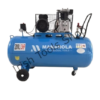
Portable 200 Litre 2 x 3HP 8 CFM Electric Air Compressor Double Pump 8 Bar
Plan a loop, fall and take-off points
A ring main is usually the best layout for a larger garage. Air can reach an outlet from two directions, which reduces pressure drop and provides a degree of backup if one section needs maintenance. A straight header can work in a small space, but pressure loss increases towards the far end.
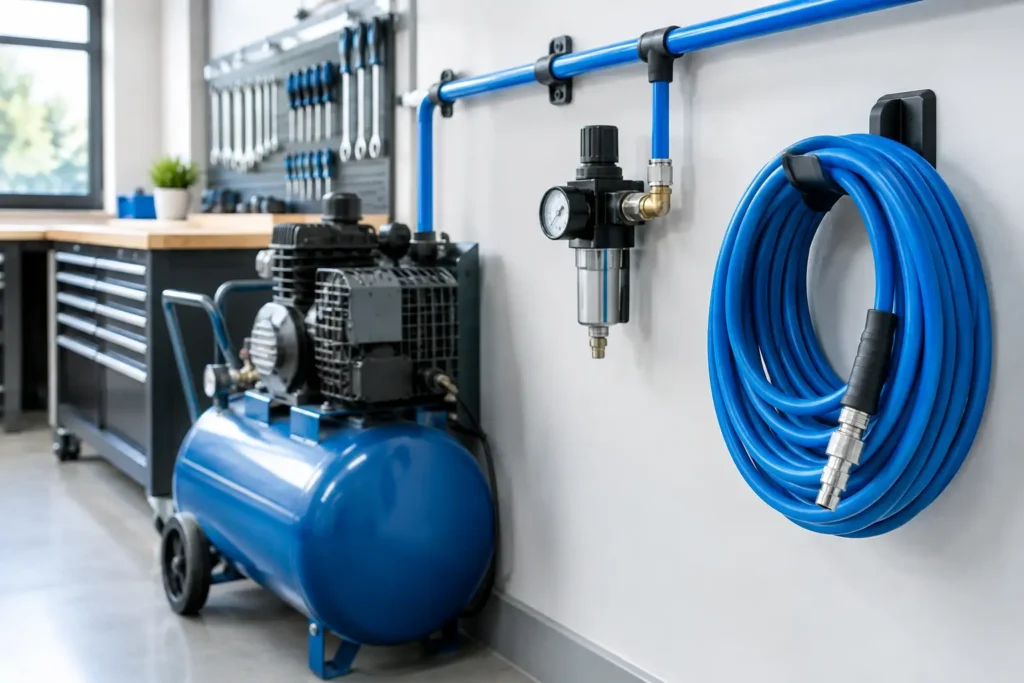
Mount the main pipe high on the wall, out of the way of vehicles, tool chests and lifting equipment. Keep it protected from impact and avoid routing it directly above sensitive electrical equipment where possible. Clearly label isolation valves so an outlet or branch can be shut down without stopping the whole garage.
Install the main run with a gentle fall in the direction of airflow, typically around 1 in 100 where the building allows it. This encourages condensed water to travel to low points rather than pooling in the pipe. Put drain legs at those low points and fit a drain valve that can be reached easily. A drain that is awkward to access will not get used.
Take outlet drops from the top of the main line, not the bottom. This simple detail helps stop collected water running directly into the hose. Run the drop down the wall, then add a short drain leg below the outlet connection. Water falls into the leg while cleaner air feeds the regulator and coupling above it.
A practical outlet arrangement contains an isolation valve, filter-regulator and quick-release coupling. For painting, plasma cutting or precision pneumatic equipment, add filtration and drying appropriate to the finish required. One general-purpose filter for the whole building may not be enough if a spray gun needs particularly dry, oil-free air.
Control moisture before it reaches the tool
Compressed air creates water. As air is compressed and then cools in the receiver and pipework, moisture condenses. In Ireland and the UK, damp ambient conditions make this a regular workshop issue rather than an occasional one.
Start with a receiver drain. If your compressor does not have an automatic drain, empty it routinely, especially after a busy day. From there, the fixed air line gives hot compressed air time and distance to cool, helping moisture separate before it reaches the outlets.
Use the right treatment at the right stage. A basic water separator protects everyday air tools. A coalescing filter can reduce oil carryover where needed. A refrigerated dryer is worth considering for regular spray work, bodyshop preparation or any operation where consistently dry air matters. There is a cost involved, but so is repainting a panel ruined by water contamination.
Oil is another decision point. If you run lubricated air tools, an in-line lubricator can extend their service life. Keep lubricated outlets separate from paint and clean-air outlets. Oil mist left in shared pipework can create expensive problems later.
Match fittings, regulators and couplers
A workshop air system is only as free-flowing as its narrowest point. It makes little sense to install a generous main line and then fit small-bore couplers at every station. Choose high-flow fittings where impact guns, tyre equipment and other demanding tools are used regularly.
Standardise your coupler type across the garage. Mixed fittings waste time and encourage improvised adaptors, which add leak points and restrictions. Keep spare couplers, hose tails and sealing washers in stock. They are low-cost items that can stop a job when one fails.
Use thread sealant or PTFE tape correctly on threaded joints, but never rely on tape to compensate for damaged threads or poor fitting selection. Once the system is pressurised, check every connection with leak-detection fluid or soapy water. A slow leak may not sound dramatic, yet it makes the compressor cycle more often, increases running costs and adds wear.
Set each regulator for the tool being used rather than running every outlet at maximum pressure. Too much pressure shortens tool life and can make a spray gun difficult to control. Too little pressure reduces performance. Read the tool manufacturer’s requirement and adjust at the point of use.
Manarola Electric Portable 200 Liter 3HP Air Compressor 10 Bar
Install safely and leave room to grow
Before fitting any new pipework, isolate the compressor, release stored air and confirm the system is at zero pressure. Secure pipe clips at sensible intervals, support heavy components properly and avoid unsupported fittings where hoses will be pulled daily. Protect lines where they pass through walls or near sharp edges.
Keep flexible hose runs short where possible and use proper hose restraints in areas where a disconnected hose could whip. Do not point an air gun at skin, clothing or another person. Compressed air can cause serious injury, even from a small outlet.
It pays to fit one or two capped branches while installing the main system. They cost very little at the build stage and make future additions straightforward. A new bench, vehicle lift or air-operated tool station should not require dismantling half the original installation.
For affordable, reliable workshop equipment, Irish Tools Shop buyers should treat air distribution as part of the tool investment, not an afterthought. A properly planned line protects the compressor, lets pneumatic tools perform as intended and keeps the work area clearer.
Build the system around the jobs you do most often, then leave enough capacity for the jobs that bring in more work tomorrow.
