







A bench grinder earns its space only when it saves time at the bench. For mechanics, fabricators and serious DIY users, it should sharpen drill bits, clean rusty parts, dress welds and restore small components without excessive vibration or constant adjustment. This bench grinder review focuses on the details that matter in a working garage: motor strength, wheel size, stability, safety and value for money.
A cheap grinder that stalls on steel or walks across the bench is not a bargain. Equally, paying for industrial capacity makes little sense if the grinder will only see occasional use. The right choice depends on the work you do, the materials you grind and how often the machine needs to run.
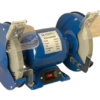
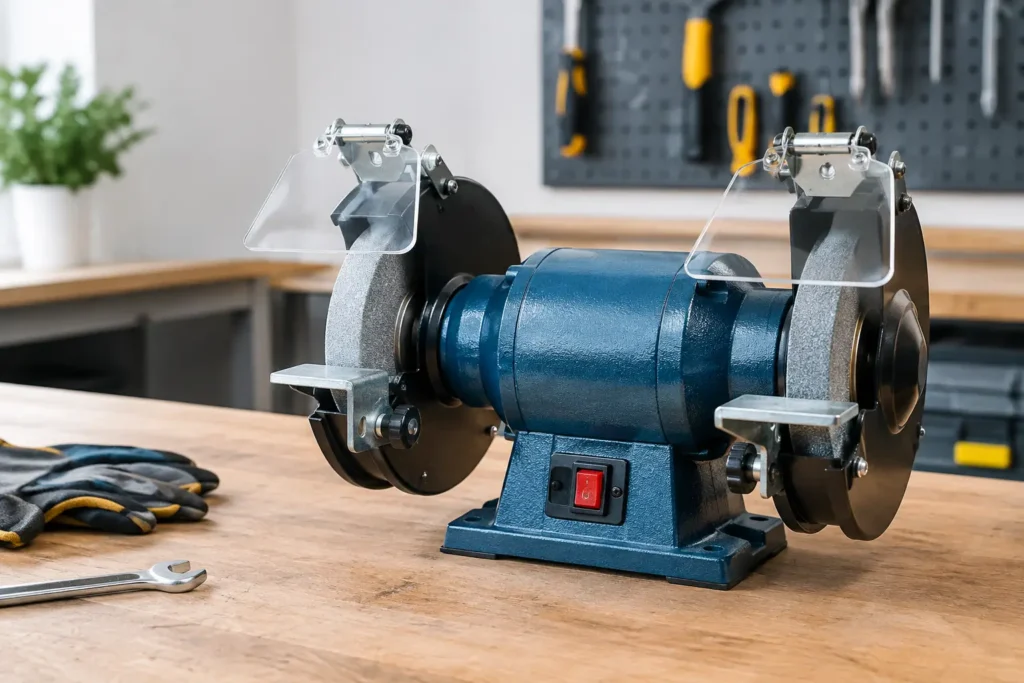
Easily Mountable 550 Watt 8″ Bench Grinder | 150mm Discs With Sight Guard
Bench Grinder Review: Start With Wheel Size
Most workshop buyers will choose between 150 mm and 200 mm bench grinders. A 150 mm model is compact, affordable and suitable for general sharpening, cleaning bolts and light metal dressing. It is a sensible fit for a home garage, mobile repair setup or a bench where space is limited.
A 200 mm grinder gives you a wider wheel and more usable grinding surface. That matters when sharpening larger chisels, lawn equipment blades, heavier hand tools or regularly dressing steel parts. The larger wheel also tends to last longer between replacements, although the machine takes up more bench space and usually costs more.
For occasional DIY work, 150 mm is often enough. For a busy garage or trade workshop, 200 mm is normally the better long-term buy. Do not judge wheel size alone, though. Check the wheel width, bore size and availability of replacement wheels before ordering. A grinder is only useful if you can easily fit suitable coarse, medium or fine wheels later.
Motor Power Is More Than a Number
Motor rating affects how confidently a grinder works under pressure. A lower-powered unit can handle light sharpening, but it may slow down when you lean into thicker steel. That creates heat, wastes time and can spoil an edge.
For routine workshop work, look for a motor that maintains speed rather than one that merely has an impressive peak figure on the box. A grinder should remove material steadily without bogging down during sensible use. Higher power is particularly worthwhile for mechanics cleaning corroded brackets, preparing small welds or reshaping tool edges.
Speed also needs consideration. Standard bench grinders run at high revolutions and remove material quickly, which is useful for general steelwork. The trade-off is heat. If you are sharpening drill bits, chisels or blades, use light pressure and cool the workpiece regularly in water. Blueing the cutting edge means the temper may have been damaged.
A variable-speed grinder offers greater control for delicate work, polishing and softer materials. It is not essential for every garage, but it can be worth paying for if you sharpen tools frequently or need one machine for several jobs. For simple cleaning and rough grinding, a fixed-speed model remains the more affordable choice.
What Separates a Good Bench Grinder From a Frustrating One
The motor and wheels get most of the attention, but the small components decide whether a grinder feels safe and practical every day. Tool rests should be solid, adjustable and easy to lock in position. A thin, flexible rest makes accurate sharpening difficult and encourages unsafe working angles.
Spark guards and clear eye shields should adjust without a fight. They are not a substitute for proper safety glasses, but they help contain debris and direct sparks away from the operator. Check that the gap between the wheel and tool rest can be set closely. As wheels wear down, this gap needs regular adjustment to stop small parts catching between the rest and the wheel.
Build quality shows up in vibration. Some vibration is normal, especially with a coarse wheel, but excessive shaking makes accurate work tiring and can loosen fasteners over time. A heavier base helps, although the best improvement comes from bolting the grinder firmly to a stable bench or a purpose-built stand.
Pay attention to the on/off switch as well. A large, front-mounted switch is easier to use with workshop gloves and safer when you need to stop the machine quickly. Rubber feet are useful for temporary setups, but they are not a replacement for proper mounting where the grinder will be used regularly.
Choose Wheels for the Jobs You Actually Do
Many bench grinders are supplied with a coarse wheel on one side and a finer wheel on the other. This is a practical starting point. The coarse wheel removes rust, burrs and damaged material quickly, while the finer wheel is better for controlled sharpening and finishing.
For workshop buyers who clean or polish hardware, a wire wheel is a useful addition. It can remove surface rust and old paint from bolts, brackets and small components far faster than hand brushing. It will not repair deeply pitted metal, and it can throw wire fragments, so face protection is essential.
A buffing wheel can improve the finish on aluminium, stainless steel and polished parts, but it should be treated as a separate task rather than an afterthought. Grinding dust and polishing compound do not mix well. If appearance work is frequent, a dedicated polishing machine or a second wheel setup keeps results cleaner.
Never fit a wheel just because it physically fits the spindle. Check its maximum rated speed, bore size and intended application. Grinding wheels can fail if damaged, incorrectly mounted or run above their rated speed. Inspect every wheel for chips or cracks before use, and allow a newly fitted wheel to run at full speed for a short time while standing to one side.
Bench Space, Power Supply and Setup
Before buying, measure the space around the grinder as well as the space beneath it. You need room to present long drill bits, brackets and tool handles to the wheel without hitting shelving or a wall. Good lighting directly above the bench makes a noticeable difference when sharpening and inspecting edges.
Most standard models suit a normal UK and Irish workshop power supply, but confirm the voltage and plug arrangement before purchase. Avoid relying on a light-duty extension lead, especially with a more powerful grinder. A proper socket close to the workbench is safer and keeps leads out of the path of sparks, oil and moving vehicles.
Mount the grinder securely using the base fixing holes. If your bench is light, reinforce the mounting area with a timber plate or steel backing plate underneath. A stable installation reduces vibration, improves accuracy and makes the machine feel more capable than a loose grinder ever will.
Is a Budget Bench Grinder Good Enough?
For light, occasional work, an affordable bench grinder can be a smart purchase. It is often more than capable of sharpening garden tools, cleaning fasteners and touching up hand tools. The key is realistic expectations. You may need to dress the supplied wheels, take lighter passes and spend a few minutes setting the rests and guards properly.
For daily trade use, spending more on a stronger motor, heavier base and better adjustment hardware usually pays back in saved time. A garage grinder is not a showpiece tool. It needs to start reliably, run smoothly and hold its settings through repeated work.
Irish Tools Shop is built around that balance: affordable, reliable equipment for garages and workshops that need tools to earn their keep. When comparing models, prioritise useful specifications and build quality over flashy claims or unnecessary extras.
Practical Safety Checks Before the First Job
A bench grinder is straightforward to use, but it deserves respect. Before switching on, make sure the guards are secure, the tool rests are close to the wheel and the work area is clear of flammable liquids, rags and loose packaging. Wear safety glasses or a face shield, hearing protection and suitable close-fitting workwear.
Do not grind on the side of a standard grinding wheel unless that wheel is specifically designed for side grinding. Keep both hands on small parts where possible, use steady pressure and let the wheel do the work. For very small items, use pliers or a holder rather than putting fingertips close to the wheel.
The best bench grinder is the one that matches your workload, is mounted properly and has wheels suited to the tasks on your bench. Buy for the jobs that waste your time now, then set it up carefully on day one – that is where the real value starts.
