







A timing belt job can turn expensive very quickly when camshaft or crankshaft position is guessed rather than locked correctly. The US Pro VAG diesel timing tool kit for SEAT, Skoda & Volkswagen is made for technicians and capable DIY users working on compatible VAG diesel engines where accurate timing setup matters from the first strip-down to final rotation check.
This is not a universal answer for every diesel engine carrying a SEAT, Skoda or Volkswagen badge. Engine codes, production years and fuel systems matter. Used against the right application, however, a dedicated timing kit saves time, avoids improvised locking methods and helps deliver the tidy, repeatable work a busy garage needs.
US PRO VAG Diesel Timing Tool Kit For Seat, Skoda & Volkswagen
What a VAG diesel timing kit is for
During timing belt replacement, cylinder-head work, camshaft repairs or injection-system work, critical engine components must remain in their specified positions. A proper timing tool kit provides the locking and setting tools needed to hold those positions while the belt, tensioner or related components are removed and refitted.
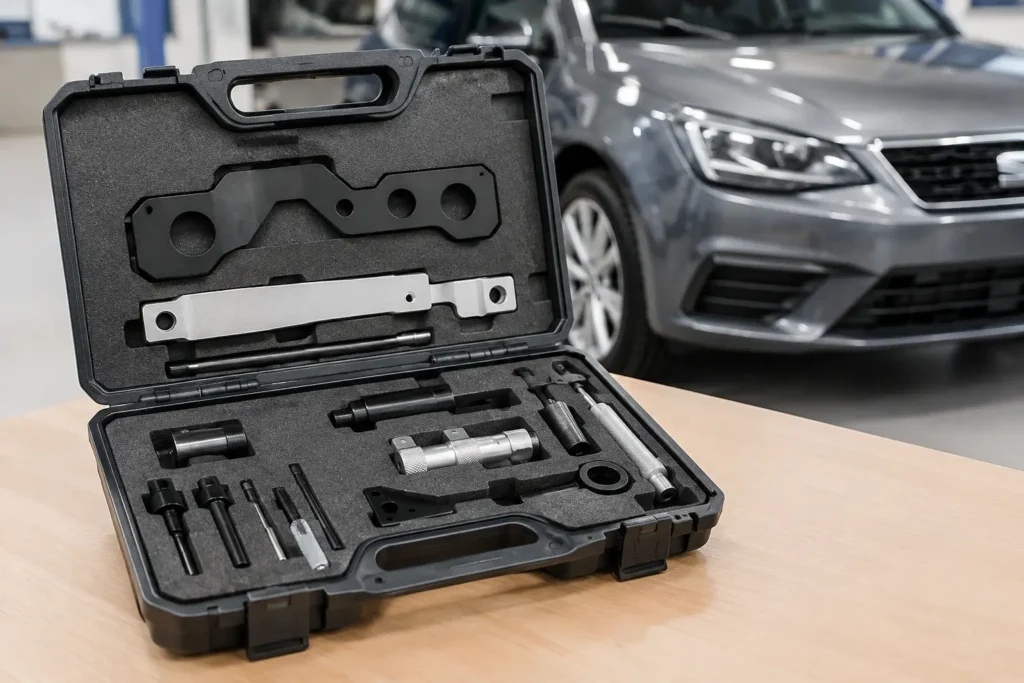
On compatible engines, the kit may be used to lock the crankshaft, locate the camshaft and assist with timing-belt tensioner setting. Exact contents and use vary by kit version, so the supplied component list should always be checked before booking the vehicle in. A pin that looks close enough is not close enough when it is controlling valve timing.
The practical benefit is simple. Purpose-made tools fit the intended locating points, reduce movement while fasteners are released and let the technician follow the manufacturer procedure with confidence. That is far safer than relying on paint marks, drill bits or homemade brackets.
US Pro Vag Engine Timing Tool kit Petrol & Diesel Audi, Seat, Skoda & VW
Why engine-code checking comes before buying
VAG diesel ranges cover many generations and engine families. Two vehicles that look almost identical from the outside can have different timing arrangements underneath the covers. A 1.9 TDI from one production period may require different locking points or setting tools from another 1.9 TDI, while common-rail 2.0 TDI engines can vary again.
Before selecting a US Pro VAG diesel timing tool kit for SEAT, Skoda and Volkswagen, confirm the vehicle registration details, engine size, engine code and build year. The engine code is the key reference. It is commonly found on the vehicle data sticker, service documentation or identification label, depending on model and age.
Do not buy based on badge alone. A Volkswagen Golf, Skoda Octavia or SEAT Leon may share engines across certain years, but shared branding does not guarantee identical timing-tool requirements. Checking fitment first avoids workshop delays, return hassles and the far greater cost of using an incorrect tool.
Check the kit contents against the job
A timing kit can include several items, and each has a specific job. Look for a clear contents list and compare it with the vehicle repair procedure. Confirm whether the kit covers the required crankshaft locking pin, camshaft locking plate or bar, tensioner retaining pin and any pump or auxiliary setting tools relevant to the engine.
It also pays to consider what work is actually being carried out. For a routine belt and water-pump replacement, the required tools may differ from those needed after cylinder-head removal. If a procedure calls for a holding tool as well as a locking tool, use both. Locking an engine in position does not automatically mean a sprocket can be safely loosened without the correct counterhold method.
A practical approach to timing-belt work
Dedicated timing tools improve accuracy, but they do not replace the repair information, torque data or workshop discipline needed for the job. Timing work should begin only when the engine is cold, the vehicle is secure and the correct replacement parts are on hand.
Start by reading the manufacturer procedure for the exact engine code. Remove covers and access parts carefully, then turn the engine only in the stated direction until it reaches the specified timing position. Fit the appropriate locking tools without forcing them. If a pin will not enter freely when the engine is at the stated position, stop and recheck the procedure rather than turning the crankshaft against resistance.
Once locked, release and remove the old belt components as directed. Replace the belt, tensioner, idlers and water pump where required by the service schedule or repair instruction. A low-cost shortcut on belt-driven components can undo the value of a correctly timed engine.
After tensioning the new belt, tighten all fasteners to the correct specification. Remove the locking tools only when the procedure says to do so. Rotate the engine manually through the required number of revolutions, return it to the timing position and check that the locking tools re-enter as specified. This verification stage takes minutes and can prevent serious damage at start-up.
Common mistakes that cost garages time
The biggest error is treating timing marks as a substitute for locking tools. Paint marks can be useful as a visual reference, but they cannot confirm the correct relationship between crankshaft, camshaft and other timed components after tension changes or sprocket movement.
Another common issue is forcing a tool into place. Timing pins and plates are locating tools, not levers. If alignment is wrong, forcing the tool can damage the engine, the tool or both. Correct the engine position and investigate why it does not line up.
Fastener reuse is another area where the workshop manual matters. Many modern engines use torque-to-yield bolts for mounts, sprockets or tensioner components. These may require replacement rather than refitting. The timing kit holds positions; it does not remove the need for new bolts, correct torque settings or an accurate torque wrench.
Finally, do not assume an engine is safe simply because it turns by hand once. The final locking-tool check, belt-tension check and visual inspection are essential. Look for trapped wiring, loose covers, coolant leaks around a replacement pump and missing fasteners before the engine is started.
Built for regular workshop use
For garages handling VAG servicing regularly, a dedicated kit earns its place quickly. It keeps the correct timing tools together, speeds up preparation and helps avoid the hunt through a mixed drawer of pins and adaptors. For a serious home mechanic, it provides a more controlled route to a job that should never be approached casually.
The value is not in having the largest case of tools. It is in having the right tools for the engine in front of you. Affordable professional-grade equipment should still have clear application information, solid construction and a sensible storage case so pieces do not disappear between jobs.
Irish Tools Shop focuses on practical workshop equipment that delivers dependable service without premium distributor pricing. When a timing job is due, buying the right kit before the vehicle is stripped is the sensible way to keep the ramp, bay or driveway moving.
Care and storage between jobs
Clean the tools after use, especially if they have been exposed to oil, coolant or brake cleaner. Wipe them dry and return every piece to its marked position in the case. Bent pins, worn locating faces or missing components can compromise the next job, so inspect the kit before each use.
Store timing tools separately from general loose tools. A hardened locking pin rolling around in a toolbox can be damaged or mistaken for an ordinary punch. Keeping the kit complete, clean and identified by application protects the investment and saves valuable time when the next SEAT, Skoda or Volkswagen diesel arrives for service.
The right timing kit will not make a complex repair automatic, but it gives a competent technician the control needed to carry out the work properly. Check the engine code, match the kit to the procedure and never rush the final timing verification.
