





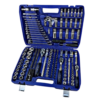



Getting the timing wrong on a VAG petrol engine is not a small mistake. One tooth out can leave you with poor running, warning lights, hard starting or, in the worst case, expensive internal engine damage. A US Pro VAG timing set for 1.8 / 2.0 litre FSI TFSI engines gives the technician the locking tools needed to hold key engine components in their correct positions while timing work is carried out.
For garages, mobile mechanics and serious DIY users, this is the sort of kit that earns its space quickly. Timing belt, chain, camshaft and cylinder-head work cannot be done properly by relying on paint marks, guesswork or improvised pins. Correct locking tools save time, reduce risk and give you a repeatable method when the vehicle is ready to go back to the customer.
US Pro Vag Engine Timing Tool kit Petrol & Diesel Audi, Seat, Skoda & VW
What a VAG timing set is designed to do
A vehicle-specific timing tool set is not a replacement for the manufacturer repair procedure. It is there to support it. On suitable 1.8 and 2.0 litre FSI and TFSI applications, the tools are used to lock or locate the crankshaft and camshafts at the required timing position while components are removed, replaced or adjusted.
That matters because these engines use tight tolerances and variable valve timing arrangements that must be set accurately. When the timing belt or chain system is released, the camshafts can move under valve spring pressure. The crankshaft can move too. Without the correct locking arrangement, putting everything back in the right position becomes far harder than it needs to be.
A proper timing set helps keep the job controlled. It allows the technician to follow the timing sequence, fit replacement parts, tension the system as specified, rotate the engine by hand where required and recheck the timing positions before final assembly.
US PRO VAG Diesel Timing Tool Kit For Seat, Skoda & Volkswagen
Check engine code before buying or starting
The words FSI and TFSI cover a wide range of VAG petrol engines across Audi, Volkswagen, SEAT and Škoda models. They are not enough on their own to confirm compatibility. Engine generations, cylinder-head designs, timing drive layouts and locking points can differ, sometimes within the same vehicle model.
Before choosing a US Pro VAG timing set for 1.8/2.0 litre FSI TFSI engines, identify the vehicle’s engine code and check the exact application information supplied with the kit. The engine code is normally shown on the vehicle data sticker, service documentation or engine identification label. Registration look-up information can be useful, but it should not be the only check when timing components are involved.
This step is especially important where an engine has been replaced previously, modified, or built near a model-year change. A timing tool that looks close is not necessarily the right tool. Forcing a locking plate or pin into position is a warning sign, not a workaround.
Why engine family makes a difference
Some 1.8 and 2.0 litre VAG petrol engines use timing belts, while others use timing chains, or a combination of drives depending on the engine family. Certain engines also require additional tools for tasks such as holding a camshaft adjuster, setting the tensioner or checking a balance shaft arrangement.
A timing set may cover the core locking requirements for listed engines, but no workshop should assume it covers every special tool needed for every repair. Check the planned job before stripping the engine down. If you are replacing a full timing system, inspect whether extra holding, counterhold or tensioning tools are specified in the repair data.
VAG Camshaft & Crankshaft Timing Tool Kit EA888 1.8, 2.0 TSI TFSI Engines | Suits Audi & VW
When this timing tool set earns its keep
Timing tools are most commonly needed during timing belt or timing chain replacement, but their use goes beyond scheduled servicing. They are also relevant when removing a cylinder head, rebuilding an engine, replacing camshafts, carrying out certain oil seal repairs or diagnosing suspected timing correlation faults.
On a busy ramp, having the correct kit available stops a simple repair turning into a delay. It is also better for the customer. Accurate timing reduces the chance of a comeback caused by rough idle, reduced power or fault codes after the work has been completed.
For a home mechanic, the value is just as clear. These are not jobs where saving money by improvising makes sense. A purpose-made timing kit is a far more affordable option than correcting valve damage after an engine has been turned over with the timing set incorrectly.
US Pro VAG Timing Tool Set | 2006 – 2013 VAG Series TSI TFSI 1.8L & 2.0 Litre
Use the kit correctly, not just carefully
Professional timing tools make the process safer, but they only work when used with the correct procedure. Start with reliable vehicle-specific technical data and make sure the engine is at the specified timing position before fitting any locks.
Do not use the locking tools to hold against high tightening torque unless the repair instructions specifically state that they can be used that way. Locking pins and plates are positioning tools. Applying excessive force to them can bend a component, damage the tool or produce a false timing position. Use the correct counterhold method for crankshaft pulley bolts, camshaft bolts and other high-torque fixings.
It is also worth following a clean, disciplined routine. Keep removed bolts in order, inspect the old belt or chain components for clues to wider problems, and replace single-use bolts where specified. If an oil leak has contaminated a belt, or a worn tensioner has allowed a chain to rattle, simply fitting new parts without dealing with the cause invites another failure.
After the timing components are installed and tensioned, remove the locking tools as directed and turn the engine by hand through the required number of revolutions. Never force it. Then return it to the timing position and confirm that the locking tools align correctly again. This final check takes minutes and can prevent a costly mistake.
What to inspect while the engine is apart
Timing work is labour-intensive, so it makes commercial sense to inspect related components while access is good. On belt-driven applications, look at the water pump, tensioner, idler rollers, auxiliary belt and seals. On chain-driven engines, inspect guides, tensioners, sprockets and any signs of excessive chain stretch or damaged guide material.
Pay attention to oil condition and service history as well. Variable valve timing components and hydraulic chain tensioners depend on clean oil and correct oil pressure. Sludge, incorrect oil grade or extended service intervals can contribute to timing-related issues that a new chain alone will not cure.
Where fault codes or running problems prompted the repair, clear the codes only after the mechanical work has been checked. A scan tool, live data review and proper road test are sensible final steps. Mechanical timing should be verified first, then electronic adaptation or diagnosis can follow if needed.
Built for workshop value
A timing set is a specialist purchase, but it should still make financial sense. For independent garages, a dependable kit avoids waiting for borrowed equipment or paying main-dealer tool prices for a job that needs to be completed now. For serious DIY work, owning the correct tools means the repair can be approached properly rather than compromised from the start.
The US Pro range suits buyers looking for practical workshop equipment at a sensible price. Like any specialist tool, it should be kept clean, stored in its case and inspected before use. Bent pins, damaged locating faces or missing pieces can compromise the job, so replace damaged tooling rather than taking chances with it.
Irish Tools Shop focuses on affordable, reliable equipment for working garages and hands-on mechanics. Whether you are adding timing tools to a growing workshop or replacing an old incomplete kit, checking compatibility first ensures you buy for the engine in front of you, not just the badge on the bonnet.
Accurate timing is one of the foundations of a proper engine repair. Take the extra time to verify the engine code, use the right procedure and lock everything in position correctly – the job will be faster, cleaner and far less likely to return on a recovery lorry.
