






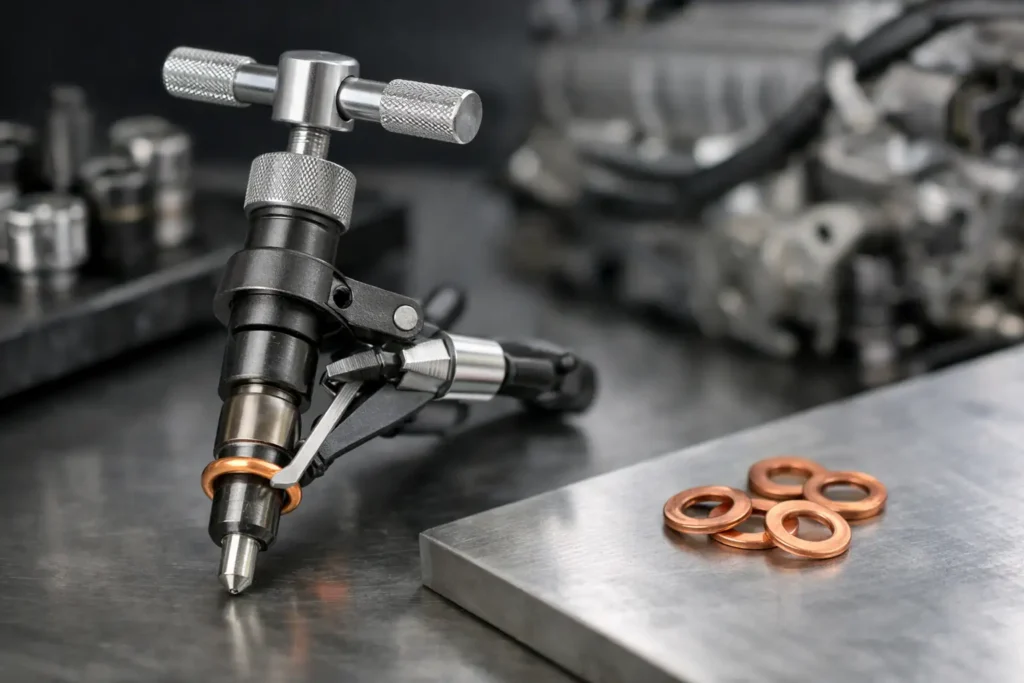
A diesel injector can come out cleanly and still leave the real problem behind: its old copper sealing washer buried in the injector seat. A US Pro diesel injector copper washer seal puller / extractor is made for that exact job, giving mechanics a controlled way to remove the washer without attacking the cylinder head with picks, screwdrivers or improvised hooks.
For garages and serious home mechanics, this is a small specialist tool that can save a costly repair. Old injector washers often bake themselves into place after thousands of heat cycles. If the seat is damaged during removal, the replacement washer may not seal properly, and the job can quickly turn into injector blow-by, repeat labour and unnecessary head work.
Why injector copper washers need the right extractor
The copper washer beneath a diesel injector is not just a spacer. It forms the combustion seal between the injector and cylinder head. Once clamped down, the soft copper conforms to the seat. Heat, carbon deposits and combustion pressure can then make it difficult to lift out, particularly on high-mileage commercial vehicles and engines that have suffered injector seal leakage.
The usual temptation is to dig around the washer with a small screwdriver or a sharp pick. That can work when the seal is loose and accessible, but it is not a controlled method. One slip can score the injector bore or the sealing face. A damaged seat may need cleaning, cutting or machining before the engine can be rebuilt with confidence.
A proper puller or extractor grips the washer from the centre and draws it upwards. The aim is simple: remove the old seal while keeping force away from the critical sealing surface. It is quicker, cleaner and more repeatable when injector work is part of normal workshop output.
What a US Pro diesel injector copper washer seal puller does
This type of tool is generally designed around a slim extraction shaft and a threaded or expanding working end. The extractor is guided into the centre of the copper washer, where it gains purchase before the washer is pulled free. Its narrow form matters because injector recesses are deep, restricted areas and access is often poor around pipes, wiring and rocker gear.
The key benefit is precision. Instead of levering against the alloy head, the technician applies straight pulling force through the tool. That reduces the chance of gouging the bore and keeps the work area far tidier than repeated probing with hand tools.
It is also useful where the washer has broken up, become carboned in or sits below the top of the injector bore. In those cases, a conventional magnetic pick-up tool will not help because copper is non-magnetic. A dedicated washer extractor gives you a positive method rather than trial and error.
That said, no puller will solve every injector problem on its own. If the injector itself is seized in the head, an injector removal tool or puller system may be required first. The copper washer extractor is for the seal left behind after the injector has been removed, not for pulling out a stuck injector body.
Before using an injector washer extractor
Cleanliness matters as much as the extraction tool. Before starting, remove loose carbon and dirt from around the injector recess. Debris that falls into the cylinder or remains on the seat can cause problems when the new washer is fitted.
First, confirm that the old washer is actually still in the bore. On some engines it may remain on the injector tip, while on others it stays in the head. Use a torch and inspect the seat carefully. A washer can be thin, blackened and easy to mistake for part of the recess, especially after a long period of blow-by.
Make sure the engine is cold enough to work on safely. Remove any loose contamination with suitable vacuum extraction where possible, rather than blowing it deeper into the engine. If there is heavy carbon build-up, deal with that carefully before fitting the puller. Forcing any tool through hard carbon can affect its grip on the washer.
How to remove a copper injector seal cleanly
Start by positioning the extractor centrally in the washer. Do not force it sideways against the injector seat. The working end needs to engage the copper, not cut into the aluminium around it.
Turn or seat the extractor according to its design until it has a firm bite. Apply steady, straight pulling force. If the washer does not move immediately, avoid aggressive twisting and levering. A little penetrating fluid around the upper bore area and a patient, controlled pull can be more effective than brute force.
Once removed, inspect the washer to make sure it has come out in one piece. If part of it remains in the bore, do not fit a new washer over it. Double-stacking seals will alter injector height and can prevent proper clamping. Reinspect with a torch before moving on.
The injector seat should then be cleaned with the correct seat cleaning or reaming tool for the engine. The goal is not to remove metal unnecessarily. It is to clear carbon and leave a clean, even surface for the new copper washer. Finish by removing all debris before installing the injector with a new seal and tightening the clamp bolt to the manufacturer’s specified torque and angle procedure.
Choosing the right tool for the workshop
A copper washer extractor is inexpensive compared with the time lost on a difficult injector job, but the right choice still depends on the engines you work on. Check the extractor’s working diameter, length and intended application. A compact tool is useful for common passenger diesel engines, while a broader workshop range may be needed if you regularly repair vans, 4x4s and light commercial vehicles.
Build quality is worth looking at. The working tip must be hard enough to bite reliably into a used copper washer without rounding off after repeated jobs. A decent shaft and handle also make it easier to keep the pull straight in a deep injector bore. Cheap, soft extractors can become a false economy if they slip and turn a straightforward seal replacement into a longer repair.
It also pays to think in terms of the full injector service kit. The extractor handles one stage of the job. A well-equipped technician may also need injector pullers, seat cleaning cutters, bore brushes, compression leak test equipment, torque tools and replacement seals. Buying tools that cover the jobs you actually see is better value than filling a drawer with one-use gadgets.
Common mistakes that create repeat repairs
The most common error is assuming the old washer has been removed when it has not. Always inspect the bore and compare the removed part with the replacement seal. Another frequent problem is fitting the new washer onto a dirty or uneven seat. A new seal cannot compensate for carbon damage underneath it.
Avoid reusing copper washers. They are designed to crush and seal once. Reusing an old washer may appear to save a few pounds, but it risks combustion gases escaping past the injector. Typical signs include chuffing noises, diesel fumes, black carbon around the injector and a smell of exhaust in the engine bay.
Do not overwork the seat with an abrasive tool either. Cleaning is necessary; removing material without reason is not. If the sealing face is visibly pitted, burnt or damaged, assess whether a correctly sized seat cutter can restore it. If not, the repair may need more than a new washer and extractor.
A small tool that protects an expensive engine
For routine diesel maintenance, a US Pro injector copper washer seal puller is the sort of tool that earns its place quickly. It helps protect cylinder heads, reduces removal time and gives a professional result on a job where improvised tools often cause the damage.
Irish Tools Shop focuses on affordable, reliable workshop equipment for mechanics who need tools ready when the job is on the ramp. Keep a dedicated copper washer extractor with your injector service tools, replace every seal properly and take the extra minute to inspect the seat. That is usually the difference between a clean repair and a customer returning with the same fault.
