







A brake job can stop a ramp, tie up a bay and cost valuable time when one basic tool is missing. This brake service kit guide sets out what a working kit should contain, which features matter and where buying the cheapest option can create more work than it saves. Whether you service customer cars every day or maintain your own vehicle on the drive, the right tools make piston retraction, caliper work and pad replacement cleaner, quicker and more controlled.
What a brake service kit should do
A proper brake service kit is not one single tool. It is a group of purpose-built items that lets you remove, inspect and refit braking components without forcing parts, damaging seals or rounding fasteners. The best choice depends on the vehicles you work on, but a useful kit should cover the common jobs: retracting caliper pistons, dealing with retaining clips and pins, cleaning contact points, measuring wear and tightening bolts correctly.
For a busy garage, versatility is usually the priority. A kit that works across a broad range of European and Japanese vehicles earns its place quickly. For a serious DIY user, it can make sense to buy a solid piston wind-back kit alongside a quality socket set, brake spanners and a torque wrench, rather than paying for adapters that will never be used.
The saving is not only in the purchase price. The correct tool reduces the risk of splitting a dust boot, chewing up a piston face or fighting with a seized slider for half an hour. That is the difference between a straightforward service and an avoidable repair.
Brake service kit guide: the tools worth having
Brake piston wind-back tool and adapters
This is the centrepiece of most brake kits. Rear calipers with an integrated handbrake mechanism often need the piston to be rotated while pressure is applied. Trying to force these pistons straight back with a clamp can damage the internal adjuster and leave the handbrake working poorly.
Choose a wind-back kit with a strong threaded press, left- and right-hand drive capability, and clearly marked adapters. Different manufacturers use different piston faces, so the adapter needs to engage positively with the slots, pins or recesses in the piston. Loose-fitting plates slip under load and can mark the piston or tear the rubber boot.
Not every rear caliper winds back. Some electronic parking brake systems require the motor to be placed in service mode with suitable diagnostic equipment, while others have different procedures. Check the vehicle data before starting. A universal wind-back kit is highly useful, but it is not a substitute for the correct procedure.
Caliper rewind clamp and piston press
A piston press or rewind clamp is ideal for front calipers and rear calipers that retract directly. Look for a wide, stable contact plate and a smooth screw thread. A narrow clamp can load the piston unevenly, especially on larger multi-piston calipers.
Open the brake fluid reservoir cap as required by the vehicle procedure and keep a close eye on the fluid level while retracting pistons. Fluid may rise in the reservoir after pads have worn down. If it overflows onto painted surfaces, deal with it immediately and safely. Never rush piston retraction – slow, even pressure gives you time to spot a sticking piston or damaged seal.
Brake pipe spanners
Brake pipe unions are easily rounded with an ordinary open-ended spanner. A good brake pipe spanner grips more sides of the fitting while still allowing it to pass over the pipe. This matters when replacing a hose, caliper or corroded section of pipework.
Buy the correct sizes for the vehicles in your workshop and use a well-made, close-fitting tool. If an old union is badly corroded, clean it first and use penetrating fluid where appropriate. Excess force on a seized fitting can twist the pipe and turn a small repair into a larger job.
Bleeding equipment
Any time the hydraulic system is opened, brake bleeding may be required. A pressure bleeder can save time in a professional setting, giving a more consistent flow than pedal pumping and allowing one technician to work efficiently. A vacuum bleeder is useful too, although it can sometimes draw air around a bleed nipple thread and make the fluid appear bubbly.
For occasional work, a basic one-person bleed bottle with a non-return valve can be enough. The important point is to use fresh brake fluid of the specified type, keep the master cylinder reservoir from running low and follow the manufacturer’s bleed sequence. Old fluid, mixed specifications and careless bleeding are false economies on a safety-critical system.
Hooks, picks and wire brushes
Small tools make a big difference to brake work. A sealable pick set helps remove clips, springs and stubborn pad wear indicators. Hooks are useful for lifting calipers clear without allowing them to hang on the flexible hose. Wire brushes and abrasive cleaning tools help remove corrosion from pad carriers and hub faces.
Use cleaning tools with restraint. Pad ears need a clean, flat slide surface, but do not grind material away unnecessarily. Likewise, a hub face must be free of rust scale so the disc sits correctly, but aggressive damage can create run-out problems. Clean, inspect and refit with care.
Torque wrench and suitable sockets
Caliper carrier bolts, guide pin bolts and wheel bolts all have specified torque settings. A reliable torque wrench is not optional if you want repeatable work. Use impact sockets where an impact wrench is needed for removal, but apply final torque with a calibrated torque wrench.
Do not guess tightening figures because a bolt “feels right”. Over-tightening can stretch fasteners or damage threads, while under-tightening can lead to serious failure. Vehicle-specific specifications always take priority over general workshop habit.
Choosing a kit for your type of work
For home servicing, start with the jobs you actually do. If you maintain one or two cars, identify whether their rear pistons wind in, push in or use an electronic parking brake. A dependable wind-back kit, piston press, brake pipe spanners, cleaning brushes and torque wrench will handle a large share of routine pad and disc work.
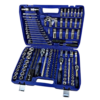
Independent garages need broader coverage and tougher construction. Choose steel adapter plates rather than lightweight pressed pieces, a heavy-duty threaded press, and organised storage that prevents adapters going missing. A moulded carry case is not just cosmetic. It keeps the correct plates identifiable, protects threads and speeds up the next job.
Mobile mechanics should also consider size and transport. A large kit with every adapter is useful, but only if it stays complete and can be carried easily. Pair it with compact bleeding equipment, good lighting and secure axle stands. Brake work should never be carried out with a vehicle supported only by a jack.
Build quality: where value matters most
Affordable tools should still be built for the load placed on them. On a piston wind-back tool, inspect the quality of the thread, thrust bearing and reaction plate. A coarse, rough thread makes controlled pressure difficult. On spanners, look for accurate jaw sizing and a finish that resists workshop corrosion. On a torque wrench, choose a range that covers the fasteners you use most often rather than selecting one simply because it is cheap.
A budget kit is a good buy when it has the right adapters, positive engagement and solid construction for occasional or regular use. It is a poor buy when the press bends, the adapters do not fit common pistons or the case fails after a few trips in the van. Buy for the workload, not just the sticker price.
Irish Tools Shop focuses on affordable, reliable workshop equipment for mechanics and serious DIY users who need tools that work hard without premium distributor pricing. When comparing brake tools, check the specification, adapter coverage and included accessories rather than relying on product photographs alone.
Common mistakes that damage brakes or waste time
The most common mistake is forcing a piston back before checking its operating type. A wind-back piston needs rotation; an electronic parking brake may need service mode; a seized piston may need diagnosis rather than more leverage. If the piston will not move smoothly, stop and inspect the caliper, slider pins, hose condition and dust seal.
Another mistake is contaminating friction surfaces. Keep grease, oil and brake fluid away from pads and discs. Use the correct high-temperature brake lubricant sparingly on approved contact points only, never across the face of a pad or disc. Replace any component that has been heavily contaminated rather than hoping a quick clean will solve it.
Finally, do not treat a warning light, spongy pedal or uneven braking as a routine pad-change issue. These symptoms can point to air in the system, a sticking caliper, worn hoses, hydraulic faults or electronic problems. The kit helps you perform the work correctly, but it cannot replace proper fault-finding.
Keep the kit ready for the next job
Clean adapters and press threads after use, especially if brake dust and old fluid have built up. Return every piece to its marked position, lightly protect bare steel parts from corrosion and replace damaged adapters before they fail under pressure. Check the torque wrench is stored at its lowest setting if its manufacturer specifies this.
The right brake service kit pays for itself through faster work, fewer damaged components and more consistent results. Choose the coverage your vehicles demand, use each tool for its intended job and never compromise on safe support, correct torque or the final brake pedal check before the vehicle leaves the workshop.
