






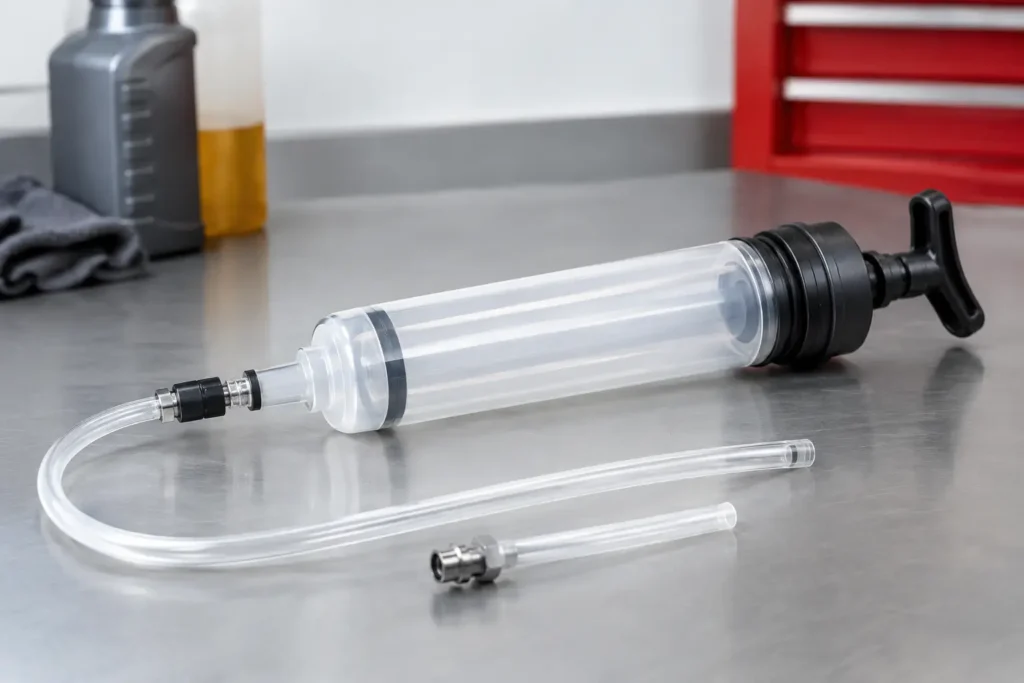
A dark, gritty fluid sample can tell you more in seconds than a quick look around the engine bay. The US Pro 200ml oil & brake fluid inspection syringe gives mechanics and serious DIY users a straightforward way to draw off a controlled sample from reservoirs, housings and tight service areas without making a mess of the job.
For a small workshop tool, it earns its place quickly. Checking fluid condition before authorising work, tracing suspected contamination, removing excess fluid after a repair, or taking a sample from an awkward point are routine jobs. A dedicated 200ml syringe keeps those jobs cleaner, quicker and more controlled than using improvised bottles, funnels or rags.
What a 200ml inspection syringe is for
An inspection syringe is designed for drawing out liquid, not replacing proper workshop equipment for every fluid-service task. Its practical value is precision. You can take a visible sample of engine oil, gearbox oil, differential oil, power steering fluid or brake fluid where access permits, then assess its colour, smell, level and condition before deciding the next step.
The 200ml capacity is a useful middle ground. It holds enough fluid for inspection or minor removal without becoming bulky or difficult to control one-handed. For most diagnostic work, there is no need to extract litres of fluid. You need a clean sample and a tool that lets you work accurately around expensive components, painted panels and finished workshop floors.
It is also handy after servicing. Overfilled reservoirs are common after topping up, especially where a vehicle is not level or where fluid has been added gradually during fault-finding. Drawing out a small amount is far safer than trying to tip fluid from the reservoir or disturbing fittings that do not need to be opened.
Why fluid inspection should not be skipped
Fluids are working components, not just maintenance items. Their condition can point towards wear, overheating, water ingress, incorrect previous servicing or a developing failure. Clean-looking oil does not guarantee a healthy system, but obvious changes often justify a closer inspection before a minor issue becomes a costly repair.
With engine and transmission oil, look for metallic sparkle, thick sludge, a burnt smell or a milky appearance. These signs need context: short journeys can cause moisture build-up, while a recently rebuilt engine may show a small amount of running-in debris. The point is not to diagnose every fault from one sample. It is to spot when a system needs further checks.
Brake fluid deserves even more care. It absorbs moisture over time, which can reduce its boiling performance and contribute to corrosion inside the braking system. A sample that is very dark or visibly contaminated is a clear prompt to check the service history and test the fluid properly. Do not treat colour alone as a pass-or-fail test, and do not return removed brake fluid to the reservoir.
US Pro 200ml oil & brake fluid inspection syringe in use
Before use, make sure the syringe is clean, dry and suitable for the fluid being handled. Cross-contamination is avoidable. A syringe used for dirty engine oil should not later be used on a brake fluid reservoir without thorough cleaning and confirmation that no residue remains. In a professional setting, keeping separate tools for oil-based fluids and brake fluid is the sensible approach.
Park the vehicle securely on level ground where possible, follow the manufacturer’s service procedure and allow hot components to cool. Wear suitable gloves and eye protection. Brake fluid can damage paintwork, while hot oil can cause burns. Keep absorbent material close by and deal with any spill immediately rather than letting it spread across a workbench or floor.
Draw the plunger back slowly. Pulling too hard can introduce air, splash fluid or make it harder to control the sample. Once you have taken the amount required, transfer it into an appropriate waste container or sample vessel. Never dispose of used oil or brake fluid down drains, onto the ground or in general waste. These fluids require proper disposal through an approved facility.
For brake work, the syringe is especially useful for removing a small amount from the master cylinder reservoir before pushing caliper pistons back. This reduces the risk of an overfilled reservoir as fluid returns to the system. However, it does not replace the correct brake bleeding equipment, a pressure bleeder or the manufacturer’s specified procedure when the system needs flushing or air removal.
Choosing the right tool for the job
A 200ml syringe is ideal when control matters more than volume. If you are emptying a large sump, gearbox or cooling system, choose a purpose-built extractor or drain arrangement instead. Using a small syringe for a large-volume task wastes time and increases the chance of spills.
For inspection and tidy fluid removal, consider access first. The opening must be large enough for the syringe or its supplied attachment, and the route to the fluid must be clear. Do not force a tube or nozzle into a reservoir, filler neck or narrow passage. Plastic fragments, damaged seals and disturbed debris can turn a simple check into extra work.
It also pays to consider the fluid itself. Oil, brake fluid, coolant, fuel and solvents behave differently and can affect materials differently. Check the tool instructions and vehicle information before use. If there is any doubt about compatibility, use a dedicated tool designed for that fluid rather than taking a chance with a general-purpose syringe.
A small tool that supports better workshop standards
The best workshop tools are not always the largest or most expensive. A reliable inspection syringe saves time because it removes the awkward part of a small job: getting a sample or extracting excess fluid without unnecessary dismantling. It also helps keep the work area presentable, which matters whether you are working on a customer vehicle or your own pride and joy.
For garages, having a simple fluid-sampling tool available makes inspections easier to document and explain. Showing a customer a contaminated sample is more useful than making a vague recommendation. For DIY users, it brings the same advantage: you can inspect carefully and make informed decisions instead of guessing from a dipstick or reservoir cap.
Irish Tools Shop supplies practical workshop equipment for jobs that need doing properly without inflated trade-counter prices. A compact item such as this fits naturally alongside brake service tools, oil drain equipment, absorbents and the everyday hand tools that keep a garage moving.
Care, storage and safe handling
Clean the syringe after every use in line with the fluid and tool guidance, then store it where dirt cannot enter the barrel or nozzle. Do not leave it full of fluid between jobs. Residue can harden, attack seals, contaminate the next sample and make the plunger difficult to operate.
Label it if it is reserved for a particular fluid type. This takes seconds and prevents a costly mix-up later. Keep it out of direct heat and away from children, and inspect the barrel, plunger and any attachments before use. If the tool is cracked, swollen, stiff or leaking, replace it rather than risking fluid on brakes, paintwork or the workshop floor.
A US Pro 200ml oil & brake fluid inspection syringe will not diagnose a fault on its own, but it gives you a clean, controlled starting point. Keep one ready in the service bay, use it with the right safety habits, and small fluid checks become faster jobs with fewer surprises.
