










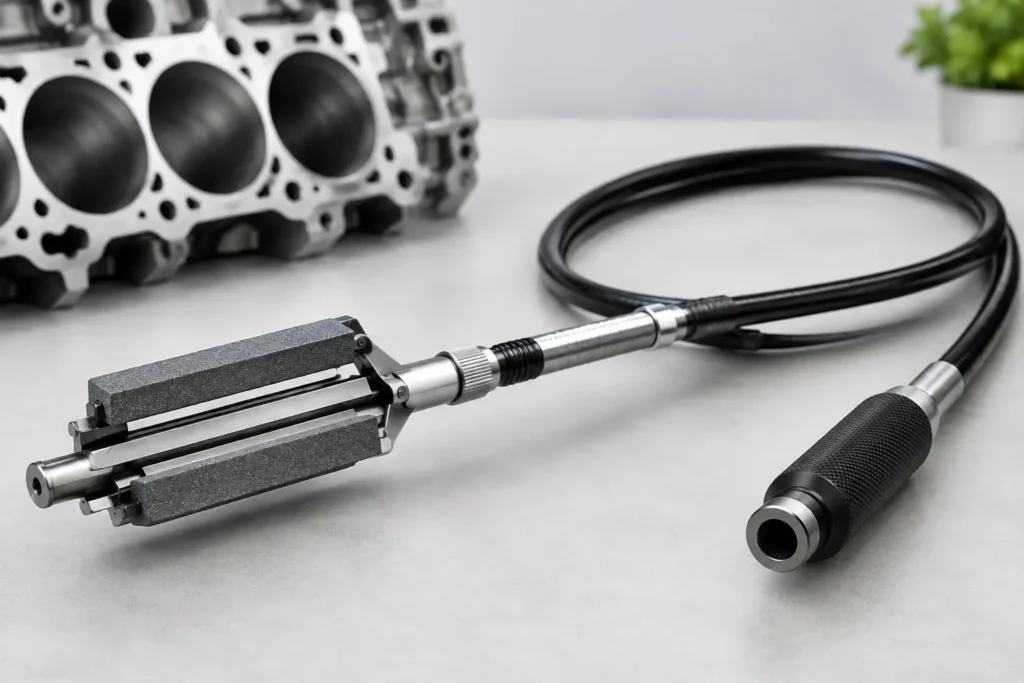
A cylinder bore can look clean and still be wrong for a rebuild. Glazing, light scoring and an uneven surface can stop new rings bedding in properly, leading to poor compression, oil consumption and a job that has to come apart again. A cylinder honing tool 3 x 75mm stone with flexible shaft gives mechanics and serious DIY users a practical way to refresh the bore surface with controlled abrasive contact.
This is a workshop finishing tool, not a shortcut for repairing major cylinder damage. Used with the right lubricant, speed and inspection process, it can help produce the cross-hatch finish piston rings need. Used carelessly, it can remove too much material, taper the bore or leave abrasive residue behind. The difference comes down to preparation and control.
What a 3 x 75mm stone honing tool does
The three-stone layout applies balanced pressure around the cylinder wall. As the tool rotates and moves steadily up and down the bore, the stones cut a fine pattern into the surface. That pattern retains a small amount of oil during initial running, helping the rings bed in instead of skating across a polished wall.
The 75mm stones provide a useful contact length for general engine work, while the flexible shaft keeps the drill or drive unit away from the bore opening. That can make the tool easier to control in confined engine-bay or bench-work situations, particularly where a rigid extension would be awkward. It also reduces the temptation to hold a heavy drill at an angle over the block.
A flexible shaft is not a substitute for alignment. The hone must still enter the cylinder squarely and remain moving throughout the cut. Its purpose is practical access and handling, not automatic precision.
When cylinder honing is the right job
Honing is normally carried out during an engine refresh after the piston and rings have been removed. It is most useful where measurements show the bore remains within the engine manufacturer’s service limits, but the old surface is glazed or needs freshening before fitting new rings.
Typical suitable jobs include a light re-ring, a top-end rebuild where the cylinder condition has been checked, or preparation of a sound bore after deglazing and cleaning. It can also be part of a full rebuild, provided the machinist or technician has already confirmed bore size, roundness and taper.
It is not the correct answer for deep scores that catch a fingernail, cracked bores, heavy corrosion, excessive taper or an out-of-round cylinder. Those faults may require boring, sleeving or block replacement. An affordable honing tool saves money when it is used for its intended finishing work. It does not turn an undersized repair into a reliable engine.
Measure before you hone
A visual inspection is only the start. Check the bore at several heights and in more than one direction using suitable measuring equipment. Compare the readings with the vehicle manufacturer’s specifications for diameter, taper and ovality.
If the bore is already close to the maximum limit, even a light hone needs careful judgement. The aim is to condition the surface, not enlarge the cylinder. For a simple re-ring job, less cutting is usually better than chasing an aggressively bright finish.
Using a cylinder honing tool 3 x 75mm stone with flexible shaft
Start with a stripped, secure engine block or cylinder barrel. Protect surrounding areas from abrasive slurry and make sure there is enough room to run the drill at a controlled speed. Use proper honing oil or a suitable cutting lubricant rather than running the stones dry. Lubrication carries away abrasive particles, reduces heat and produces a more even finish.
Set the stone pressure lightly at first. The stones should contact the wall evenly, but they should not be forced hard into the bore. Excess pressure can cut too quickly, load the stones and make it difficult to maintain a consistent surface.
Insert the hone into the lubricated bore before starting the drill. Once running, move it smoothly up and down the full working length of the cylinder. The travel speed and drill speed work together to create the cross-hatch angle. There is no universal drill setting for every engine, stone grade or bore condition, so use the tool manufacturer’s guidance and check the finish frequently.
Do not allow the hone to sit spinning in one place. This can create a local low spot and spoil the bore geometry. Keep the motion continuous, bring the stones slightly beyond each end of the ring travel area where appropriate, then stop the drill only after the stones are fully clear or safely controlled according to the tool instructions.
Short passes followed by inspection are safer than one long, aggressive session. Wipe the bore, assess the pattern and re-measure if material removal is a concern. A clear, even cross-hatch is the target. A mirror-like bore generally means too little texture, while heavy grooves or an irregular pattern point to poor technique, unsuitable stones or excessive pressure.
Flexible shaft advantages in a working workshop
A flexible shaft makes this type of hone easier to use where access is limited. It allows the drill to sit at a more natural angle while the honing head stays centred in the cylinder. That is useful on engines still mounted on a stand, compact motorcycle cylinders and jobs where the workpiece cannot be positioned perfectly beneath a drill.
There is a trade-off. A flexible shaft can transmit less direct feel than a rigid drive, and it can be damaged by tight bends or careless handling. Keep the bend gradual, avoid crushing the shaft against sharp edges and inspect it before use. If the shaft starts to bind, vibrate heavily or run unevenly, stop work and find the cause rather than forcing it through the job.
For regular engine rebuilding, the best results come from treating the flexible shaft as a control aid. Keep the bore measured, use the correct abrasive grade and let the stones do the work at a steady pace.
Stone condition, grit and pressure matter
Honing stones are consumable items. Worn, glazed or clogged stones cut poorly and can leave an inconsistent finish. If the stones are loaded with residue, clean or dress them only in line with the product instructions. Replace them when their condition affects performance.
Stone grit should suit the intended ring and bore material. A finish that works for a conventional cast-iron bore and standard rings may not be right for every modern ring pack, coated cylinder or specialist performance build. Always check the engine data before selecting the process. Some plated, coated or aluminium cylinder bores require a different method entirely and should not be treated like a traditional cast-iron block.
Pressure is equally important. More pressure does not mean a better finish. It usually means faster wear, more heat and less control. Light, even contact with adequate lubricant gives the operator time to inspect the results before too much material is removed.
Cleaning after honing is non-negotiable
The honing job is not finished when the cross-hatch looks right. Abrasive particles and metallic residue remain in the cylinder wall, oil galleries and surrounding surfaces. Left behind, they can quickly damage new rings, pistons and bearings.
Wash the bore thoroughly with hot water and detergent, then scrub it with a clean brush. Dry it immediately to prevent surface rust and wipe it with a clean, lightly oiled cloth. Continue cleaning until the cloth comes away clean. Follow the engine manufacturer’s assembly requirements for final lubrication, ring fitting and running-in.
This stage takes time, but it is cheaper than replacing a freshly rebuilt engine. A clean bore protects the work you have just done.
A sensible choice for re-ring and rebuild work
For garages and capable home mechanics, a three-stone hone with 75mm stones and a flexible shaft is a useful, affordable addition to an engine-service tool kit. It is compact, practical and suited to controlled bore conditioning where measurements confirm honing is appropriate.
Irish Tools Shop customers often buy workshop tools to keep repair work moving without premium distributor pricing. The best value comes from choosing the correct tool for the job, using it carefully and avoiding the false economy of reusing worn rings or assembling an engine with an unprepared bore.
Take the extra few minutes to measure, lubricate, inspect and clean. A controlled honing finish gives new rings a fair start, and that is where a dependable rebuild begins.
