






A jack that will not fit under the sill, will not reach the lifting point or feels unstable under load is no bargain. In the trolley jack vs bottle jack decision, the right choice comes down to the vehicles you work on, the surface you work over and how often the jack earns its keep. Both types can lift serious weight, but they do very different jobs.
For regular servicing in a garage or driveway, a trolley jack is usually the more practical option. For compact storage, higher ground clearance and occasional heavy lifting, a bottle jack can offer excellent value. The key is to compare lifting range, not just the tonnage printed on the box.
4 Ton Low Profile Floor Trolley Jack with Quick Dual Pump & 3 Years Warranty
Trolley Jack vs Bottle Jack: The Main Difference
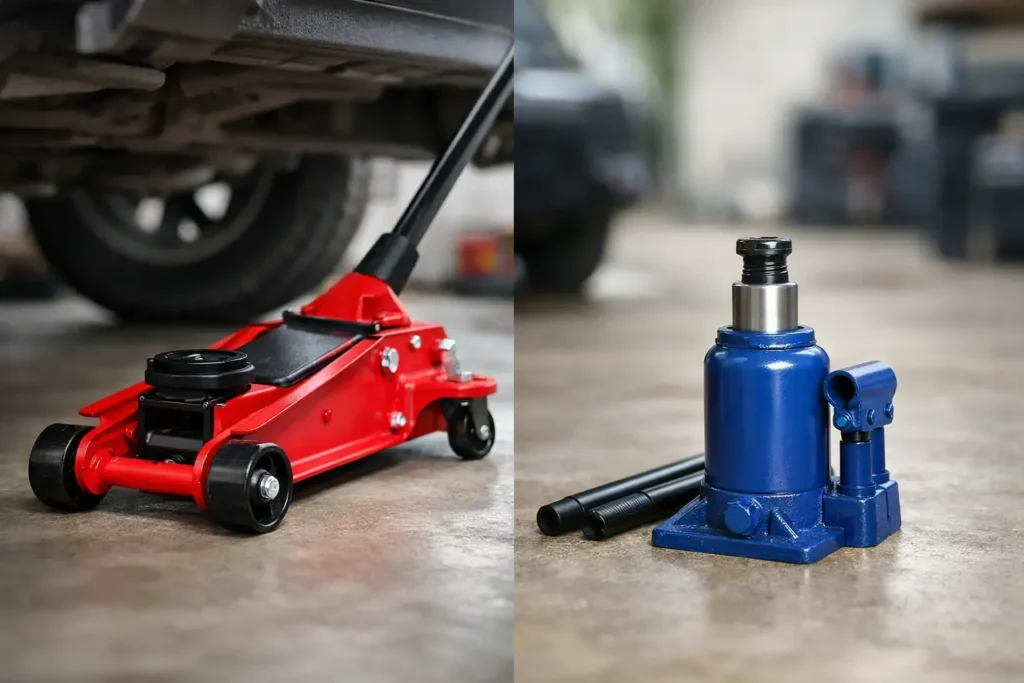
A trolley jack is a low, wheeled hydraulic jack with a long handle and a wide chassis. It rolls beneath the vehicle, lifts through a pivoting saddle and is designed for controlled work on a firm, level floor. It is the familiar choice in professional workshops because it is quick to position, stable under load and easy to pump repeatedly through the day.
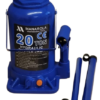
A bottle jack is a compact upright hydraulic ram. Its cylindrical body gives it the appearance of a bottle, hence the name. It has fewer moving parts, takes up little shelf or boot space and often provides a higher maximum lift for its size. It is a strong, affordable solution when access beneath the vehicle is not restricted.
Neither design is automatically better. A 2-tonne trolley jack may be ideal for a low saloon or hatchback, while a 4-tonne bottle jack may suit a 4×4, van or trailer with generous ground clearance. Choosing only by rated capacity can leave you with a jack that is physically unable to do the job.
Why a Trolley Jack Suits Garage Work
The biggest advantage of a trolley jack is its low entry height. Low-profile models are made to slide beneath lowered cars and modern vehicles with limited clearance. This matters when changing wheels, working on brakes or inspecting suspension components. A bottle jack often cannot get under the jacking point until the vehicle is already raised.
Trolley jacks also provide a broad wheelbase and a long handle. That makes them easier to pump with steady control, particularly when lifting vehicles frequently. As the vehicle rises, the jack can roll slightly with the suspension or lifting arc rather than fighting against it. On smooth concrete, this helps keep the lifting operation controlled.
The wider saddle is another practical benefit. It is easier to line up accurately with a reinforced sill point, front subframe or rear axle point. A quality rubber saddle pad can help protect painted seams and reduce the risk of metal-on-metal damage, provided it does not interfere with secure contact.
For a busy garage, speed matters. A dual-piston or quick-lift trolley jack can reach the contact point in fewer handle strokes, saving time over repeated tyre, brake and suspension jobs. The trade-off is size. Trolley jacks are heavier, bulkier and need dry storage. They are workshop equipment, not something most people want loose in a small car boot.
When a Bottle Jack Makes More Sense
A bottle jack delivers a great deal of lifting force from a compact body. It is easy to store in a van, lorry, trailer or home garage cupboard, and it is often less expensive than a comparable trolley jack. For users who need a capable jack without committing floor space to a larger unit, that is a clear advantage.
Its higher starting height can work well for vehicles with substantial clearance. Many 4x4s, agricultural trailers, plant equipment and commercial vehicles have suitable lifting points high enough for a bottle jack to fit underneath. A screw extension on some models can also close part of the gap before hydraulic lifting starts.
Bottle jacks are also useful where the jack needs to be carried to the job. If you maintain a trailer away from the workshop or keep emergency lifting equipment in a work vehicle, the compact format is hard to beat. It is a practical tool for occasional use, provided the ground is solid and level.
However, a bottle jack has a smaller footprint and must stand upright on a stable surface. Soft tarmac, gravel, mud and uneven paving are poor conditions for any jack, but especially for a narrow-base bottle jack. A proper load-spreading pad may be needed on firm ground, but it does not make unsafe terrain safe. Never improvise with loose timber, blocks or unstable materials.
Check Lift Range Before Load Capacity
The vehicle’s weight is only the first specification to check. You also need the minimum height, maximum height and the amount of lift required to get the wheel clear of the ground. A jack rated well above your vehicle’s weight can still be unsuitable if its closed height is too tall or its maximum lift is too short.
A low sports-style car may need a trolley jack with an entry height of around 75 to 90 mm. A standard family car usually has more room, but low-profile body kits and damaged tyres can reduce access quickly. For taller vehicles, a bottle jack may have the reach, although a high-lift trolley jack can offer better stability for frequent servicing.
Consider where you will lift from as well. The designated sill points are often low, while axle casings or chassis points may be higher. Consult the vehicle handbook before lifting. Modern electric and hybrid vehicles can have protected battery structures underneath, so guessing at a lifting point is not acceptable.
Stability, Surface and Safe Working Practice
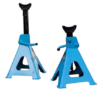
A hydraulic jack is for lifting, not supporting a vehicle while you work beneath it. Once the vehicle is at the required height, place correctly rated axle stands under approved support points and lower the vehicle carefully on to them. Keep the jack in position where practical as an additional precaution, but do not rely on hydraulic pressure alone.
Before every lift, make these checks:
- Work on flat, hard ground with enough room to operate the handle safely.
- Apply the handbrake, select Park or first gear as appropriate, and chock the wheels that remain on the ground.
- Inspect the jack for oil leaks, damaged wheels, a bent handle, a cracked saddle or poor hydraulic action.
- Confirm the lifting point, vehicle weight and axle stand capacity before any wheel leaves the ground.
Do not lift one side excessively if the task does not require it, and never put any part of your body beneath a vehicle supported only by a jack. Release the lowering valve slowly. Fast, uncontrolled descent can damage the vehicle, the jack and anyone nearby.
Which Jack Should You Buy?
Buy a trolley jack if you carry out regular maintenance, own low-clearance cars or want faster, more controlled lifting on a concrete garage floor. A 2-tonne or 2.5-tonne low-profile trolley jack is a sensible starting point for many cars, but always check the actual vehicle weight and lifting requirements. Garage owners and technicians will usually benefit from a heavy-duty model with a strong chassis, reliable hydraulics and a useful lift range.
Buy a bottle jack if storage space is tight, you work on higher vehicles, need equipment for a trailer or van, or want a compact backup jack. Choose a capacity with a sensible safety margin, but make sure the minimum and maximum heights suit the vehicle. A larger bottle jack is not automatically the better purchase if it is too tall to position correctly.
For many serious DIY users, the best setup is both: a trolley jack for routine workshop jobs and a bottle jack for portable, high-clearance lifting. Pair either with correctly rated axle stands, wheel chocks and a suitable saddle pad. These are not optional extras when safe access is the goal.
Irish Tools Shop buyers should look beyond headline discounts and compare the specifications that affect daily use: capacity, closed height, lift height, saddle design, overall weight and whether the jack suits the intended vehicles. Affordable and reliable equipment should save money without adding compromise to a safety-critical job.
Choose the jack that fits under your vehicle, reaches its approved lifting point and works safely on your normal surface. Get those three details right, and every tyre, brake and suspension job starts on solid ground.
3 Ton Trolley Jack Heavy Duty Hydraulic Floor Jack Fits Caravan Van 4×4 Garage
