






A missing 10mm socket, a drawer full of mixed brands and a ratchet that slips under load all cost more than the replacement price. They slow the job, frustrate the technician and make a busy bay less efficient. Teng Tools is built around a simpler approach: dependable professional tooling, clear organisation and a system that can grow with the workshop.
For mechanics, tradespeople and serious DIY users, the appeal is not just having a recognisable name on the handle. It is buying tools that suit real working conditions without paying inflated distributor prices for every item. Whether you are replacing worn essentials or fitting out a new garage, the right Teng setup should make the next job quicker to start and easier to finish.
Why Teng Tools suits working garages
Teng Tools has a strong reputation among users who need practical hand tools, socket sets and storage that stand up to regular use. The range is particularly useful for automotive work because it covers the equipment most often reached for: metric sockets, ratchets, spanners, screwdrivers, pliers, bit sets and specialist service tools.
The real advantage is that the range is designed as a system rather than a collection of unrelated items. A mechanic can begin with a socket set, then add matching trays, cabinets and specialist modules as the workload expands. That matters in a garage where wasted movement soon adds up across a day of servicing, brake work and repairs.
There is a value point here too. Cheap tools can be perfectly acceptable for an occasional household repair, but they often become false economy when used daily. Rounded fasteners, split cases and poor-fitting sockets cost time and can create a bigger repair. On the other hand, not every garage needs the most expensive tool range on the market. Teng sits in the useful middle ground for buyers who want professional-grade equipment, sensible specifications and a price that still leaves room in the budget for jacks, lifting gear or diagnostic equipment.
The Teng Tools system: organisation is part of the tool
A good tool chest is not just storage. It is an efficiency upgrade. When each socket, bit and spanner has a defined place, stock checks are faster and missing tools are obvious before they disappear into a customer vehicle or across the workshop.
Teng Tools is well known for modular trays and tool control layouts. These allow users to arrange sets within compatible drawers rather than relying on loose blow-moulded cases or piles of tools. For a mobile technician, a carrying case may be the better starting point. For a fixed workshop, drawer modules make more sense because the tools remain visible and ready for repeated use.
Start with the tools used every day
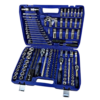
Most automotive buyers should build from the jobs that create the most regular demand. A quality 1/2-inch drive socket set is a sensible base for wheel, suspension and general repair work. A 3/8-inch drive set is often the most versatile choice for engine bay access, while 1/4-inch drive sockets and bit tools earn their place on trim, interior and smaller fasteners.
Do not overlook combination spanners, pliers and screwdriver sets. These are used constantly, often before a socket set is opened. If your existing tools are mixed and incomplete, a well-selected set can reduce duplicate purchases and give every drawer a more useful purpose.
Choose the drive size for the work, not the biggest number
Larger drive tools are not automatically better. A 1/2-inch ratchet and impact socket set offers the strength needed for wheel nuts and heavier fixings, but it is awkward in tight engine compartments. A compact 1/4-inch ratchet provides better access but should not be forced onto seized bolts beyond its intended capacity.
For most garages, having all three common drive sizes is more practical than overloading one set. Use the 1/4-inch drive for precision and access, 3/8-inch for everyday versatility, and 1/2-inch for higher-torque work. Add extensions, universal joints and deep sockets where vehicle access demands them. These small additions often save more time than buying another large kit.
Buying Teng Tools for automotive work
Before choosing a set, consider what comes through the workshop. A tyre and fast-fit operation will prioritise impact sockets, breaker bars, torque tools and wheel-service equipment. A servicing and repair garage needs broader socket coverage, spanners, inspection tools and screwdrivers. Restoration work may justify more specialist pullers, extractors and bodywork tools.
For buyers comparing Teng Tools sets, look beyond the headline piece count. A 200-piece kit is only good value if it contains the sizes and tool types you will genuinely use. Some large sets achieve their total with repeated bits and accessories, while a smaller, better targeted set may cover more actual jobs.
Check these details before ordering:
- Socket range and whether it includes deep sockets for recessed nuts and studs.
- Drive sizes, ratchet tooth count and the availability of extensions and joints.
- Six-point versus bi-hex socket profiles for the fasteners you work on most.
- Whether the tools come in a carry case, foam tray or modular drawer insert.
- The cabinet or chest dimensions if you are adding modules to existing storage.
Impact work deserves particular care. Standard chrome sockets are not a substitute for impact sockets when using an air or battery impact wrench. Impact sockets are built for repeated shock loading and are the safer choice for wheel nuts, crank bolts and stubborn suspension fixings. Keep impact and hand-drive sockets separate so the right tool is always within reach.
Torque tools also need a more considered purchase. A torque wrench is not a breaker bar, and using one to free seized bolts can damage its mechanism and affect accuracy. Choose a torque range that covers your most common specifications, store it correctly and follow the manufacturer guidance on use, setting and calibration. For wheel fitting, accurate torque is not an optional extra.
Build a tool chest that works harder
A large roller cabinet looks impressive, but capacity alone does not make it useful. The best layout puts high-frequency tools between waist and chest height, keeps heavier items low down and avoids overloading individual drawers. Put sockets and ratchets near the top, pliers and screwdrivers in shallow drawers, and heavier pullers or impact equipment below.
Modular Teng trays make this easier because they remove the guesswork from drawer planning. Instead of buying an oversized chest and filling it with loose tools, you can allocate space by task. One drawer might cover brakes, another electrical repairs, another engine service. This makes handovers easier in a shared garage and reduces the time spent searching for a particular tool.
A trolley or roll cab is worth considering where work moves between bays. However, make sure the floor is reasonably level and that the cabinet is not loaded beyond what its castors can handle. For a home garage with limited space, a smaller chest combined with a portable socket case can be the more affordable and practical option.
Where savings make sense – and where they do not
Buying a complete Teng Tools set can offer better value than purchasing each item separately, especially when you are equipping an empty workspace. It also gives a consistent storage format and avoids gaps in common sizes. Sale pricing is useful, but do not buy a set simply because its discount looks large. Check the contents first, then compare that against the work you actually carry out.
It is sensible to save on duplicate items and rarely used accessories. It is less sensible to cut corners on ratchets, sockets, torque tools, lifting equipment or the tools used on safety-critical repairs. These are the items that see hard use and where failure can damage parts, delay a job or put someone at risk.
For a growing workshop, Irish Tools Shop can be a practical source for matching hand tools, storage, impact equipment and the larger garage essentials that support them. Building the setup in stages is often the smarter route: buy the daily-use tools first, then add specialist modules when the jobs justify them.
Care that protects your investment
Even quality tools need basic care. Wipe sockets and ratchets clean before returning them to a tray, keep moving parts free from heavy contamination and do not leave precision tools in damp conditions. A quick check at the end of the day is cheaper than replacing tools lost under a vehicle or damaged by being left outside.
Use the correct size, keep fasteners squarely engaged and stop when a tool is clearly being pushed beyond its role. Check the applicable warranty terms for the product and retain proof of purchase. A well-organised Teng setup is not about owning more tools than the next garage. It is about having the right tool, in the right place, ready when the job lands.
