






A garage loses money when a seized fastener, a flat battery or an occupied lift stops a job halfway through. For buyers looking for Garage Tools In Meath, the priority is not a flashy badge on a box. It is dependable equipment that suits the work, arrives quickly and keeps costs under control.
Whether you run a busy repair bay in Navan, maintain commercial vehicles near Ashbourne or carry out serious work from a home garage, buying the right tools starts with the job in front of you. Load ratings, drive sizes, air demand and storage capacity matter far more than a vague claim of “professional quality”.
Garage Tools In Meath for Working Workshops
A well-equipped garage is built in stages. Start with the equipment that keeps routine work moving: lifting gear, socket sets, hand tools, diagnostic basics and organised storage. Add specialist kits when the volume of work justifies them. This approach avoids spending heavily on tools that sit unused while leaving everyday tasks slower than they need to be.
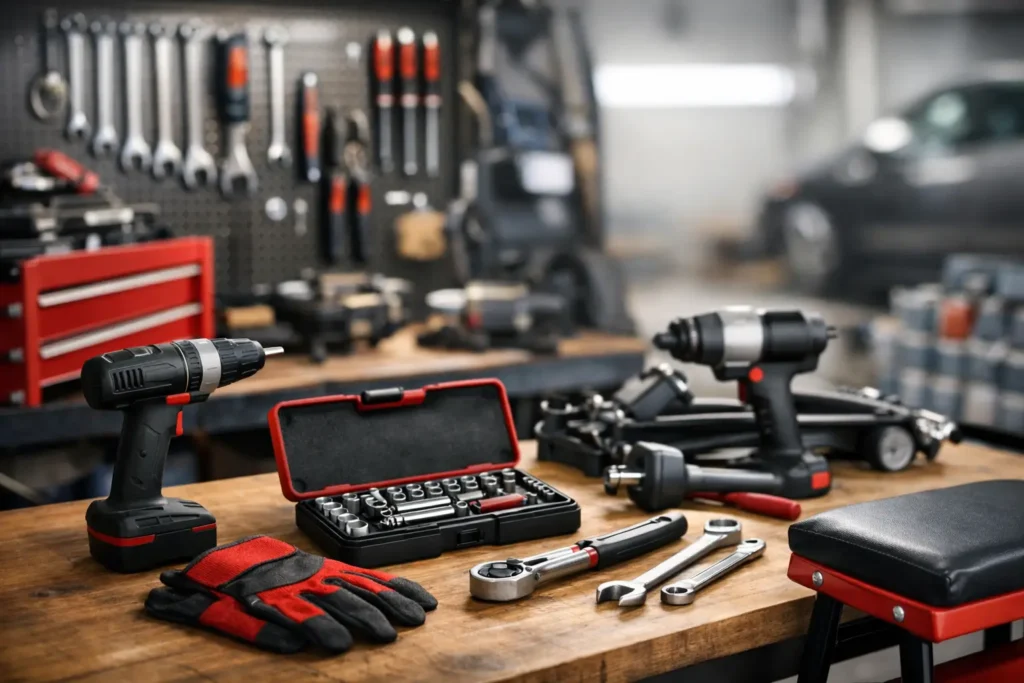
For general servicing, a quality impact socket set, combination spanners, screwdrivers, pliers, torque wrench and breaker bar cover a large share of jobs. Pair them with a proper trolley jack and axle stands, rather than relying on the vehicle jack supplied by the manufacturer. The supplied jack is designed for an emergency wheel change, not for working safely underneath a vehicle.
Workshop buyers should also consider the working environment. A tool chest with smooth drawers and a secure locking system protects expensive equipment while cutting down time spent searching for it. In a one-person garage, that time adds up quickly. In a commercial workshop, poor organisation can affect every technician on the floor.
Buy lifting equipment on capacity, not guesswork
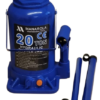
Lifting equipment is one area where specification is non-negotiable. A two-tonne trolley jack may be sufficient for many cars, but it is not automatically the right choice for every vehicle that comes through the door. Larger SUVs, vans, pickups and loaded commercial vehicles can demand more capacity and a different lifting arrangement.
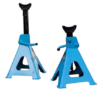
Check the vehicle weight, lifting points and available floor space before ordering. The rated capacity should comfortably cover the job, and the equipment must be used on a level, sound surface. A jack lifts the vehicle; axle stands support it. Never treat those two pieces of equipment as interchangeable.
For garages handling regular engine or gearbox work, an engine crane and engine stand can make a major difference to safety and turnaround time. Folding engine cranes are useful where space is limited, while a heavier fixed-frame model makes better sense for frequent use. Look at the boom position and corresponding lifting capacity, not just the maximum figure printed in the product title. Capacity drops as the boom extends.
Vehicle lifts can be a strong long-term purchase for busy premises, but they require more planning. Ceiling height, slab condition, electrical supply, access, installation and vehicle types all need checking before you commit. A low-cost lift that does not fit the workshop or the usual vehicle mix is no bargain.
Air tools need the right compressor behind them
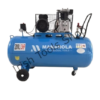
Air impact wrenches, tyre inflators, blow guns and air ratchets remain practical workshop tools because they are tough, fast and comfortable over repeated jobs. Their performance depends on the compressor supplying them. Buying a powerful air tool without enough usable air flow is a common and expensive mistake.
Do not judge a compressor by tank size alone. Tank capacity affects how long the stored air lasts, while delivered air flow determines whether the compressor can keep up with the tool. Check the tool’s air consumption, operating pressure and duty cycle. A tyre inflator has modest demand; a high-use impact wrench, die grinder or spray gun can require significantly more.
Hose diameter and fittings also affect performance. Restrictive fittings or a narrow hose can reduce airflow at the tool, making an impact wrench feel weaker than it should. Keep the air system drained, use appropriate filtration where needed and inspect hoses regularly. Water in compressed air can damage tools and ruin paintwork.
For occasional wheel removal, a cordless impact wrench may be the simpler option. It removes the need for an airline and compressor, and it is ideal for mobile work. For continuous workshop use, air tools can still offer excellent value, provided the air supply is correctly matched.
Brake, suspension and wheel work: avoid universal-tool disappointment
Many jobs require more than standard sockets and spanners. Brake caliper wind-back kits, bearing separator sets, ball-joint splitters, coil spring compressors and hub pullers can save hours and prevent damage to components. The key is matching the kit to the vehicle work you actually carry out.
A universal kit is useful for mixed makes, but it may not suit every modern vehicle or unusual fitment. Check the adapter sizes, thread direction and stated compatibility before purchasing. This is particularly relevant for brake service equipment, where electronic parking brakes and rear caliper designs vary widely.
The same applies to impact sockets. Standard chrome sockets should not be used with an impact wrench unless they are specifically rated for impact use. Proper impact sockets are built to withstand repeated hammering loads and reduce the chance of cracking. A complete set in common metric sizes is a sensible foundation for garages servicing modern Irish and UK vehicles.
Torque control matters just as much as removal speed. Wheel nuts, cylinder head bolts, suspension fasteners and many engine components require a torque wrench used within its stated range. Set it correctly, use it only for tightening and store it according to the manufacturer’s instructions. Guessing at critical tightening figures can turn a simple repair into a costly return job.
Storage that makes tools earn their place
Buying more tools does not automatically make a garage more productive. A packed bench, loose sockets and damaged cases slow every task down. Tool chests, roller cabinets and wall storage help protect equipment while keeping the most-used items within reach.
Choose storage by drawer depth, weight capacity and the footprint available in the workshop. Shallow drawers suit sockets, spanners and hand tools. Deeper drawers are better for power tools, diagnostic equipment and larger service kits. A mobile roller cabinet is useful for moving equipment to the vehicle, but it should have stable castors and brakes that hold it firmly in place.
For a start-up garage, a modest roller chest and carefully chosen tool sets often offer better value than a huge cabinet bought half empty. Expand storage as the tool range grows. It keeps cash available for the equipment that brings in work now.
What to check before ordering garage equipment
Price matters, especially when you are fitting out a garage or replacing a failed essential tool. It should not be the only comparison point. The lowest-priced product may be right for occasional DIY use, but daily trade work places higher demands on moving parts, handles, welds, seals and ratchets.
Before you buy, confirm these practical details:
- The rated load capacity, dimensions and weight of lifting equipment.
- The drive size, socket range and material for hand and impact tool sets.
- The delivered air flow, pressure and power requirements for compressors and air tools.
- The drawer load rating, locking arrangement and overall size of tool storage.
- Warranty terms, stock status and the expected delivery timeframe.
For larger equipment, measure twice. Check doorway widths, turning space, ceiling clearance and where the item will be stored when not in use. An engine crane, compressor or tool chest needs room to work around it, not simply a space where it can be squeezed in.
Affordable professional-grade tools without the local wait
Local stock can be limited, especially when you need a particular brake kit, lifting accessory or large workshop item at short notice. Online buying gives Meath garages access to a wider range, but it pays to buy from a specialist that provides clear specifications rather than relying on generic descriptions.
Irish Tools Shop supplies the everyday mechanic essentials and heavy-duty workshop equipment that help garages buy in one place, from socket sets and air tools to axle stands, cranes and vehicle lifting equipment. Frequent sale pricing makes it easier to replace worn essentials or invest in the next piece of equipment without paying premium distributor prices.
Free shipping on qualifying orders can also make a real difference when buying heavy or bulky items. However, plan the order around what the garage genuinely needs. Adding unsuitable items merely to reach a delivery threshold is false economy; adding the consumables, sockets or hand tools already due for replacement is sensible purchasing.
The strongest garage setup is not the one with the most equipment. It is the one where every tool is rated for the job, easy to find and dependable when the vehicle is already on the ramp.
