






A snapped timing belt can turn an affordable service job into a cylinder-head repair in seconds. That is why buying a Ford 1.8 diesel engine timing kit TDI/TDCi is not a case of matching the engine size alone. Ford used several 1.8 diesel variants across different years and models, and the correct kit depends on the engine code, fuel system, belt arrangement and build date.
For garages and capable DIY mechanics, the priority is straightforward: identify the engine correctly, fit quality components together, and use the proper locking tools. A timing kit is a service item, but there is nothing minor about getting it wrong.
Ford 1.8 diesel timing kit TDI/TDCi: identify the engine first
The term TDI is often used in searches as a general description for a turbo diesel with direct injection. It is not always Ford’s official engine designation. On Ford applications, you may encounter earlier 1.8 Endura-D and Endura-DI engines, 1.8 TDDi engines and later 1.8 TDCi units. They can look similar at a glance, yet their timing components, tensioners and setting procedures may differ.
Never order solely from the model badge. A Ford Focus, Mondeo, Transit Connect or Fiesta may have been offered with more than one 1.8 diesel engine across its production run. A registration lookup can help, but it should be checked against the vehicle VIN, engine code and the existing belt layout before a kit is opened or fitted.
The engine code is the useful starting point. It may be recorded in workshop data, shown on vehicle documentation or stamped on the engine, depending on the model. Build month also matters where a manufacturer changed pulley or tensioner design during production. If there is doubt, compare the old tensioner, idler and belt tooth profile with the replacement parts before stripping the engine down.
What a proper timing belt kit should include
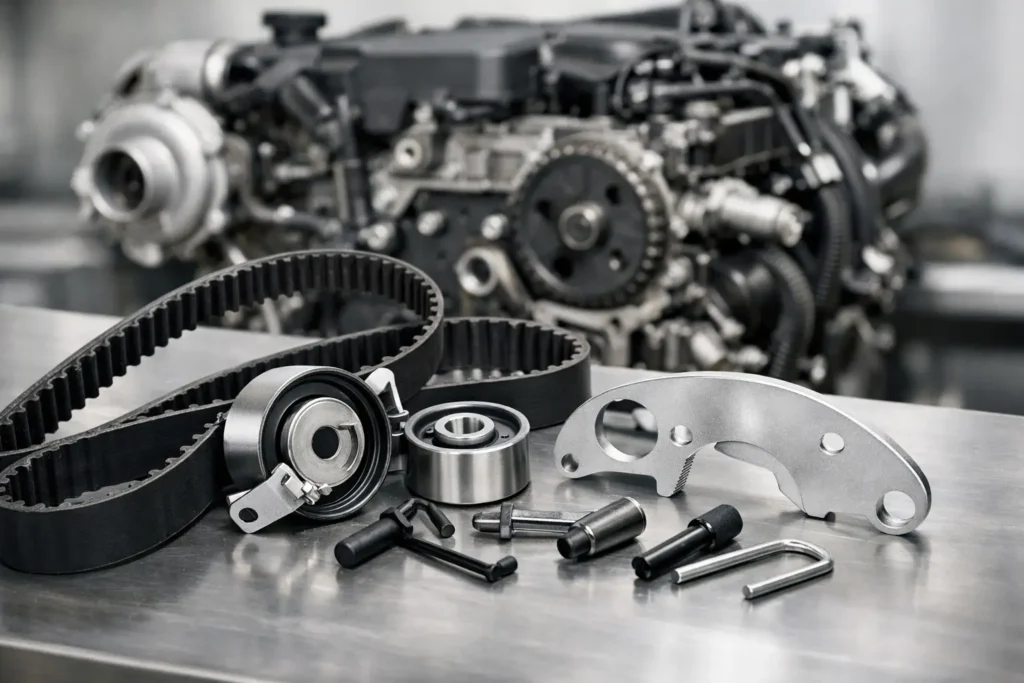
At minimum, a timing kit normally includes the timing belt and the tensioner. Better-value full kits also include the guide and idler pulleys that run with the belt. Replacing only the belt may save money on the day, but it leaves old bearings and a worn tensioner in a system where every component works under heat, load and constant rotation.
A complete kit is usually the sensible choice because a failed idler or tensioner can damage a new belt just as quickly as an old one. For a working garage, fitting matched components also avoids the false economy of repeating labour after an avoidable failure.
Check the product specification for belt tooth count, belt width, tensioner type and exact engine compatibility. Product images are useful for reference, but specifications and engine-code fitment should make the final decision. Do not assume that two belts with a similar length are interchangeable.
Some Ford 1.8 diesel applications use a water pump driven by the timing belt, while others have a different arrangement. Where the pump is driven by the belt, replacing it at the same time is good workshop practice. Access is already gained, coolant is already being drained, and an old pump bearing or seal is not worth gambling against a fresh timing kit. If the pump is not belt-driven, inspect it for leaks, play and noise, then decide on its condition rather than changing parts blindly.
When should the timing kit be replaced?
Use Ford’s service information for the exact engine and model rather than relying on a single mileage figure found online. Timing-belt replacement intervals vary by engine type, age and operating conditions. A low-mileage vehicle is not automatically safe if the belt has aged, suffered oil contamination or spent years on short, cold runs.
Warning signs can include a chirping or rumbling noise from the belt end of the engine, visible cracking, frayed belt edges, coolant traces around the pump or a tensioner sitting outside its normal position. These signs call for inspection, but do not wait for them as a service plan. Belts often fail without a useful warning.
Oil contamination needs attention before a new kit is fitted. A leaking camshaft seal, crankshaft seal, rocker-cover gasket or vacuum-pump seal can shorten belt life. Replacing a timing kit without dealing with the source of contamination simply puts the new parts at risk.
Tools needed to fit a Ford 1.8 diesel timing kit
This is not a job for paint marks, guesswork or an adjustable spanner. The camshaft, crankshaft and, on relevant diesel systems, injection-pump timing must be set exactly. The correct engine timing locking kit is the foundation of the job.
A well-prepared technician will normally need a suitable Ford engine locking set, a calibrated torque wrench, breaker bar, socket and impact socket set, crankshaft pulley holding tool where specified, axle stands or a vehicle lift, and an engine support bar or jack with a suitable support arrangement. The engine mounting may need to be removed for access, so the engine must be supported safely before bolts are loosened.
You will also need fresh coolant if the water pump is being replaced, cleaning materials for the belt area and the correct single-use bolts where Ford specifies them. Certain crank pulley and engine-mount fasteners are torque-to-yield items. Reusing them because they look serviceable is a poor saving when the work involves critical engine timing.
A tool kit designed for the engine family is more reliable than improvised pins or drill bits. Correct pins locate at the right depth and diameter, helping prevent a small timing error that can cause poor starting, rough running, smoke, fault codes or internal damage.
The fitting process: where mistakes cost money
Start by confirming the replacement kit against the engine before disassembly. With covers removed, inspect the old belt route, pulleys and surrounding seals. Then set the engine to the specified timing position and install the correct locking tools. Do not rotate the crankshaft or camshaft independently once the belt is removed unless the workshop procedure specifically allows it.
The new belt must follow the manufacturer’s routing and tensioning procedure exactly. Tensioner pointers, alignment marks and rotational direction are not decorative details. Set the tensioner correctly, torque every fastener to specification and rotate the engine manually through the required number of turns before rechecking the timing locks and tensioner position.
If the engine does not turn smoothly by hand, stop. Do not use the starter motor to force it. Recheck timing, belt routing and locking-tool position first. Turning an incorrectly timed diesel engine on the starter can convert a fitting issue into bent valves, damaged rockers or worse.
After reassembly, refill and bleed the cooling system where required, then start the engine and listen carefully. Check for belt noise, coolant leaks and oil leaks around any seals disturbed during the job. A short road test and final fluid inspection give the customer a far better handover than starting it once and assuming the work is finished.
Buy for fitment and reliability, not the lowest belt price
A cheap belt on its own is rarely a bargain. The real cost of timing work is access and labour, particularly on a daily-use van or a busy family car. A quality belt kit with tensioner and pulleys gives the job a proper service baseline. Add a water pump where applicable, replace specified bolts and use the correct locking tools.
For professional workshops, keeping the right timing tools alongside dependable torque tools, axle stands and engine-support equipment reduces delays when a service booking turns into a timing-belt job. For serious DIY users, the same approach makes the difference between a controlled repair and an expensive recovery.
Irish Tools Shop focuses on affordable, reliable workshop equipment for jobs where accuracy and safe support matter. Check the engine code, confirm the kit contents, and have every required tool ready before the vehicle goes on the lift.
