









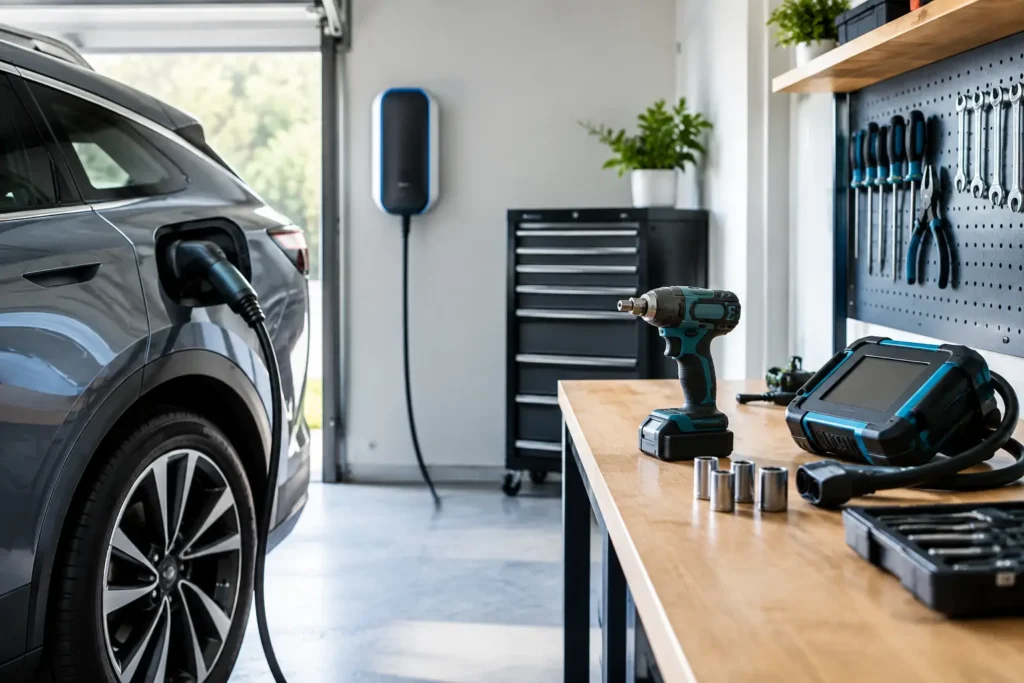
A high-voltage warning label is no longer something only main dealers see. EV tool trends are now shaping independent garages, mobile mechanics and serious home workshops across Ireland and the UK. The work is changing, but the buying decision remains familiar: choose equipment that is safe, fit for purpose and built to earn its place in the tool chest.
Electric vehicles still need tyres, brakes, suspension work, body repairs and routine inspection. What has changed is the risk around the vehicle and the level of diagnosis required before a technician starts work. A garage that gets its tooling right can take on more EV and hybrid jobs without filling the workshop with expensive equipment that sits unused.
EV Tool Trends Start With High-Voltage Safety
The biggest shift is not a flashy new power tool. It is the move towards controlled, repeatable high-voltage isolation. Before work begins near an EV battery, electric motor, inverter, orange cables or air-conditioning system, the vehicle must be made safe using the manufacturer procedure. That means identifying the system, isolating it correctly, proving it is dead and securing the work area.
Insulated hand tools rated for electrical work are becoming a sensible addition to automotive tool kits. Spanners, sockets, screwdrivers and pliers with clear insulation ratings give technicians the right equipment when working around live-system components. They are not a substitute for training or a licence to work on high voltage, but they remove one obvious weak point: using ordinary damaged or untested hand tools where insulation is required.
A properly specified multimeter is equally important. EV work demands more than checking a 12V battery or continuity on a conventional circuit. Technicians need a meter with the correct voltage range, safety category and reliable leads for the job. Cheap, unbranded test equipment is a false economy when the result determines whether a system is safe to touch.
High-voltage personal protective equipment is also becoming part of workshop stock. Insulating gloves, leather over-gloves, face protection, insulated mats and lockout tags all have a role, depending on the task. These items need inspection, correct storage and replacement when damaged or out of date. Buying them once and forgetting about them is not a safety system.
Better Diagnosis Before Parts Are Fitted
The next major EV tool trend is diagnostic capability. A conventional fault code reader remains useful, but EVs and hybrids bring battery management systems, thermal control modules, charging faults, insulation monitoring and communication issues that basic scanners may not fully cover.
For independent garages, the practical choice is usually a capable diagnostic platform with strong vehicle coverage and regular software support. It should read live data, perform service functions, access manufacturer-level modules where available and clearly identify faults rather than simply display a code. The right scanner helps a technician decide whether the fault is a connector, sensor, 12V supply, cooling issue, charging problem or a component that genuinely needs replacement.
Battery health testing is growing in value too. Customers buying used EVs want a clearer view of battery condition, while fleet operators want evidence before approving costly work. Battery assessment tools can provide useful information, but garages should be careful about what they promise. State of health is not always a simple pass-or-fail number, and results can depend on temperature, charge level, vehicle software and test method.
A good diagnostic process still starts with basics. Check the 12V battery, visual condition, wiring, connectors, coolant level and stored fault history before condemning high-value EV components. The same disciplined approach that saves money on petrol and diesel repairs saves even more when an inverter, battery pack or charging unit is involved.
Lifting Equipment Must Suit Heavier Vehicles
EVs often weigh more than equivalent petrol or diesel models because of their battery packs. That makes workshop lifting equipment one of the most commercially important areas to review. A trolley jack that was adequate for smaller cars may not offer enough capacity or lifting range for newer electric SUVs and vans. Axle stands must be correctly rated, used as a pair and positioned only at approved lifting points.
Two-post and four-post vehicle lifts also need a close look at capacity, arm reach and pad placement. Battery packs are commonly mounted beneath the floor, so lifting an EV from the wrong location can damage undertrays, cooling lines or the battery enclosure. Workshop staff need access to lifting-point information, not guesswork based on the vehicle shape.
Battery support tables and transmission jacks are another noticeable trend. Removing an EV battery is not a job for a standard garage jack balanced with timber blocks. A suitable lifting table gives better control over a large, heavy and expensive component. Features worth checking include load capacity, platform size, lift height, locking castors and fine adjustment. The correct equipment makes the work safer, but it also reduces the risk of a costly claim caused by poor handling.
Not every workshop needs battery-removal equipment immediately. If your work is mainly tyres, brakes, servicing and suspension, spend first on safe lifting, diagnostic tools and insulated essentials. Add specialist battery equipment when job volume supports it.
Brake, Tyre and Suspension Tools Still Do the Daily Work
There is a misconception that EVs require an entirely different workshop. In reality, many profitable jobs still use the core equipment every mechanic knows well. Brake wind-back kits, impact socket sets, torque wrenches, pry bars, ball joint tools, wheel alignment equipment and tyre service tools remain central to EV maintenance.
There are differences. Regenerative braking can mean less friction-brake use, which may lead to corrosion on discs, pads and caliper slides where vehicles are driven gently or make short trips. EVs are also heavier and can wear tyres quickly if alignment is poor. That creates regular demand for quality tyre, suspension and brake tools.
Torque control deserves extra attention. Lightweight alloy components, battery protection panels and high-voltage cable fixings may have precise torque requirements. A dependable torque wrench, used within its working range and stored correctly, is one of the lowest-cost upgrades a workshop can make. Impact guns are excellent for speed, but final tightening should follow the vehicle specification.
Organisation Is Becoming a Safety Tool
A busy garage cannot manage EV work safely with loose tools, mixed test leads and missing PPE. Tool chests, mobile roller cabinets and clearly marked storage make a direct difference to speed and control. Separate high-voltage tools from general workshop tools so they are easy to inspect and not borrowed for unsuitable jobs.
The same applies to work areas. A simple barrier, warning signage and a clear process for vehicle keys can prevent an isolated vehicle from being accidentally powered up or moved. This is particularly relevant when several technicians share a workshop floor. Good organisation is not paperwork for its own sake. It keeps the job moving and reduces avoidable mistakes.
For mobile technicians, a well-planned tool case is often better than carrying every tool available. Build the kit around the work you are trained and equipped to do: diagnostics, 12V support, brakes, suspension, tyres or inspections. Refer complex high-voltage repairs to a suitably equipped specialist rather than taking risks to complete one job.
Buy for the Work You Can Win
The strongest EV workshop setup is not necessarily the most expensive one. It is the one that matches the vehicles coming through the door. A general repair garage may start with insulated hand tools, reliable test equipment, a capable scanner, correctly rated lifting gear and secure storage. A specialist working on battery repairs will need far more, including dedicated lifting and safety systems.
When comparing equipment, look beyond the headline price. Check load ratings, insulation standards, warranty cover, replacement parts, calibration needs and whether the tool will suit the vehicles you actually see. Affordable professional-grade equipment should still have clear specifications and a job it can perform repeatedly.
Irish Tools Shop serves the practical side of this change with garage essentials that continue to matter on every EV ramp: lifting equipment, tool storage, torque tools, sockets, brake kits and workshop gear built for daily use. Buying the basics well leaves more budget for the specialist training and diagnostic support that EV work demands.
The next vehicle booked in may be electric, hybrid or conventional, but the workshop principle stays the same: use the right rated tool, follow the proper procedure and buy equipment that helps you finish safe, accurate work without paying over the odds.
