







A worn, damaged or incorrectly fitted Hyundai / Kia high pressure fuel injection pump sprocket can turn a straightforward diesel repair into a timing fault, poor running issue or no-start job. This is not a universal part to buy by appearance alone. On Hyundai and Kia diesel engines, sprocket design, tooth count, chain arrangement and pump fitment can vary sharply between engine families and production years.
For a garage or capable home mechanic, the priority is simple: identify the engine correctly, hold the timing system securely and replace only with a sprocket that matches the original specification. Saving money on the right part is good workshop practice. Guessing at fitment is not.
What the fuel injection pump sprocket does
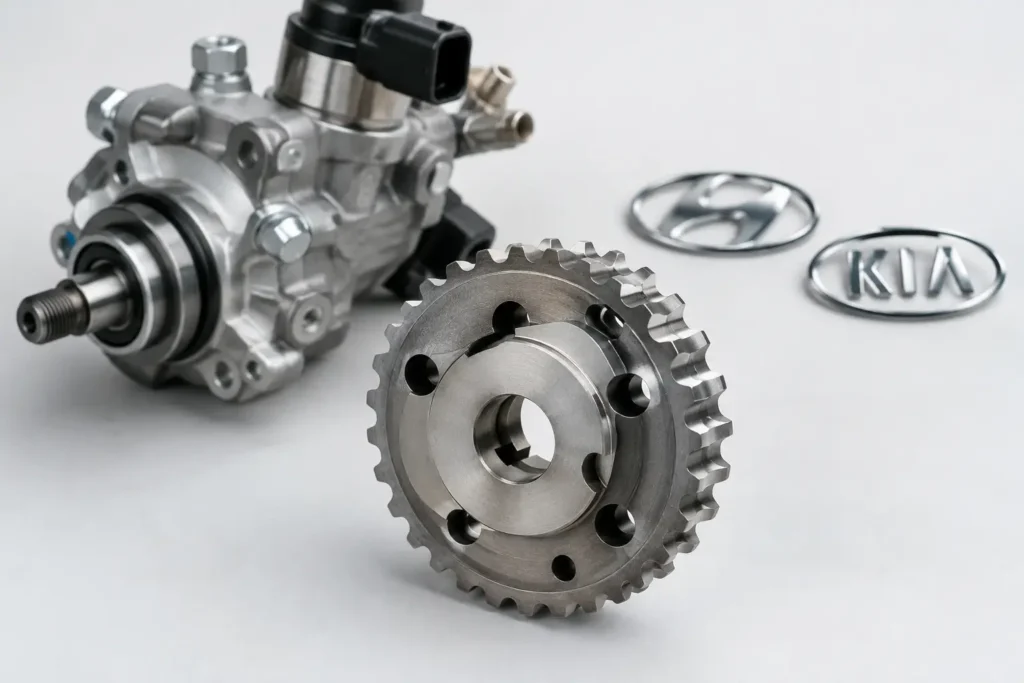
The high-pressure fuel pump sprocket transfers drive from the timing chain or belt system to the pump. On many Hyundai and Kia common-rail diesel engines, it is part of a chain-driven arrangement at the timing end of the engine. Its job is mechanical and constant: it keeps the pump rotating in step with the engine’s timing drive.
It is worth separating pump drive from injection timing. In many modern common-rail systems, the engine control unit commands injector timing electronically, so the pump itself does not need to be timed in the same way as an older mechanical diesel injection pump. That does not mean sprocket position can be treated casually. The chain, crankshaft, camshaft and associated guides still need to be assembled to the manufacturer’s timing procedure.
A sprocket with worn teeth, damaged keyways, distorted mounting faces or the wrong offset can accelerate chain wear and cause alignment problems. If a timing chain repair is already under way, it makes sense to inspect the sprocket closely rather than refit a questionable component behind a sealed timing cover.
Hyundai / Kia High Pressure Fuel Injection Pump Sprocket Tool
Hyundai / Kia high pressure fuel injection pump sprocket fitment
The phrase Hyundai or Kia is not enough to confirm compatibility. The two manufacturers share platforms and diesel engines across various models, but a similar-looking pump or engine bay does not prove that the sprocket is interchangeable.
Start with the engine code. This is more reliable than registration, model badge or engine size alone. A 1.7 CRDi, 2.0 CRDi or 2.2 CRDi badge can cover different generations, emissions systems and timing-drive layouts. Check the vehicle identification number, engine code, original equipment part number and build date before ordering.
Then compare the details that matter: number and profile of teeth, chain width, centre bore, bolt pattern, locating features, sprocket offset and pump manufacturer. A minor difference in any of these areas can prevent correct installation or put the chain out of line. Where possible, compare the removed component against technical images and measurements from the supplier.
Be particularly careful with parts advertised as fitting a wide model range. Broad fitment claims can be useful as a starting point, but they should never replace an engine-code check. The right part should be confirmed for the exact engine, not just the vehicle make.
Common signs the sprocket needs attention
A sprocket rarely fails without another underlying issue. Chain stretch, a failed guide, poor lubrication, debris in the timing case or incorrect previous work may be the real cause. During inspection, look for hooked or rounded teeth, unusual polishing on one side of the teeth, cracks around bolt holes, fretting at the mounting face and damage to the centre bore or keyway.
Rattling from the timing end on cold start, metallic debris in the oil, a chain-related fault code or visible chain misalignment all justify a full inspection. However, these symptoms do not automatically mean the pump sprocket is at fault. Diagnose the complete timing drive before fitting parts.
Replace the sprocket as part of a proper timing repair
Accessing the high-pressure pump sprocket often means removing covers, auxiliary components and, on some engines, working in a restricted space. That labour is the reason a partial repair can be false economy. If the chain, tensioner or guides show wear, replacing only the sprocket may leave the real fault in place.
A sensible repair plan considers the chain, guides, tensioner, seals, mounting bolts and any single-use fasteners specified by the manufacturer. It may also include an oil and filter change where timing debris or poor oil condition has contributed to wear. The exact scope depends on inspection results, mileage and service history.
Do not reuse bolts simply because they look clean. Some timing and pump fasteners are torque-to-yield items and must be renewed. Follow the engine-specific tightening sequence and torque data. A high-quality torque wrench is not optional for work in this area.
Before dismantling, rotate the engine only in the specified direction and set it to the correct timing position. Use the proper crankshaft, camshaft and pump locking tools where the workshop procedure calls for them. Paint marks can help document the original position, but they are not a substitute for locking pins and timing fixtures.
Tools that make the job safer
Professional results depend as much on control as force. For a typical Hyundai or Kia diesel timing-side repair, useful equipment includes a vehicle-specific timing tool kit, torque wrench, breaker bar, suitable sockets, pullers where required, inspection light and clean trays for fasteners. A low-profile trolley jack, axle stands and a proper engine support bar may also be needed when access requires removal of an engine mount.
Never support an engine on a jack alone. Use rated lifting or support equipment and work on stable, level ground. This is especially relevant when the timing cover sits close to a mount or chassis leg. Workshop safety is cheaper than repairing damaged components or dealing with an avoidable injury.
Irish Tools Shop supplies the practical workshop equipment that makes these jobs easier to manage, from torque tools and socket sets to lifting equipment built for regular garage use.
Installation checks before the engine is started
Once the replacement sprocket is fitted, do not rush to reconnect the battery and start the engine. First, turn the crankshaft by hand through the required number of revolutions, usually in the normal running direction, following the manufacturer procedure. Feel for abnormal resistance. Then return the engine to its timing position and confirm that all timing marks or locking tools align as specified.
Check chain seating across every sprocket, tensioner operation and guide placement. Make sure no tools, rags or loose bolts remain in the timing area. Refit covers using the correct sealant only where required. Excess sealant can break away and block oil passages, which is a costly outcome on a chain-driven diesel engine.
After starting, listen closely during the first idle period. A brief hydraulic tensioner noise can occur on some systems, but persistent rattle, warning lights, rough running or fuel system fault codes need immediate investigation. Do not continue running an engine that sounds wrong after timing work.
When replacement is not the answer
If the sprocket teeth and mounting surfaces are in sound condition, replacement may not be necessary. A chain kit repair, pump replacement or access work does not automatically demand a new sprocket. Reusing a good original component can be sensible when measurements, visual inspection and manufacturer guidance support it.
Conversely, fitting a new sprocket will not cure low rail pressure caused by a failing high-pressure pump, injector leak-off, blocked fuel supply, wiring faults or pressure-control issues. Use diagnostic data before condemning expensive fuel-system components. Rail pressure requested versus actual, stored fault codes and fuel contamination checks can save a great deal of wasted labour.
The best result comes from treating the Hyundai or Kia fuel pump sprocket as one precise part of a larger system. Confirm the engine code, inspect the complete timing drive, use the correct locking tools and tighten every fastener to specification. That is how you protect the repair, the engine and the customer’s budget.
