







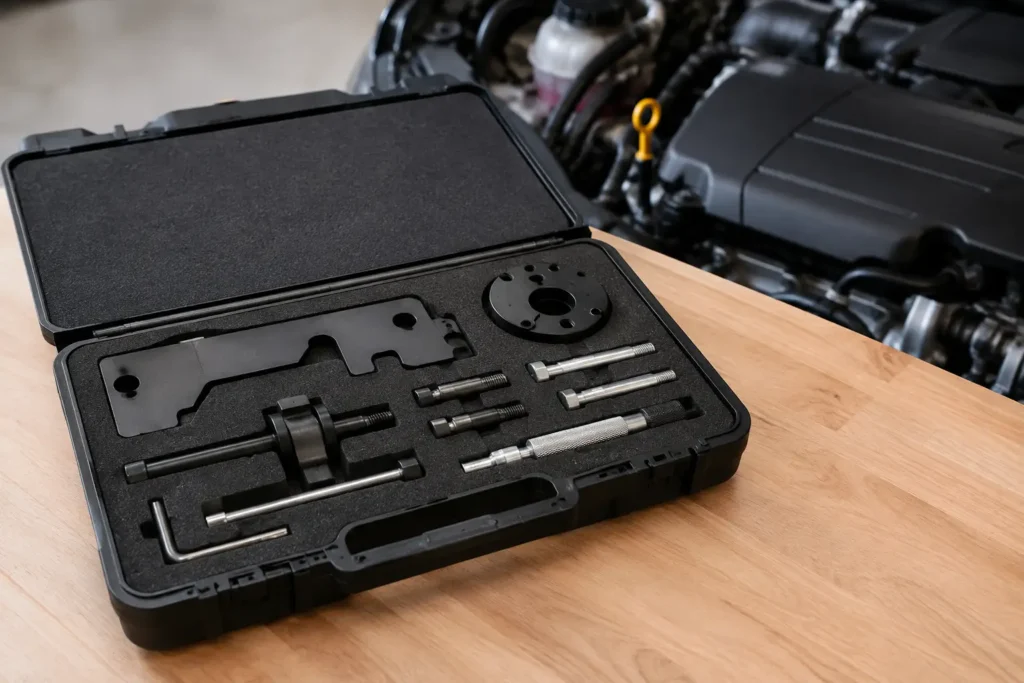
Getting cam timing wrong on a modern VAG petrol engine can turn a routine belt or chain job into an expensive comeback. A US Pro VAG timing tool set for petrol 1.0 1.2 1.4 TSI TFSI suits VW, SEAT & Skoda applications where accurate crankshaft and camshaft positioning matters. It is the sensible workshop solution for technicians and capable DIY mechanics who need to lock the engine correctly before stripping it down.
These small-capacity turbo petrol engines are common across the VW Group range, but common does not mean simple. Tight engine bays, variable valve timing components and engine-specific timing positions all demand the right locking tools. Marks made with paint or a quick glance at an old belt are not a reliable substitute for correct timing equipment.
Why Correct VAG Timing Tools Matter
Timing tools are not an optional extra when the job calls for them. Their purpose is to hold the crankshaft, camshaft and, where required, other timing components in their specified positions while a timing belt, chain, tensioner or related part is removed and refitted. This helps prevent movement that can put valve timing out of specification.
On interference engines, incorrect timing can allow pistons and valves to make contact. The result may be bent valves, cylinder head damage and a repair bill that quickly outweighs the price of the proper tool kit. Even where no physical contact occurs, poor timing can cause rough running, misfires, warning lights, reduced power or fault codes that waste valuable diagnostic time.
A dedicated US Pro set gives the job a repeatable method. Instead of trying to hold components by hand or improvising with unsuitable pins, the technician can follow the correct workshop procedure and verify positions before reassembly. That means less guesswork and fewer avoidable delays.
US PRO Ford 1.0 Ecoboost Petrol Engine Timing Kit Suits Fiesta, Focus & Transit
US Pro VAG Timing Tool Set Compatibility
The wording 1.0, 1.2 and 1.4 TSI or TFSI covers a broad family of petrol engines found in Volkswagen, SEAT and Skoda vehicles. However, compatibility must always be checked against the vehicle’s engine code, year and timing system before work starts. The same badge model can use different engines across production years, and a 1.4-litre TSI in one vehicle may not share the same locking points as another.
Check the engine code from the vehicle data sticker, service record or diagnostic system. Then compare it with the listed application information for the tool set. This is particularly important on vehicles that have had engine replacements, modified parts or unclear service history.
The set is intended for relevant petrol VAG engine timing work, not every VW Group engine on the road. It should not be treated as a universal diesel timing kit, and it may not cover later engine generations simply because their capacity is the same. Buying by engine capacity alone is a costly shortcut.
For a busy garage, confirming fitment before ordering also avoids having a vehicle sitting on a ramp while the correct locking plate or pin is sourced. For the home mechanic, it prevents starting a major service job with a tool that is close, but not correct.
VAG Diesel Engine Timing Kit for 1.4 – 1.6 – 2.0 Audi, Seat, Skoda & VW TDi CR Engines From 2012
What a Proper Timing Set Helps You Do
A VAG engine timing set is designed to support controlled, accurate work during timing-related repairs. Depending on the specified engine application and the procedure being carried out, it helps establish the correct top dead centre position and retain the required relationship between timing components.
That matters during timing belt replacement, chain work, camshaft removal, cylinder head repairs and certain sealing or valve train jobs. It can also be useful where timing correlation faults are being investigated after a suspected chain stretch, slipped belt, tensioner issue or previous repair.
The tool set does not replace technical data. You still need the correct service procedure, tightening torques, angular tightening stages and component replacement requirements for the exact engine. Many modern timing bolts are torque-to-yield and must not be reused. A locking kit holds the engine in position, but it does not make old fasteners safe or compensate for a worn tensioner, damaged pulley or stretched chain.
A Better Workshop Method for VAG Petrol Engines
Before dismantling, identify the engine code and obtain the correct timing instructions. Allow the engine to cool where the procedure requires it, disconnect the battery if appropriate and make sure the vehicle is safely supported. Access can be limited on compact VAG models, so plan the job before removing mountings, covers and ancillary components.
Bring the engine to the stated timing position by hand in the correct direction of rotation. Do not use the starter motor to find timing marks. Once the specified position is reached, fit the relevant locking tools carefully. They should locate positively without force. If a tool will not seat correctly, stop and recheck the engine position and application rather than forcing it into place.
With the engine locked, remove and replace the required timing components according to the service procedure. Inspect related parts while access is available. Oil contamination around a belt, damaged covers, worn guides, weak tensioners and leaking seals should be dealt with now, not left to undermine the new repair.
After fitting components and applying the correct tensioning method, remove the locking tools only when the procedure instructs it. Turn the engine manually through the required number of revolutions, return it to the timing position and confirm that the tools still locate as intended. This verification stage takes little time and can catch an error before the engine is started.
Never use timing tools to counter-hold components while undoing or tightening heavily torqued fasteners unless the manufacturer procedure specifically permits it. Locking tools are precision positioning equipment, not substitute breaker bars. Use the proper counter-hold tool and a calibrated torque wrench where needed.
When This Tool Set Earns Its Place
For an independent garage, the value is straightforward. The right timing equipment reduces the risk attached to work that carries a high consequence if it goes wrong. It also helps technicians complete jobs with a consistent process, particularly when several VW, SEAT and Skoda models come through the workshop each week.
For serious DIY users, it offers the confidence to carry out suitable timing work properly rather than relying on improvised methods. That said, timing repairs are not a beginner’s first engine job. If you cannot verify engine code compatibility, access proper technical information or confidently follow torque and timing procedures, professional fitting is the safer choice.
The set can also save time during diagnosis. A vehicle with correlation codes or poor running after previous engine work may need its mechanical timing checked before expensive sensors, coils or fuel-system parts are replaced. Correct locking tools help establish whether the base timing is where it should be.
Choosing the Right Tool for the Job
Affordable tooling should still be fit for purpose. Look for a set intended for the relevant VAG petrol engine family, clear application information and secure storage that keeps the individual pieces together. Small timing pins and locking plates are easy to misplace in a busy workshop, and a missing item can stop a job completely.
It is also worth buying with the full job in mind. A timing tool set works best alongside dependable sockets, torque wrenches, breaker bars, engine support equipment and diagnostic tools. If an engine mounting must be removed for access, make sure the engine is supported correctly. Cutting corners around support or torque settings is not a saving.
Irish Tools Shop supplies affordable, reliable workshop tools for mechanics and serious DIY buyers who need equipment that earns its keep. Check the exact engine application first, prepare the job properly and use the US Pro VAG timing tool set as part of a disciplined repair process. The right tool is a small cost when it protects the engine, the repair and your reputation.
