







A tyre changer only earns its floor space when it saves time on every wheel that comes through the door. This tyre changer review looks past headline prices and concentrates on the details that determine whether a machine is a dependable workshop asset or a source of damaged rims, slow jobs and avoidable downtime.
For a garage fitting tyres every day, a proper machine is not a luxury. It keeps technicians moving, reduces manual effort and gives customers a quicker turnaround. For serious DIY users, it can also make sense, but only when the machine’s capacity, air supply and practical set-up match the work being done.
Tyre Changer Review: What Actually Matters
The first mistake is buying on price alone. Affordable equipment is good value when it is built for the job, supplied with the right features and supported by clear specifications. It is poor value when it cannot handle the wheel sizes your customers bring in.
Start with the type of tyres you expect to change. Standard steel wheels and conventional alloy wheels put far less demand on a machine than low-profile, run-flat or large 4×4 tyres. A basic manual or semi-automatic tyre changer can be a sensible choice for occasional work on ordinary passenger vehicles. A busy tyre bay, independent garage or mobile fitting operation needs more speed, control and protection.
Pay attention to the stated clamping range, both internal and external. Do not assume the largest number covers every wheel you may see. Wheel design, tyre sidewall stiffness and the position of the jaws all affect real-world usability. If you regularly work on modern alloys, choose enough capacity above your usual range rather than buying to the absolute limit.
The turntable is another key point. A solid, well-built table with secure jaws holds the wheel steadily during removal and fitting. Weak clamping creates frustration and raises the chance of marking an alloy. Look for durable jaw covers or rim protectors, and make sure replacement protective parts are available. These are small items, but they matter when the machine is in regular use.
Bead Breaking Power Is Not an Extra
The bead breaker separates the tyre bead from the rim before removal. On older tyres, it may seem like a simple step. On stiff sidewalls, corroded steel wheels or tyres that have been fitted for years, it is where an underpowered machine quickly shows its limits.
A strong pneumatic bead breaker gives controlled force and reduces the temptation to force the job. Check the blade shape and the travel of the arm, particularly if you work with a wide mix of wheels. Good positioning helps the operator break the bead without damaging the rim edge.
Air pressure requirements also deserve a proper check. Most workshop tyre changers need a reliable compressed-air supply, commonly around 8 to 10 bar. The compressor must deliver sufficient airflow as well as pressure. A small compressor that constantly struggles to recover will slow the job and make the tyre changer feel weaker than it should.
Heavy Duty Tyre Inflator 0-160PSI/0-1100KPA | Rust Proof & Protective Steel Hose Sleeve
Manual, Semi-Automatic or Fully Automatic?
The right format depends on your workload, available space and the tyres you handle. There is no benefit in paying for advanced functions that will rarely be used, but there is also no saving in buying a basic machine that limits profitable work.
Manual tyre changers suit low-volume work and straightforward wheels. They are often compact and cost-effective, although they require more physical effort and operator skill. They are better suited to a home workshop or occasional use than a fast-moving commercial tyre bay.
Semi-automatic machines are a practical middle ground. They typically use an upright mounting arm and foot-pedal controls, making them familiar and efficient for standard passenger-car work. They can offer strong value for smaller garages where floor space is tight and tyre fitting is one part of the business rather than the main service.
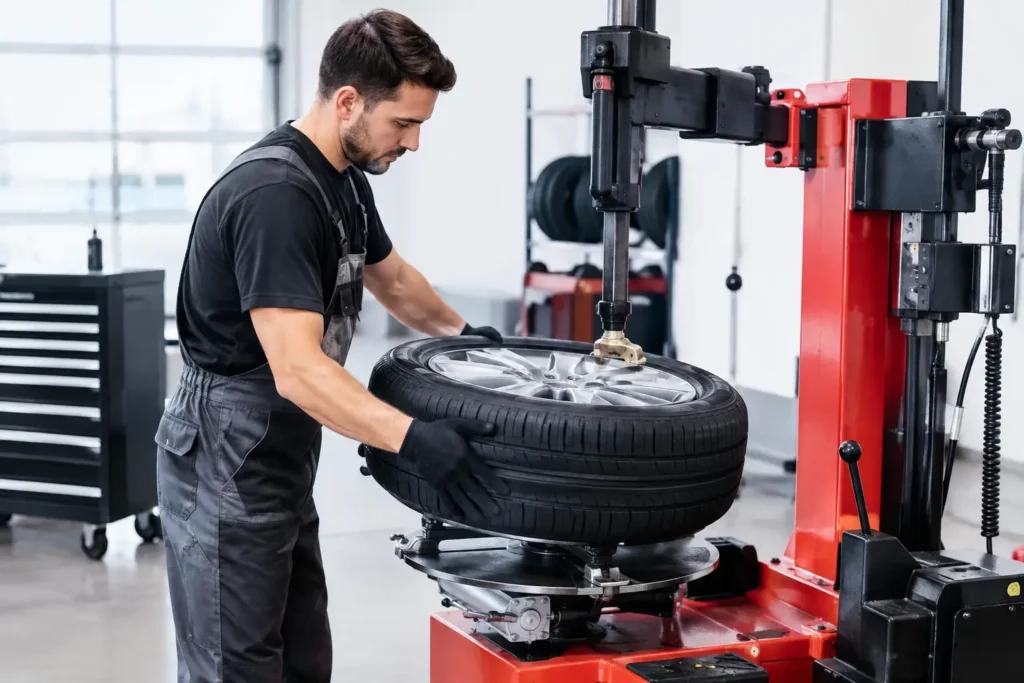
Fully automatic tyre changers generally use a tilt-back or swing-arm design that moves the mounting column clear of the wheel. This speeds up repeated work, gives better access and is more comfortable for the operator over a long day. They are a stronger option for garages handling high volumes or a wide mix of alloy wheels.
For low-profile and run-flat tyres, look beyond the basic machine classification. You may need a helper arm, bead press arm or additional assist system. These features control stiff sidewalls during fitting and reduce the risk of damaging expensive wheels. They add cost, but for workshops regularly fitting premium tyres, they can pay for themselves in saved time and fewer rejected jobs.
Build Quality and Daily Control
A tyre changer has to tolerate dust, moisture, tyre lubricant and repeated force. The frame should feel stable, with clean welds, a strong vertical column and foot pedals that engage positively. Loose linkages and vague pedal operation are not minor annoyances. They make accurate work harder and can become a maintenance problem under daily use.
The mounting head deserves close attention. It should guide the tyre bead over the rim smoothly without scraping the wheel. Nylon or composite protection is valuable for alloy wheels, but it should not be treated as a substitute for correct operation. A trained operator, proper lubricant and controlled pressure are still the best protection against cosmetic damage.
The machine should also be easy to service. Check access to lubricators, air lines, pedal valves and wear parts. Workshops lose money when essential equipment is out of action, so a machine with sensible maintenance access is usually the better long-term buy. Before ordering, confirm the warranty terms and what support is available if a component needs replacing.
Do Not Forget the Wheel Balancer
A tyre changer removes and fits the tyre. It does not finish the job. If you are setting up a tyre service area, a wheel balancer is the natural partner. Fitting tyres without balancing can lead to vibration, uneven tyre wear and unhappy customers returning with a complaint.
Buying the two machines together can make practical sense, particularly when building a new workshop bay. Measure the working area first. You need room around the tyre changer for the operator to load wheels, work the mounting arm safely and move completed wheels to the balancer. A cramped layout slows technicians and increases the chance of damage.
Tyre Changer Review: Checks Before You Order
Specifications should be compared against the jobs you want to complete, not against the cheapest price on a page. A quick pre-purchase check avoids most expensive mistakes:
- Confirm internal and external clamping capacity against the wheels you see most often.
- Check the maximum wheel diameter and width, especially for 4×4, van and performance tyres.
- Match the air requirement to a compressor with adequate pressure and delivery.
- Decide whether a helper arm is needed for low-profile, run-flat or stiff sidewall tyres.
- Measure access routes, ceiling height and the workshop floor area before delivery.
- Check the electrical supply, machine dimensions, warranty and availability of consumable parts.
There is also a safety point that should not be ignored. Tyres, compressed air and rotating equipment demand proper working practices. Position the machine on a level, solid floor. Follow the supplied operating instructions, wear suitable eye and hand protection, and never exceed the rated wheel or tyre capacity. A tyre that is incorrectly seated or inflated can cause serious injury.
Value Is More Than the Purchase Price
The cheapest tyre changer can be the right purchase for occasional standard-wheel work. Equally, a more capable machine can be the better value choice where it allows a garage to take on profitable alloy, 4×4 and run-flat jobs with confidence. The decision comes down to capacity, workflow and the cost of turning customers away.
For professional users, calculate value over the machine’s working life. Consider how many wheels it will handle each week, how much time it saves per fitting and whether it prevents wheel damage claims. A stronger machine with better controls may cost more up front, but it can reduce fatigue and keep jobs moving when the workshop is busy.
Irish Tools Shop focuses on affordable, reliable workshop equipment for buyers who need practical specifications without inflated distributor pricing. Choose a tyre changer that fits the work already coming through your doors, while leaving enough capacity for the jobs you want to win next.
