






A seized wheel bearing, stubborn bush or bent bracket can turn a quick repair into an expensive delay when the workshop does not have enough pressing force. This hydraulic shop press review looks at what actually separates a useful garage press from a machine that takes up floor space, leaks fluid and leaves you reaching for another solution.
For mechanics, fabrication shops and serious DIY users, a hydraulic press is not a novelty purchase. It is a practical way to remove and install bearings, bushes, U-joints, pulleys, pins and other interference-fit parts without damaging the surrounding component. The right press saves labour, reduces replacement-part waste and gives you more control than improvised methods involving hammers, heat or a vice.
What a Hydraulic Shop Press Needs to Do Well
The first figure most buyers see is tonnage. It matters, but it is not the whole review. A press earns its place in a working garage when its frame remains stable under load, the ram tracks cleanly, the bed adjusts without a struggle and the operator can position work safely and accurately.
A light 6-tonne or 10-tonne bench press suits occasional small bearing jobs, motorcycle work and compact components. It is affordable and easy to store, but it reaches its limits quickly. Pressing corroded automotive suspension bushes or larger hub bearings with too little capacity is frustrating at best and unsafe at worst.
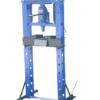
For most car repair work, a 20-tonne floor-standing hydraulic shop press is the sensible starting point. It offers enough force for common bearing, bush and drivetrain jobs while remaining manageable in a normal garage. A 30-tonne model provides more headroom for seized parts, heavier commercial work and frequent use. Above that, 50-tonne presses are generally aimed at busy workshops, agricultural equipment and fabrication work where large components are routine.
More tonnage is not automatically better. A higher-capacity press costs more, weighs more and needs more floor space. If 90 per cent of your work involves passenger cars, a well-built 20-tonne press with a good working width and adjustable bed can be better value than a poorly specified 50-tonne unit.
US PRO 8 Ton Handheld Hydraulic Press Crimping Tool 4 – 70MM² For Aluminium, Copper Or Steel Wire
Hydraulic Shop Press Review: Frame, Ram and Bed
Frame construction tells you a lot about how a press will feel in use. Look for a welded steel frame with substantial uprights, a properly braced top beam and a wide base. A press should sit squarely on a level concrete floor without rocking. Thin uprights and light cross-members may be acceptable for occasional low-load work, but they are not ideal for repeated high-pressure jobs.
The gap between the uprights is just as useful as the tonnage rating. Wide working space gives room for hub assemblies, axle components and bearing separator tools. Check the maximum daylight opening as well. A deep opening makes it easier to work with taller parts and adaptors, while an adjustable bed lets you bring the work close to the ram rather than relying on long stacks of spacers.
Bed adjustment deserves close attention. Pin-adjusted beds are common, effective and good value, but moving a heavy bed by hand can be awkward. A winch-assisted bed adjustment system costs more but is worthwhile in a busy workshop, particularly on 30-tonne and 50-tonne presses. It improves set-up speed and removes one of the least enjoyable parts of operating a large press.
A quality hydraulic ram should lower and retract predictably, with no obvious oil seepage around seals or fittings. Bottle-jack systems remain popular because they are simple and economical to replace. Air-hydraulic systems speed up repetitive work by using compressor air for the initial stroke, while retaining hand-pump control when precision matters. For a garage already running an air compressor, this can be a major time saver.
Where Budget Presses Make Sense
Affordable equipment has a place, especially for a home mechanic or small garage building its workshop gradually. A basic manual 20-tonne model can handle many of the same tasks as a more expensive unit if it has a solid frame, sensible dimensions and correctly rated components.
The trade-off is usually convenience, not basic pressing ability. Budget presses may have manual bed adjustment, a slower pump, fewer included press plates or a less refined finish. None of these are deal-breakers if the press is used occasionally. They become more significant when several vehicles pass through the workshop each week.
Do not judge value by the headline sale price alone. Consider whether the press includes a pressure gauge, V-blocks or press plates, and whether replacement hydraulic parts are available. A slightly higher initial price can be the better deal if it avoids buying essential accessories separately or replacing a weak jack after limited use.
Irish Tools Shop focuses on affordable professional-grade workshop equipment, which suits buyers who need dependable capacity without paying premium distributor pricing. The best purchase is normally the press that matches your normal workload, not the most expensive machine on the page.
Pressure Gauges and Accessories Are More Than Extras
A pressure gauge is one of the most useful additions to a hydraulic press. It does not make an unsafe set-up safe, but it gives the operator a clear indication of load. This helps when following manufacturer specifications, repeating a known job or recognising when a component is resisting beyond a sensible level.
Without a gauge, it is easy to keep pumping because the part has not moved. With a gauge, you can stop, reassess alignment, apply penetrating oil, use the correct bearing tool or decide that controlled heat is needed. That judgement protects expensive hubs, aluminium housings and press tooling.
Press plates should be thick, flat and matched to the size of the work. Basic plates are useful, but a proper bearing separator, stepped support blocks and suitable drifts dramatically improve results. Never balance a component on random sockets, loose steel offcuts or uneven timber. The force involved can send parts or tooling out from the press area at speed.
Safety Is Part of the Buying Decision
A hydraulic shop press is one of the most useful machines in a garage and one of the easiest to misuse. The main risk is not simply high pressure. It is stored energy, poor support and parts shifting suddenly when an interference fit releases.
Set the press on a sound, level floor and keep the work centred beneath the ram. Use supports that contact strong, flat areas of the component. Make sure the ram, bearing driver and workpiece are aligned on the same axis before applying pressure. If the part begins to tilt, stop immediately rather than trying to force it straight under load.
Wear eye protection and keep your face and body out of the line of force. A clear polycarbonate safety guard is a worthwhile feature where available, particularly in a commercial setting. Keep bystanders clear, inspect the hose and fittings regularly, and never use a press to support a vehicle or as a substitute for a jack, axle stands or a lifting table.
Manual or Air-Hydraulic: Which Is Better?
A manual hydraulic press is the right choice for many buyers. It is straightforward, needs no compressor and gives a good feel for the load being applied. For occasional bearing work, the lower purchase cost makes clear sense.
Air-hydraulic operation is better for workshops performing repetitive tasks. The air-powered stage closes the ram quickly, reducing pumping time and operator fatigue. It is particularly useful when a technician needs to move between jobs rather than stand at the press for every stroke. However, it needs a suitable air supply and adds complexity, so it is not automatically the best option for a home garage.
Choose manual for simplicity and low cost. Choose air-hydraulic when press work is frequent enough that faster set-up and reduced effort will pay back the difference.
The Practical Verdict for UK Garage Buyers
For general automotive repairs, a 20-tonne floor-standing press with a strong welded frame, adjustable bed, press plates and preferably a pressure gauge is the best all-round buy. It covers the jobs most independent garages and committed DIY mechanics face without demanding excessive space or budget.
Move to 30 tonnes if seized suspension components, vans, agricultural machinery or regular professional use are part of the workload. Select a bench press only when space is tight and the work is genuinely light. Whatever capacity you choose, spend time on frame quality, working dimensions and safe support tooling before being persuaded by the biggest tonne figure.
A press pays for itself when it prevents one damaged hub, shortens one difficult bearing job or lets your workshop complete work in-house rather than sending it elsewhere. Buy the capacity you will use, set it up properly and let the machine do the forceful work while you stay in control.
