








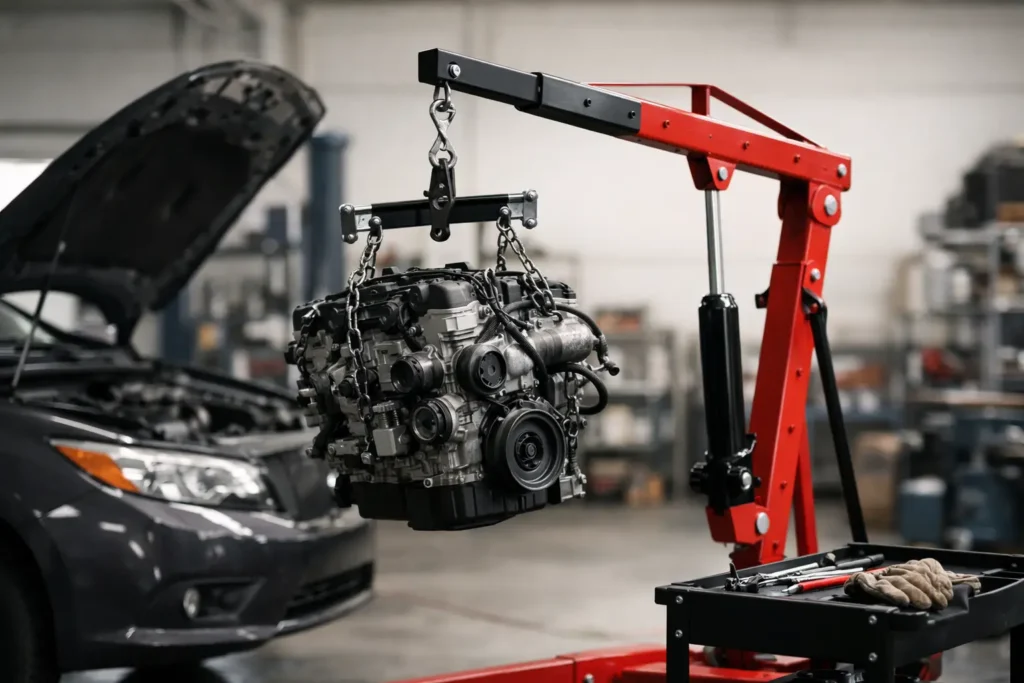
An engine swap stops being a straightforward job the moment lifting equipment is undersized, poorly positioned or difficult to move under load. The right engine cranes give a garage the control to remove, hold and refit heavy engines safely, without tying up ramps, improvising with straps or risking damage to the vehicle.
For a busy workshop, an engine crane is not an occasional extra. It is a working piece of lifting equipment that needs the right capacity, boom reach and footprint for the vehicles coming through the door. For serious home mechanics, it is often the difference between taking on a rebuild properly and struggling through it with unsuitable gear.
Choosing Engine Cranes by Capacity and Reach
Capacity is the first figure most buyers check, but it is not the only one that matters. A 2-tonne engine crane may sound more than adequate for typical car engines, yet its safe working load reduces as the boom extends. The capacity stated at the shortest boom setting is not necessarily the rating available at full reach.
This matters when working on vehicles with a deep engine bay, a long front end or limited access around the bonnet opening. You may need the boom fully extended to clear the engine, gearbox or ancillary components. Check the load chart on the crane before buying, then compare its extended-position capacity with the heaviest unit you expect to lift.
A 1-tonne folding engine crane can suit lighter petrol engines and occasional home use where storage is tight. A 2-tonne model is usually the more versatile choice for independent garages, diesel work and regular lifting. It offers useful headroom when assemblies are awkward, loaded with accessories or being lifted with a gearbox attached.
Do not buy purely on the biggest headline number. A crane that is rated well but cannot reach the lifting points cleanly can turn a simple removal into a frustrating job. Measure the likely distance from the crane legs to the engine lifting points, and consider bonnet height, radiator support panels and available floor space.
Folding, Fixed and Long-Reach Frames
Folding engine cranes are popular because they can be stored against a wall when not in use. This is a practical benefit in home garages and smaller workshops where every square metre matters. The trade-off is that folding mechanisms add joints and pins, so inspect them regularly and make sure the legs lock fully in the working position.
Fixed-leg cranes are often a better fit for high-use environments. They are simple, stable and ready to work, although they claim more permanent floor space. If engines are removed every week, the time saved by having lifting equipment ready can outweigh the storage issue.
Long-reach models are worth considering for larger vans, 4x4s and vehicles with engines set well back in the bay. Extra reach is useful, but it changes the loading on the boom and frame. Always use the correct boom position and never assume that a longer reach carries the same load as the shortest setting.
What Makes an Engine Crane Safe in Daily Use
A good engine crane needs more than a large capacity label. Look for a heavy-duty steel frame, a properly rated hydraulic ram, strong castors and clear markings on each boom position. Weld quality, pin fitment and the condition of the chain and hook all matter once a load is off the ground.
The workshop floor matters too. Engine cranes move best on clean, level concrete. Loose gravel, broken paving, drain covers and steep slopes can stop castors suddenly or pull the crane out of line. A load that swings even slightly can create a serious hazard, particularly around wings, doors and vehicle lifts.
Before every lift, check four essentials:
- The crane is on firm, level ground with both legs fully positioned.
- The boom setting has enough rated capacity for the actual assembly being lifted.
- The chain, hook, leveller and lifting points are undamaged and correctly secured.
- The route for moving the load is clear of tools, cables, ramps and people.
Never work beneath a suspended engine. Once the unit is out and needs to be held for repairs, lower it onto a suitable engine stand rated for the job. A crane is designed to lift and position. An engine stand is designed to support the engine during stripping, rebuilding and assembly.
Use an Engine Leveller for Better Control
An engine leveller is one of the most useful additions to an engine crane. It allows the load angle to be adjusted gradually while the engine is suspended. That control is valuable when removing an engine and gearbox together, where the assembly often needs to tilt sharply to clear the bulkhead and front panel.
Without a leveller, mechanics may rely on changing chain positions mid-job or trying to control the angle by hand. Neither is ideal. A correctly rated leveller gives a more controlled lift and reduces the chance of catching pipework, wiring, radiators or bodywork.
Check the leveller’s safe working load separately from the crane. The system is only as strong as its lowest-rated component. This includes shackles, hooks, chains and the vehicle manufacturer’s lifting eyes. If a lifting eye is corroded, bent or missing, replace it with the correct part rather than attaching to a convenient bracket.
Getting the Crane into Position
Open the bonnet as far as its hinges allow and remove it if access remains restricted. Protect painted edges where practical, and remove components such as the radiator, front panel or intercooler when the workshop procedure calls for it. Taking time to create clearance is normally quicker than forcing a heavy assembly through a narrow gap.
Position the crane centrally in front of the vehicle. Its legs should sit evenly on the floor and should not be pushed against tyres, ramps or obstructions. If the car is raised, make sure there is enough clearance beneath the chassis and that the crane can roll freely as the engine comes forward.
Lift slowly until the chains take the weight, then stop. Check that the engine is balanced, the lifting points are carrying correctly and no hoses, earth straps, gear linkages or driveshafts remain connected. This pause prevents the common and costly mistake of finding one forgotten connection only after the engine is already hanging in the air.
Once clear, keep the load low while moving it. A low centre of gravity gives better control and reduces the consequences if a castor catches. Avoid rushing, avoid sharp direction changes and keep hands clear of pinch points between the crane, vehicle and engine.
Maintenance That Protects Your Investment
Engine cranes work hard but are simple to maintain. Keep the ram clean, inspect for hydraulic fluid leaks and make sure the release valve operates smoothly. Grease moving pivots where specified by the manufacturer, and remove dirt or swarf from castors so the crane rolls properly.
Inspect chains, hooks and safety latches before use. A stretched chain link, cracked weld, damaged castor or bent boom pin is a reason to take the crane out of service until it is repaired or replaced. Do not treat lifting equipment faults as minor workshop annoyances. They are safety issues.
When storing a folding model, lower the boom completely and keep it in a dry area. Moisture and poor storage shorten the life of hydraulic components and leave moving joints stiff when the crane is needed most. A quick inspection before each job costs very little and helps avoid downtime in a packed workshop.
For garages that need dependable lifting equipment without premium distributor pricing, Irish Tools Shop offers practical workshop tools built for real mechanical work. Choose a crane around the vehicles you service most often, allow a sensible margin on capacity, and pair it with correctly rated lifting gear. The job will be safer, cleaner and far easier to keep moving.
