






A tool chest earns its place when a job is moving quickly and every socket, spanner and diagnostic tool is where it should be. For a working mechanic, busy garage or serious home workshop, scattered tools cost time, damage equipment and make routine work harder than it needs to be. The right storage gives you faster access, a cleaner bay and better protection for the tools you have paid for.
Cheap storage can look good on a screen but disappoint once drawers are loaded with impact sockets, pullers and heavy hand tools. A worthwhile chest needs strong construction, sensible drawer layouts, reliable runners and enough capacity for the work you actually do. Buying the biggest unit available is not always the answer. Buying the right one for your tools, space and workload is.
Choosing Tool Chests for Real Workshop Use
Start with the type of work carried out in your garage. A mobile mechanic may need a compact roller cabinet that fits easily beside a vehicle and can be secured in a van overnight. A fixed workshop with several bays can make better use of a larger combination chest, with a roll cabinet below and a top chest above for maximum organised storage.
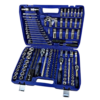
Think about the tools that need a permanent home, not only the tools currently lying on the bench. Socket sets, ratchets, spanners, pliers, screwdrivers, electrical testers, air fittings and specialist brake tools soon fill a small cabinet. If you are building a workshop, leave room for the next set of tools rather than replacing an undersized chest in a year.
The working surface matters too. A roller cabinet with a solid top can double as a useful preparation area for parts, fasteners and paperwork. In a tight garage, that extra usable surface can be more valuable than another separate bench. However, it should not be treated as a substitute for a proper heavy-duty workbench when regularly stripping engines, gearboxes or suspension assemblies.
Size, Drawer Layout and Capacity
Overall dimensions tell you whether a chest will fit against a wall or between vehicle bays, but drawer dimensions determine whether it will work day to day. Deep drawers are useful for power tools, air tools, larger pullers and bulky service kits. Shallow drawers are better for socket rails, spanners, screwdrivers, measuring tools and small electrical items.
A sensible layout normally combines both. Too many deep drawers waste space when filled with small tools. Too many shallow drawers leave nowhere for larger equipment and encourage tools to end up on the floor or bench. Consider how you reach for tools during a standard job. Frequently used items should sit in the upper drawers, while heavier and less regularly used equipment belongs lower down.
Drawer load rating deserves close attention. A drawer filled with 1/2-inch impact sockets, breaker bars and adapters weighs far more than it appears. Weak runners can bind, sag or fail under repeated use, particularly if the chest is moved while loaded. Look for smooth, supported drawer runners designed for workshop weight, rather than light domestic storage.
Do not overlook total cabinet load capacity. A fully stocked chest can become extremely heavy, especially when loaded with tool sets, cordless equipment and steel accessories. The base, castors and frame must all be capable of carrying that weight safely. This is particularly important for rolling cabinets that are moved across rough concrete floors.
Steel Construction Makes the Difference
Tool storage takes knocks. Drawers are opened with oily hands, cabinet sides meet vehicle lifts and castors cross expansion joints in the floor. Steel thickness, reinforced drawer edges and a rigid cabinet structure all influence how well a chest stands up to this use.
Powder-coated finishes are a practical choice for workshops because they help resist everyday scratches, oil residue and grime. They will not make a cabinet indestructible, but they make it easier to keep clean and presentable. Dark finishes tend to hide workshop marks better, while brighter colours can make a chest easier to spot in a larger shared space.
Weld quality and cabinet alignment are also worth checking. Drawers should open without catching, sit square when shut and close securely. A chest with poor alignment may seem acceptable when empty, then become frustrating once every drawer is carrying weight. Reliability is not an optional extra when the cabinet is opened dozens of times a day.
Mobility, Stability and Castors
A rolling tool chest gives flexibility in a garage. You can bring the tools to the ramp, move the cabinet around a vehicle or clear space for larger jobs. Good castors should roll freely under load and include dependable brakes to stop the cabinet moving when you are applying force to a tool.
Larger wheels generally cope better with uneven workshop floors, thresholds and debris. Small castors can be suitable for a light-duty cabinet on smooth flooring, but they are less useful in a working garage where dust, metal fragments and uneven concrete are common. The practical test is simple: a loaded chest should move when you need it to and stay put when you do not.
Stability is just as important as mobility. Opening several loaded drawers at once can make a tall cabinet tip forward. Anti-tilt systems, which allow only one drawer to open at a time, add useful protection in busy environments. Even without this feature, keep the heaviest tools in the bottom drawers and avoid pulling out multiple full drawers together.
Security for Tools You Rely On
Tools are expensive to replace, and portable equipment is an easy target in shared workshops, commercial premises and vans. A central locking system helps keep all drawers secured when the chest is unattended. It is not a replacement for secure building or vehicle storage, but it is an essential first layer of protection.
Check whether the lock engages properly across the drawers and whether spare keys can be stored safely. For garages with several technicians, decide who needs access before choosing a single large chest. In some cases, separate smaller cabinets are more practical than one shared unit, as they reduce lost tools and make accountability clearer.
Security also means protecting tools from damage. Drawer liners stop sockets, spanners and precision items sliding around when the cabinet moves. Foam organisers cost extra, but they can save time by keeping sets complete and making missing tools obvious at a glance. For diagnostic equipment, torque wrenches and measuring tools, that protection is worthwhile.
Set Up Your Chest to Save Time
A well-built cabinet still needs a logical layout. Group tools by task rather than simply filling drawers wherever space is available. Keep socket sets and ratchets together, brake service tools together, and electrical tools in their own area. That approach reduces time spent searching and makes it easier to return equipment after a job.
Use the top drawers for your daily essentials: screwdrivers, pliers, ratchets, socket rails, trim tools and common spanners. Mid-level drawers suit specialist sets used regularly, such as brake wind-back kits, bearing tools and torque tools. Lower drawers should carry heavier items, including cordless power tools, impact guns and large socket cases.
Avoid overpacking. A drawer crammed with loose tools is difficult to open, hard to clean and more likely to damage its contents. If a chest is already full, add a side cabinet, top chest or separate storage solution instead of forcing another tool into the wrong place. Order is part of workshop efficiency, not decoration.
Get Value Without Buying Twice
The best value tool chests are not necessarily the cheapest at checkout. A low-cost cabinet that develops broken runners, seized castors or bent drawers soon becomes a false economy. Equally, not every buyer needs a premium-sized professional unit with capacity far beyond their current work.
Match the specification to the workload. A serious DIY user servicing vehicles at weekends may be well served by a durable mid-size roller cabinet with a secure lock and a mixed drawer layout. A professional technician using the chest every day should place more weight on drawer capacity, runner quality, castor strength and long-term durability.
At Irish Tools Shop, workshop buyers can choose affordable, reliable storage alongside the socket sets, jacks, air tools and service equipment that fill it. Check the dimensions, drawer arrangement and load details before ordering, then choose a cabinet that leaves your tools protected, visible and ready for the next job.
A tidy chest will not do the repair for you, but it will remove wasted minutes from every repair that follows. Give your most-used tools a proper place, keep the heavy gear supported and buy storage built to work as hard as the rest of your garage.
