



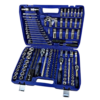



A missing 13 mm socket or a rounded-off screwdriver can stop a straightforward repair for far longer than it should. A tool box with tools gives you a ready working base for servicing cars, handling garage repairs and tackling serious DIY without buying every item one at a time. The right kit saves money, keeps the workspace organised and puts the tools you reach for most within arm’s reach.
But not every pre-packed box is a bargain. A large tool count can look impressive while hiding duplicates, light-duty bits or accessories that never leave the tray. Buy for the jobs you actually do, the space you have and the level of daily use the kit must withstand.
What a Tool Box with Tools Should Include
For most garage and automotive work, a useful starter set begins with a sensible socket range. That generally means metric sockets, a ratchet, extension bars, a universal joint and a selection of deep sockets. Metric sizes are the priority for most modern vehicles in Ireland and the UK, while a few imperial tools can still be useful for older machinery, trailers and certain imported equipment.
Combination spanners should cover the common sizes without large gaps. Screwdrivers need both flat and cross-head profiles, preferably with comfortable non-slip handles. Pliers, side cutters, an adjustable wrench, a hammer, hex keys and a tape measure round out the tools used on countless routine jobs.
A better-equipped tool box may also include Torx and spline bits, spark plug sockets, breaker bars, impact socket sets or specialist pliers. These add real value for mechanics, but only if the quality is suitable. A cheaply made breaker bar or impact socket is not a replacement for a properly rated workshop tool.
For a general-purpose kit, look for a balanced selection rather than the highest number printed on the box. Two good ratchets and a practical range of sockets are worth more than 100 loose screwdriver bits of uncertain quality.
Match the Kit to the Work You Do
A homeowner tightening fittings, assembling furniture and carrying out occasional vehicle checks has different needs from a technician servicing several cars each day. The tool box should suit the workload, not just the budget.
DIY and home maintenance
For occasional jobs, portability matters. A compact carry case with well-marked slots keeps tools together in a shed, boot or utility room. Focus on the core hand tools: a socket set, spanners, screwdrivers, pliers, hammer and measuring tools. There is little benefit in paying for specialist brake tools or oversized sockets that will never be used.
That said, avoid buying a kit so basic that it cannot handle a seized fastener or an awkward access point. A ratchet with extensions, a solid adjustable wrench and a useful bit set make everyday repairs much less frustrating.
Car owners and serious DIY mechanics
If you service your own vehicle, the need for stronger tooling rises quickly. Oil changes, brake work, suspension jobs and battery replacement all demand metric sockets, Torx bits and dependable spanners. Deep sockets are particularly useful around threaded studs, while a breaker bar can make safe work of tight wheel bolts when used correctly.
A portable box is useful for driveway repairs, but a larger chest or roller cabinet is often a better next step. It lets you add specialist tools as your work expands, rather than forcing every item into a crowded plastic case.
Professional garages and trade use
Daily workshop use calls for tools that tolerate repeated loading, oily hands and fast-paced work. Look for chrome vanadium hand tools, clearly stamped sizes, solid ratchet mechanisms and secure storage. A tool kit can provide the foundation, but professional users will normally add dedicated impact sockets, torque wrenches, brake service tools, air tools and diagnostic equipment over time.
Here, a small saving on a weak ratchet can cost more in downtime than a stronger tool costs upfront. For garage use, choose reliability first, then build around it with the equipment your work requires.
Check the Box, Case and Storage Layout
The storage is not an afterthought. A tool box that rattles open in transit, has weak catches or mixes every socket together will slow you down. The best layout depends on whether you need to carry the set, store it on a bench or use it as part of a larger workshop system.
A moulded carry case keeps each item visible and makes it obvious when something is missing. It is a strong choice for mobile use and occasional repairs. Its drawback is capacity: once you buy extra tools, finding a secure place for them can become difficult.
Traditional metal tool boxes are durable and simple, with room for loose tools, consumables and larger items. They work well for tradespeople who want a hard-wearing portable option, although smaller sockets and bits may need separate organisers.
For a fixed garage, drawer tool chests and roller cabinets offer better organisation. Shallow drawers are ideal for sockets, spanners and pliers, while deeper drawers hold power tools, service kits and bulky equipment. A lockable cabinet also protects a serious tool investment when several people use the same workspace.
Before buying, check these practical details:
- Strong metal catches or secure latches that will not release during transport.
- Clear size markings on sockets, spanners and drawer labels.
- Enough room to add the tools you know you will need next.
- A handle and weight you can safely carry when the kit is full.
- Drawer runners and castors rated for the load if choosing a cabinet.
Quality Matters More Than the Tool Count
Tool counts are useful only when the contents earn their place. A 200-piece set may include every bit, clip and small accessory separately, which makes the number look high without necessarily increasing the kit’s working capability. Check the actual contents list and identify the tools you would otherwise buy individually.
For sockets and spanners, durable steel construction and accurate sizing matter. Poorly finished tools can slip on a fastener, damage the head and turn a routine job into a costly repair. Ratchets should engage cleanly and reverse positively. Handles should feel secure, particularly when working with gloves or in cold conditions.
For power and air tools, confirm the drive size, air requirement, battery platform or rated output before treating them as part of a package saving. A 1/2-inch drive impact socket set is built for different work from a 1/4-inch drive socket kit. Using standard chrome sockets with an impact wrench can be unsafe, so keep impact-rated sockets separate and clearly identified.
Warranty coverage is also worth checking. It does not make an unsuitable tool suitable, but it provides confidence when buying equipment intended for regular use. Affordable and reliable should mean paying for the strength you need, not paying extra for a name alone.
Buy in Stages Without Leaving Gaps
A complete workshop is rarely bought in one order. Start with the hand tools that cover regular tasks, then add tools where they remove a real bottleneck. If wheel and brake work is common, invest next in a trolley jack, correctly rated axle stands, a torque wrench and brake service equipment. If you work on engines, lifting equipment and specialist pullers may become more valuable than another general screwdriver set.
This staged approach prevents duplicate purchases. It also helps you choose storage that can grow with the collection. A compact tool box with tools may be the right first purchase, while a tool chest becomes the sensible upgrade when loose tools begin filling benches, shelves and vehicle footwells.
Irish Tools Shop caters for this practical route, from everyday hand-tool sets through to workshop lifting equipment and larger garage storage. The objective is straightforward: buy the essentials at a fair price, then add professional-grade equipment when the work demands it.
Make Your Kit Work Harder
Once the box arrives, take a few minutes to check every tool, learn the layout and remove any packaging that obstructs access. Keep sockets and bits in their marked positions, wipe tools down after use and return them before moving to the next job. This is not about keeping a display cabinet tidy. It is how you avoid wasting time searching for a 10 mm socket halfway through a repair.
Do not overload a portable case simply because there is empty space. Heavy loose tools can damage smaller pieces and make lifting unsafe. For workshop cabinets, keep heavier items in lower drawers and avoid opening more than one loaded drawer at a time unless the cabinet is designed to prevent tipping.
A well-chosen kit should make the next job quicker from day one. Choose the tools you will use, store them where they stay protected and leave room for the equipment your garage will need next.
