






A car jack quick lift can turn an awkward job on the floor into fast, practical vehicle access. For tyre changes, brake work, exhaust repairs and inspections, the right lifting equipment saves time without taking up the space or budget of a full two-post ramp. But speed only counts when the lift is correctly rated, stable and used on suitable ground.
For busy garages and serious home mechanics, quick-lift equipment sits between a standard trolley jack and a permanent vehicle lift. It is built for buyers who need dependable clearance for regular servicing, but do not want the cost, installation work or ceiling-height requirements of a fixed workshop ramp.
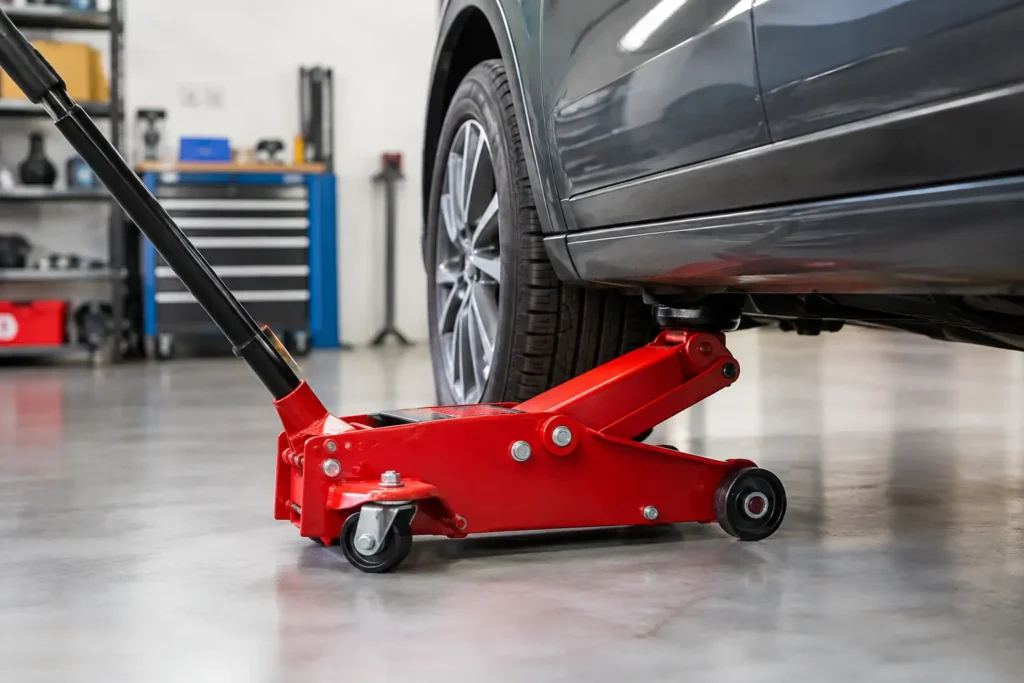
4 Ton Low Profile Floor Trolley Jack with Quick Dual Pump & 3 Years Warranty
What Is a Car Jack Quick Lift?
The term car jack quick lift is often used for compact hydraulic lifting equipment designed to raise a vehicle quickly from its factory jacking points or approved lifting points. Depending on the design, it may be a low-rise scissor lift, a portable lifting frame, or a fast-lift jack system with mechanical safety locks.
That distinction matters. A trolley jack raises one end or one corner of a car and is ideal for short jobs when used with correctly rated axle stands. A quick lift normally raises more of the vehicle at once, providing better access underneath and leaving the wheels free for brake, suspension and tyre work.
A proper quick-lift system should not rely on hydraulic pressure alone while you work. Look for positive mechanical locking positions, stable lifting arms or platforms, and clear instructions for the correct vehicle contact points. This is workshop equipment, not a shortcut around safe lifting practice.
3 Ton Trolley Jack Heavy Duty Hydraulic Floor Jack Fits Caravan Van 4×4 Garage
Why a Quick Lift Makes Sense in a Working Garage
The biggest benefit is access. Raising a car evenly gives you room to remove wheels, inspect undertrays, work around sills and carry out jobs that are uncomfortable or slow when the vehicle is supported only at one end. For repeat servicing, that time soon adds up.
It can also be a practical answer where space is limited. A low-rise or portable lift can be stored when not in use, allowing a home garage, detailing bay or small repair unit to keep its floor space available. That flexibility is useful, but it comes with trade-offs: portable equipment must still be set up on level, solid concrete and checked before every use.
For a professional garage, a quick lift is often a strong second lifting station. It can keep tyre, brake and suspension jobs moving while the main ramp is occupied. For the serious DIY buyer, it provides far more working room than a basic jack-and-stands setup, provided the vehicle and task suit the lift design.
Choose Capacity for the Vehicle You Actually Lift
Do not buy on price alone or assume that every car is light enough for every lift. Check the vehicle’s gross weight, then select a lift with enough rated capacity to provide a sensible margin. A small hatchback, a large estate car, an electric vehicle and a commercial van can differ significantly in weight and lifting-point layout.
Capacity is not the only figure to check. Pay close attention to the minimum pad height, maximum lifting height, platform length and overall footprint. Low sports cars need equipment that can get underneath without ramps or blocks. Larger SUVs may need wider pad adjustment, longer frames and sufficient lift height to make wheel and underbody work worthwhile.
Electric and hybrid vehicles deserve extra care. Their battery packs add weight and can alter the approved lifting locations. Never place pads or arms under a battery casing, floor pan or structural area unless the vehicle manufacturer specifies that point for lifting.
Minimum Height and Maximum Clearance
Low entry height matters if you work on lowered cars or vehicles with deep side skirts. Measure the available ground clearance rather than guessing from photographs. If access ramps are required, make sure they are designed for the lift and will not slide under load.
Maximum lift height determines the jobs the equipment will genuinely improve. A compact quick lift may be excellent for wheel-off servicing and inspections, but it will not replace a full-height ramp for gearbox removal, exhaust fabrication or standing work beneath the vehicle. Buy for the work you do most often, not for the occasional job that needs a different machine.
Safety Locks Are Not Optional
Hydraulic systems are effective, but mechanical locks provide the security needed while a vehicle is raised. Before starting work, raise the vehicle, confirm it is sitting evenly, then lower it gently onto the specified lock position. Do not work beneath a vehicle supported solely by a hydraulic jack or by a lift that has not engaged its safety devices.
Check that lock release controls are easy to operate but protected from accidental movement. On twin-frame systems, both sides must lift and lock evenly. If either side appears out of sync, stop immediately and inspect the equipment before continuing.
Match the Lift to the Job
A compact quick lift is particularly useful for tyres, brakes, suspension arms, wheel bearings, underbody inspections, oil services and valeting work. With all four wheels raised, access is cleaner and more controlled than lifting one corner at a time.
It is less suitable for every task. If your regular workload includes major engine and gearbox removal, chassis repairs or long periods working fully upright underneath vehicles, a two-post lift or four-post ramp may be the better long-term investment. Quick-lift equipment offers speed and value, but it is not a replacement for every type of workshop lifting equipment.
Also consider how often the lift will be moved. A portable unit can be ideal for a multipurpose garage, while a heavier fixed low-rise lift may be better for daily workshop use. Wheels, handles and storage stands make a real difference when the equipment needs to be cleared away between jobs.
Set-Up Rules That Protect You and the Vehicle
A lift is only as safe as the surface and procedure behind it. Use it on level, sound concrete that can support the vehicle and equipment load. Avoid uneven paving, sloped driveways, soft ground and damaged floors. The lift must sit flat, and the vehicle must be centred according to the manufacturer’s layout.
Before lifting, check tyre condition, remove loose items from the work area and identify the correct jacking points. Position the pads squarely under reinforced points, not under plastic trims, thin floor sections or suspension components unless the manufacturer explicitly permits it. Raise the vehicle only a short distance at first, then stop and check that it remains level and stable.
Keep a clear exclusion area around the lift. Nobody should sit in the vehicle, reach into the cabin or walk beneath it while it is being raised or lowered. When the work is complete, remove tools, lower the vehicle in a controlled manner and make sure the pads clear properly before driving away.
Maintain It Like Any Other Workshop Tool
Regular checks prevent expensive problems and avoidable downtime. Inspect hydraulic hoses for damage or leaks, examine pads for wear, keep moving joints clean, and check fasteners and safety locks at the intervals stated in the manual. Replace worn rubber blocks and damaged components with suitable parts rather than improvising a repair.
If the lift is used commercially, keep maintenance and inspection records. A tool that sees daily use needs more attention than a unit used for occasional weekend servicing. Good lifting equipment is affordable over its working life when it is looked after properly.
Getting Better Value From Your Purchase
The cheapest option is rarely the best value if it lacks lifting capacity, safety locks or spare-part support. Focus on a clear specification: rated load, lifting range, pad arrangement, locking system, power requirement and whether the unit is portable or fixed. These details tell you far more than a promotional image.
It is also worth planning the supporting equipment. Quality axle stands remain useful for jobs that require a vehicle to be held at a specific height. A trolley jack, wheel chocks, suitable lifting pads and proper impact sockets all help keep service work efficient. Buying the right equipment together avoids delays when the vehicle is already off the ground.
Irish Tools Shop supplies affordable, reliable workshop lifting equipment and mechanic essentials for buyers who need practical specifications without premium distributor pricing. Whether you are fitting out a garage bay or improving a home workshop, choose equipment that matches the vehicles on your floor and the work booked in.
A car jack quick lift should make every service job quicker, safer and less punishing on your back. Choose the capacity carefully, use the locks every time, and you will have a hard-working piece of equipment that earns its space in the workshop.
