






A seized wheel nut, a busy service bay and a flat-rate job do not leave much room for underpowered equipment. The choice between air tools vs electric affects how quickly work moves, how much you spend upfront and whether your setup can cope with repeated daily use. Neither option wins every job. The right answer depends on the work you do, the space you have and the air or electrical supply already available.
For a home mechanic, a cordless impact wrench may be the quickest route to useful power. For a garage removing wheels all day, a properly sized compressor and pneumatic impact wrench can be the more productive long-term investment. Buy for the workload, not just the headline price.
Air Tools vs Electric: The Core Difference
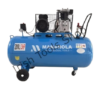
Air tools use compressed air supplied by a compressor, hose and couplings. The tool itself is usually compact, tough and simple, but it only performs as well as the compressor feeding it. An air impact wrench, ratchet, die grinder or tyre inflator is part of a system rather than a standalone purchase.
Electric tools run from either a mains lead or a battery. Corded tools offer continuous power wherever there is a suitable socket. Cordless tools bring mobility, with no air hose trailing around a vehicle or workshop floor. Batteries, chargers and spare battery platforms become part of the buying decision.
The practical difference is consistency. Pneumatic equipment can run for long periods when the compressor has enough delivered air. Cordless equipment is faster to pick up and use, but repeated heavy jobs can drain batteries or trigger thermal protection. A mains electric tool avoids battery changes, although its cable can limit movement.
When Air Tools Make Better Sense
Pneumatic tools remain a workshop standard for good reasons. They are particularly well suited to regular automotive work, tyre bays, bodywork preparation and garages where a compressor is already running.
An air impact wrench can handle wheel removal repeatedly without requiring a battery change. Air ratchets fit into tight engine-bay spaces, while die grinders and cut-off tools offer steady performance for fabrication, exhaust repairs and cleaning corroded parts. Many air tools are also lighter in the hand than their battery-powered equivalents because there is no large battery pack beneath the handle.
Air tools deal well with sustained use. They have fewer electronic components to overheat, and their mechanical design is generally straightforward. With clean, dry air and occasional oiling where required, a quality pneumatic tool can give dependable service in a hard-working garage.
There is also a cost advantage when building a broader tool collection. Once the compressor is in place, individual air tools can be affordable compared with premium cordless tools supplied with batteries and chargers. That matters when you need an impact wrench, ratchet, grinder, inflator and blow gun rather than one tool alone.
The catch is compressor capacity. Pressure alone does not tell the full story. A compressor may be rated at 8 or 10 bar, but the key figure is its delivered air volume, commonly shown as litres per minute or CFM. Check the tool’s air consumption and allow a sensible margin. A small portable compressor may run a tyre inflator or blow gun comfortably, yet struggle to keep up with a die grinder used continuously.
What a pneumatic setup needs
A useful air system needs more than a compressor and a tool. You will need the right hose bore, secure couplings and a regulator set to the tool manufacturer’s recommended pressure. A restrictive hose or undersized fitting can reduce performance, making a strong impact wrench feel weak at the wheel nut.
Moisture control matters too. Compressors create condensation, especially in damp conditions. Drain the tank regularly and use filtration where appropriate. Water in the air line can damage tools, spoil paintwork and reduce reliability. Keep hoses off sharp edges, inspect fittings for leaks and never point an air gun at skin or clothing.
Where Electric Tools Have the Advantage
Electric tools are hard to beat for convenience. A cordless impact wrench can be taken to a driveway, recovery job or customer vehicle without searching for a socket or pulling out an air line. For mobile mechanics and serious DIY users, that freedom is often worth the higher purchase cost.
Battery impact wrenches have improved considerably. A capable 18V or 20V-class model can remove most car wheel nuts and tackle many suspension fasteners. They are ideal for quick tyre changes, brake jobs and occasional repair work. A cordless ratchet is equally useful where a hose would snag around an engine bay.
Mains electric tools suit fixed jobs where continuous running is needed but a compressor is not practical. A corded grinder, drill or polisher delivers steady output without charging breaks. For a small workshop with reliable mains power, it can be the sensible middle ground between basic hand tools and a full compressed-air installation.
Electric tools are also cleaner to set up. There is no compressor noise building in the background, no tank to drain and no air leaks wasting energy. Pick up the tool, fit the correct socket, disc or bit, and get on with the job.
That said, batteries are consumable parts. Their capacity falls over time, particularly if they are stored flat, overheated or used constantly in cold conditions. If a cordless impact is central to your trade, budget for at least two batteries and choose a platform with compatible drills, grinders, lights and other workshop essentials. One battery and one charger can become a delay you did not need.
Power Claims: Look Beyond the Numbers
Manufacturers often advertise impressive torque figures for electric impact wrenches. These figures can be useful, but check whether they refer to fastening torque or breakaway torque. Breakaway torque is the force available to loosen a stubborn fastener, while fastening torque should be controlled to avoid overtightening wheel nuts and damaging threads.
With air impacts, quoted torque also depends on the supplied pressure and airflow. A tool tested with a short, wide hose at full pressure may not achieve the same result on a long, narrow hose with a tired compressor. For both types, a quality impact socket set and correct fastening procedure matter as much as outright force.
Do not use an impact wrench as the final word on wheel nut torque. Run nuts up carefully, then use a calibrated torque wrench to tighten to the vehicle manufacturer’s specification. It protects wheels, studs and customers, and it avoids the expensive problem of overtightened fixings at the next service.
Upfront Cost Versus Long-Term Cost
A cordless tool can appear expensive because the real package includes the body, batteries and charger. It may still be the best value if it saves time, especially for mobile work or occasional jobs where installing an air system would make little sense.
Air equipment usually costs more at the start if you are buying the full setup. You may need a compressor, hose reel, fittings, regulator and the tools themselves. However, that investment spreads well across a busy workshop. A compressor can support tyre inflation, cleaning, spraying, air-operated lifting accessories and multiple hand tools.
Running costs need an honest look. Compressors consume electricity and can be noisy, particularly when cycling frequently. Leaks in hoses and fittings waste air and make the compressor work harder. Electric tools use power too, while replacement batteries can add a significant cost over several years. The cheapest option is rarely the one with the lowest ticket price. It is the one that keeps jobs moving without creating avoidable downtime.
Choose by Your Type of Work
For occasional repairs, wheel changes and home servicing, cordless electric tools are usually the easiest starting point. Add a good trolley jack, axle stands, impact sockets and a torque wrench, and you have a practical setup without needing a compressor.
For a professional garage, tyre service operation or fabrication area, air tools earn their place quickly. A correctly specified compressor allows repeated use, supports several tasks and gives technicians familiar, hard-wearing equipment for demanding work.
A mixed workshop often gets the best result from both. Use cordless tools for fast jobs away from the bench or ramp, then rely on pneumatic impacts, grinders and inflators for repetitive work. This reduces pressure on one system and keeps a backup available if a battery is charging or the compressor is being serviced.
Before buying, write down the tools you use most often and how long each runs at a time. Match air demand to compressor output, or match battery capacity and torque to the jobs you actually handle. Irish Tools Shop focuses on affordable, reliable workshop equipment because a tool only represents good value when it is ready to work when you are.
Choose the setup that removes the biggest delay from your day. A cordless impact may save a mobile mechanic ten minutes on every call-out; a properly supplied air system may save a busy garage hours across a week. Buy the tool system that earns its space in your workshop.
