






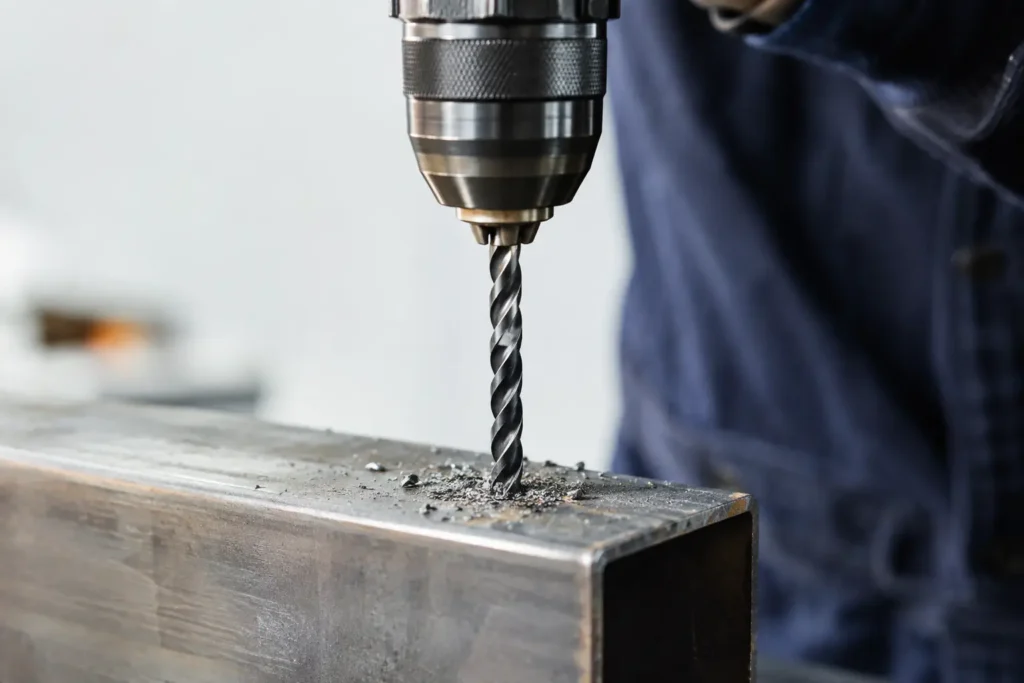
A drill bit turning blue, squealing through a steel bracket or polishing the surface without cutting is usually not a drill-power problem. It is a speed, pressure and heat problem. If you are asking what drill speed for steel, the short answer is: slower than most people expect, with steady pressure and cutting fluid.
For garage work, slower RPM gives the cutting edge time to bite and carry heat away in the swarf. Run too fast and the bit overheats, loses its edge and can work-harden mild steel. That turns a straightforward hole in a chassis bracket, mounting plate or tool cabinet into an expensive waste of drill bits.
What Drill Speed for Steel? Start With Bit Size
There is no single RPM for every steel-drilling job. The correct speed falls as drill diameter rises. A 3 mm pilot hole can run far faster than a 13 mm hole because the outside edge of the larger bit is travelling much quicker.
For ordinary mild steel, these RPM ranges are a practical starting point with an HSS or cobalt twist drill in a pillar drill or variable-speed hand drill.
| Drill bit diameter | Starting speed for mild steel | |—|—:| | 3 mm | 2,000-3,000 RPM | | 4 mm | 1,500-2,200 RPM | | 5 mm | 1,200-1,800 RPM | | 6 mm | 1,000-1,500 RPM | | 8 mm | 750-1,100 RPM | | 10 mm | 600-900 RPM | | 12 mm | 450-700 RPM | | 13 mm | 400-600 RPM |
These figures are sensible workshop ranges, not a rule that must be followed to the exact RPM. Drill press rigidity, steel grade, hole depth, coolant and the quality of the bit all affect the best setting. When in doubt, start towards the lower end and listen to the cut.
A good cut produces tight, curled metal swarf and a steady drilling sound. Fine dust, smoke, discoloured metal or a high-pitched squeal mean the drill is running too quickly, is not sharp, or is not being fed hard enough.
Use Surface Speed to Choose the Right RPM
Professional machinists work from cutting speed, often called surface metres per minute. It is the speed of the bit’s cutting edge as it passes through the material. This is why a larger bit needs lower RPM even when drilling the same steel.
For mild steel, HSS drill bits generally work well around 20-30 metres per minute. Cobalt bits can often run a little quicker, around 25-35 metres per minute, but they still need controlled speed and lubrication. Carbide is a different case: it is suited to rigid machines, not a handheld drill wandering across a vehicle bracket.
The workshop calculation is:
RPM = cutting speed × 1,000 ÷ (3.14 × drill diameter in mm)
For example, using 25 metres per minute with a 10 mm HSS drill gives roughly 800 RPM. With a 6 mm drill, the same cutting speed gives around 1,325 RPM. You do not need to calculate every hole on the job, but understanding the relationship stops the common mistake of setting every bit to full speed.
Match the Speed to the Type of Steel
“Mild steel” covers much of the steel found in fabrication, general repair and workshop fixtures. It is usually forgiving when you use a sharp HSS bit, moderate speed and cutting oil. But automotive and industrial work regularly involves tougher material.
Mild steel and ordinary brackets
Use the RPM table as your starting point. HSS bits are suitable for occasional work, while cobalt bits are worth the extra cost if you drill steel regularly. For a 10 mm hole in 3-5 mm mild steel, around 600-800 RPM with cutting fluid is a reliable working range.
Stainless steel
Stainless steel needs a slower speed and more deliberate feed pressure. It work-hardens quickly if the bit rubs rather than cuts, leaving a polished surface that can be harder than the surrounding steel. Drop the speed by roughly 30-50 per cent from mild-steel settings. A 10 mm cobalt drill at 400-600 RPM is a safer place to begin.
Keep the bit cutting continuously where possible. Pausing repeatedly while the bit is spinning can create heat and harden the surface. Use proper cutting paste or oil, especially on thicker stainless sections.
Hardened steel, spring steel and high-tensile parts
A standard HSS drill is unlikely to make progress in properly hardened steel. Slowing it down will not overcome the wrong bit material. Cobalt may work on some high-tensile steel, but hardened pins, bearing races, springs and heat-treated components can require carbide tooling, annealing, or a different repair method.
Do not drill structural vehicle components, suspension parts or fasteners without considering the safety implications. A hole in the wrong place can weaken the part, and a snapped bit inside a critical bracket creates more work than it saves.
Drill Speed Is Only Half the Job
Correct RPM matters, but steel drilling depends just as heavily on feed pressure. The cutting lips need enough pressure to take a proper chip. If you barely lean on the drill, the bit rubs, builds heat and blunts. If you force it aggressively, it can grab, snap or pull the workpiece from the vice.
With a handheld drill, use a low gear for larger holes. Low gear provides the torque needed to keep cutting at reduced RPM. High gear is useful for small pilot holes, but it is rarely the best choice for a 10 mm or 13 mm hole through steel.
Secure the work. Never hold a small steel plate by hand while drilling it. If the bit catches as it breaks through, the plate can spin sharply and cause a serious injury. Clamp the workpiece to a bench or drill table, support it properly and wear eye protection. Gloves should not be worn near rotating machinery because loose material can catch.
Choose a Drill Bit Built for Steel
The bit matters as much as the speed setting. Cheap, dull bits can make a good drill look underpowered. For occasional mild-steel repairs, quality HSS twist drills are a sound, affordable choice. For stainless, repeated fabrication work and tougher steels, cobalt bits retain hardness better at high temperatures.
Titanium-nitride coated bits can reduce friction, but the coating does not turn a poor bit into a stainless-steel specialist. Once a coated bit is sharpened, the coating is removed from the cutting edge. For regular workshop use, a good cobalt drill set and a reliable sharpening method often offer better value than repeatedly replacing bargain packs.
For thin sheet steel, a step drill is often cleaner and faster than forcing a large twist drill through the panel. Run it slowly, use lubricant and support the sheet to reduce tearing. For holes above 13 mm in thicker material, use a properly sized pilot hole, then step up through sizes or use an annular cutter in a suitable magnetic or pillar drill.
9 Piece Plumpers HSS Bimetal Holesaws | Drill Adaptors Included
Cutting Fluid Prevents Burnt Bits
Cutting oil is inexpensive compared with drill bits and wasted time. It lubricates the cut, improves swarf removal and reduces heat at the cutting edge. Apply a small amount before drilling, then add more for deep holes or larger diameters.
For vertical drilling on a pillar drill, a steady application is easy. On a handheld drill, brush or drip oil onto the cutting area and stop periodically to clear swarf. Do not flood the work around electrical equipment, and clean spilled oil from the floor before it becomes a slip hazard.
If you have no cutting fluid for a small emergency repair, drill more slowly and take breaks to prevent overheating. That is a compromise, not a substitute for lubricant. Avoid using general penetrating spray as your first choice where proper cutting oil is available.
Industrial 19 Piece HSS Cobalt Metric Drill Bit Set 1 – 10mm
Common Problems and Quick Fixes
If the bit is spinning but not cutting, stop before the steel work-hardens further. Check that the drill is sharp, reduce the RPM and apply firmer, controlled pressure. A centre punch mark also prevents the bit skating across the surface at the start.
If a bit keeps snapping, the usual causes are side loading, poor clamping, a bent bit, too much force or a drill grabbing as it breaks through. Ease pressure in the final millimetre, especially with thin steel. A pilot hole can help with larger holes, but do not make it excessively small – a pilot drill that is too small can leave the main drill chisel edge unsupported.
If the drill turns straw blue or dark blue, it has overheated. Replace or sharpen it rather than expecting it to cut cleanly next time. Slow the drill down, add cutting fluid and make sure the bit is producing chips instead of rubbing.
For dependable results, treat the speed chart as a starting setting, not a guess. Use a sharp bit, select low gear for larger diameters, clamp the job securely and let the swarf tell you whether the cut is right. That simple approach saves bits, protects your drill and gets steelwork finished without unnecessary delays.
