







A customer who has just paid for tyres will notice a crooked steering wheel before they leave the forecourt. Worse still, they will come back quickly if the new tyres start wearing on one edge. Wheel alignment tools give a workshop the means to measure and correct the angles that keep a vehicle tracking straight, steering predictably and using its tyres properly.
For a working garage, alignment is not a cosmetic extra. It is a profitable service, a sensible add-on after suspension work and a practical way to protect customers from premature tyre replacement. The right setup depends on the vehicles you see, the space available and how quickly the equipment needs to earn its place.
What wheel alignment actually measures
Wheel alignment is often called tracking, but front toe is only one part of the job. A proper alignment check looks at the angles set by the manufacturer, then identifies what can be adjusted and what points to worn, bent or damaged components.
Toe is whether the wheels point slightly inwards or outwards when viewed from above. Incorrect toe is a major cause of rapid tyre wear and can make a vehicle wander. Camber is the inward or outward lean of a wheel when viewed from the front. Excessive negative or positive camber can wear the inner or outer tyre shoulder. Caster is the steering axis angle that helps the wheel self-centre and affects straight-line stability.
Many vehicles also have rear adjustment points. If the rear axle is not square to the vehicle centreline, setting the front wheels alone may leave the steering wheel off-centre. This is why four-wheel alignment is the standard for garages handling modern cars, vans and suspension repairs.
Choosing wheel alignment tools for the work you take on
There is no single best system for every workshop. A tyre bay carrying out basic tracking on older vehicles has different needs from a busy garage fitting suspension arms, coilovers and steering components every day. Buying more capability than you can use wastes budget, but buying a basic kit that cannot handle routine jobs creates its own bottleneck.
Manual tracking gauges and toe plates
Toe plates, trammel gauges and string alignment kits are low-cost tools for quick checks. They can be useful for track cars, classic vehicles, mobile mechanics and DIY users who understand suspension geometry. They are also handy as a second check after replacing track rod ends.
Their limitation is speed and repeatability. The operator must set up carefully on a level surface, compensate for wheel run-out where required and interpret the readings correctly. They normally will not offer the vehicle database, printout or full-angle measurement expected by customers paying for a professional alignment service.
Optical and CCD alignment systems
CCD systems use measuring heads, wheel clamps and a console to calculate alignment angles. They remain a solid workshop option because they offer reliable measurements, guided procedures and manufacturer specifications without the cost of some premium camera-based machines.
Check the quality of the clamps, battery condition, software coverage and calibration support before buying. A cheaper system loses its value quickly if it is awkward to set up, has poor vehicle data or cannot be kept accurate. For a garage doing regular steering and suspension work, a four-wheel CCD system can be a sensible balance between cost and capability.
3D camera alignment systems
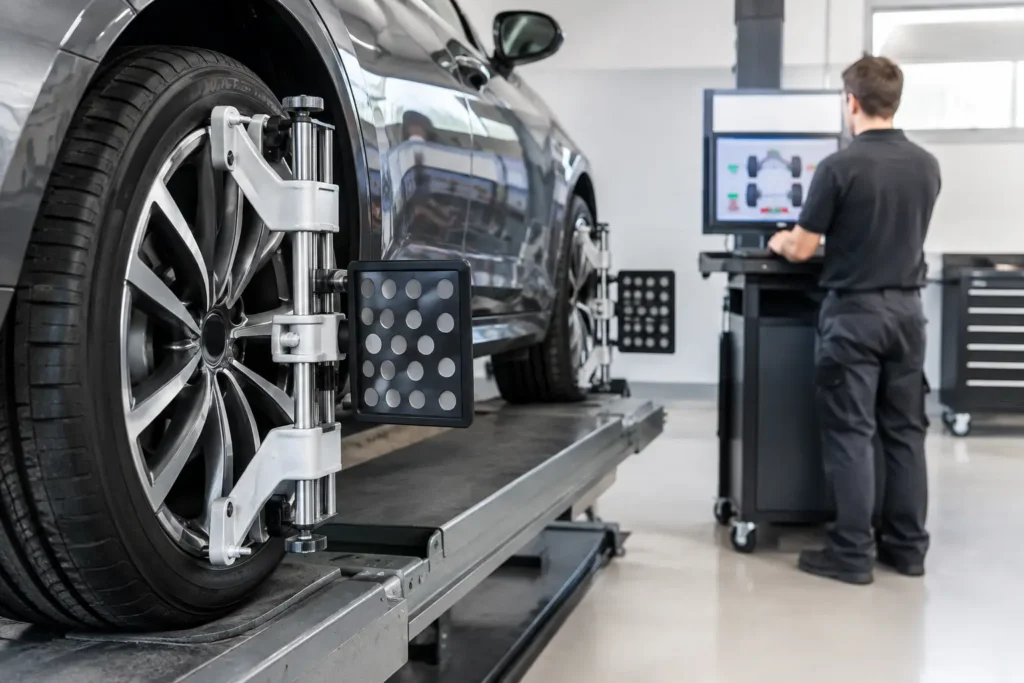
3D systems use targets mounted to the wheels and cameras positioned in front of the vehicle. They are quick, visual and well suited to high-throughput tyre and service bays. The technician can follow on-screen instructions, see live readings and produce a clear before-and-after report for the customer.
The trade-off is purchase price and space. The cameras need a stable, correctly positioned mounting point, while the lift or alignment bay must be level and suitable for the equipment. A 3D system earns its keep where alignment is a regular revenue stream, not an occasional favour for existing customers.
The equipment around the alignment machine matters
An alignment machine is only as accurate as the surface beneath the vehicle. A sloping or uneven floor can produce misleading camber and caster readings. Dedicated alignment lifts provide a level platform, rear slip plates and front recesses for turn plates, making adjustments safer and quicker.
If you are using a four-post lift, confirm it is designed or adapted for alignment work. You need enough access below the vehicle to reach eccentric bolts, adjust rear toe links and inspect suspension parts. Front turn plates allow the wheels to move freely as the steering is turned, while rear slip plates prevent the suspension from binding as the geometry changes.
A practical setup also includes a tyre inflator with a reliable gauge, tread-depth gauge, steering wheel holder and brake pedal depressor. These are small items, but skipping them undermines the job. Tyre pressures must be correct, tread condition must be checked and the steering wheel must be held straight before final toe adjustment.
Accuracy starts before the readings appear
A screen full of red values does not automatically mean the vehicle needs adjustment. First inspect the tyres for uneven wear, sidewall damage and mismatched sizes. Check wheel bearings, ball joints, track rod ends, bushes, springs, shock absorbers and ride height. Any play in the steering or suspension can make an alignment reading unstable or make the adjustment pointless.
Ask the driver what they have noticed. A pull under braking may be a brake issue rather than alignment. A drift on a cambered road can be normal, while a constant pull on level ground may need further investigation. Kerb damage, potholes and recent suspension replacement are useful clues.
Follow the vehicle manufacturer procedure rather than guessing. Some cars require ride-height measurement, steering angle sensor calibration or specific ballast conditions. Others have limited adjustment from the factory, so a bad reading may indicate accident damage, a bent suspension arm or a seized adjuster. Clear diagnosis protects the garage from promising a result that adjustment alone cannot deliver.
Turning alignment checks into profitable repair work
The strongest alignment service is transparent. Show the customer the initial readings, explain what they mean in plain language and point out any worn parts before adjustment begins. A printed or digital report supports the invoice and gives the customer evidence that the work was completed properly.
Alignment naturally follows tyre fitting, steering repairs, suspension replacement and accident repairs. It should also be offered when a vehicle shows feathered tread, an off-centre steering wheel or a complaint of pulling. Do not treat it as a rushed final step. A thorough inspection and correct adjustment take time, and the price should reflect that labour, equipment investment and technician skill.
For garages expanding their service offering, start with the type of jobs already coming through the door. If you regularly fit lower arms, track rod ends and tyres, four-wheel measurement will pay back faster than another general-purpose tool purchase. If space and volume are limited, a dependable manual setup or entry-level digital system may be the right first move.
Buying for value, not just the lowest ticket price
Affordable equipment should still have the essentials: sturdy wheel clamps, readable displays, clear operating instructions, available replacement parts and support for calibration. Consider software updates and whether the system covers the cars and light commercial vehicles your customers drive. The lowest upfront price can become expensive if setup is slow, data is missing or the equipment spends weeks out of service.
Also consider delivery, warranty and the practical cost of installation. Heavy alignment lifts and camera systems may need electrical work, anchoring and a prepared level floor. Plan these details before the equipment arrives so the new service can start earning without delay.
Irish Tools Shop focuses on affordable, reliable workshop equipment for mechanics who need practical kit without premium distributor pricing. Match the tool to the work, set it up on a sound foundation and make every alignment report a reason for the customer to return when their next repair is due.
