






A seized caliper carrier bolt is not the time to find out that a 1/4 inch ratchet is too light for the job. A proper socket drive comparison starts with the work in front of you: access, fastener size, required torque and whether you are turning by hand or using an impact wrench. Drive size affects strength, socket range and how efficiently you can work, but the biggest drive is not automatically the best choice.
For most garages and serious DIY setups, 1/4, 3/8 and 1/2 inch drives cover almost every routine task. Add 3/4 inch drive when you work on commercial vehicles, agricultural machinery or heavy plant. Choosing the right combination prevents rounded fasteners, broken tools and wasted money on sets that sit unused in the chest.
US PRO 34 Piece 3/8″ Drive Star Bit Sockets, Star Tamper Bits & E Socket Set
Socket drive comparison by common size
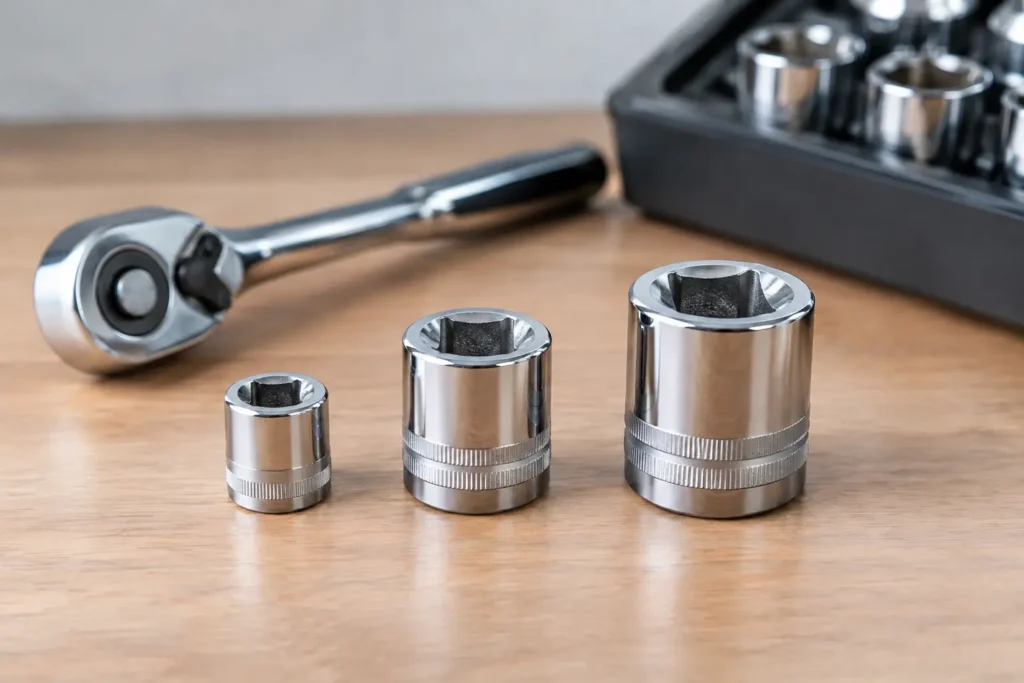
The square drive is the fitting between the ratchet, extension, breaker bar or impact wrench and the socket. It is measured in inches, while the socket opening is normally measured in metric millimetres or imperial AF sizes. A 13 mm socket, for example, can be available in several drive sizes. The drive choice determines the tool’s torque capacity and physical bulk.
1/4 inch drive: compact access and lighter fasteners
A 1/4 inch drive socket set earns its place under dashboards, around engine covers, on motorcycles and inside tight engine bays. Its small ratchet head and compact sockets reach fixings where a larger tool simply will not fit. Common socket sizes usually run from around 4 mm to 14 mm, though larger options are available.
Use this drive for hose clips, trim fasteners, small brackets, electrical fittings and low-torque engine work. It is also the sensible choice for delicate fasteners, where a long handle could apply too much force before you feel the bolt starting to strip.
The trade-off is clear: do not use it as a substitute for a breaker bar. A stubborn 15 mm suspension bolt or wheel bolt can damage the ratchet mechanism, twist an extension or shear an adaptor. If the fastener needs serious leverage, step up to 3/8 or 1/2 inch drive rather than forcing a smaller tool.
3/8 inch drive: the everyday mechanic’s choice
For many technicians, 3/8 inch is the most useful all-round drive. It combines useful strength with a head size that still works in most engine bays and wheel arches. A typical 3/8 inch set covers approximately 8 mm to 19 mm, with deeper and larger sockets available for specific jobs.
This is the drive to reach for on spark plugs, brake calipers, engine mounting bolts, service work and medium-duty suspension fixings. It handles more torque than 1/4 inch drive but remains far easier to use in confined areas than a 1/2 inch ratchet.
A 3/8 inch torque wrench is also a practical addition for jobs that need controlled tightening rather than brute force. Think spark plugs, cam cover bolts and many brake components. Always follow the vehicle manufacturer’s torque specification. A quality ratchet is strong, but it is not a torque measuring tool.
If you can buy only one socket set for general automotive work, a well-made 3/8 inch metric set is often the best starting point. For a working garage, however, it works best alongside 1/4 inch and 1/2 inch drive rather than replacing either one.
1/2 inch drive: high torque for wheels and heavy repairs
The 1/2 inch drive is standard equipment for wheel removal, suspension work, drivetrain repairs and heavier garage jobs. It accepts larger sockets, works with longer breaker bars and is the normal drive size for many impact socket sets. Socket sizes often run from 10 mm or 12 mm upwards, covering the 17 mm, 19 mm, 21 mm and larger sizes regularly used on cars and vans.
Choose 1/2 inch drive for wheel nuts or bolts, hub nuts where the correct larger socket is required, subframe hardware, seized exhaust fittings and suspension fasteners. With a breaker bar or suitable impact wrench, it provides the leverage and strength needed to shift tight fixings without overloading lighter equipment.
The downside is access. A 1/2 inch ratchet and socket can be too bulky near an inlet manifold, behind an alternator or around a crowded engine bay. It can also make overtightening easier. Use the breaker bar to loosen a stubborn fastener, then switch to a ratchet for removal. For reassembly, use a torque wrench where the specification matters.
3/4 inch drive: for commercial and heavy-duty work
A 3/4 inch drive set is built for a different class of work. It is suited to lorry wheel nuts, agricultural equipment, plant machinery and large structural fasteners. The sockets, bars and ratchets are larger because they must withstand substantially higher torque.
For ordinary car servicing, it is overkill. The tools cost more, take up more storage space and offer little benefit on small fasteners. But for workshops servicing commercial vehicles, investing in the correct 3/4 inch impact sockets and breaker equipment is safer and more efficient than continually pushing 1/2 inch tools beyond their intended workload.
Ratchet sockets, impact sockets and adaptors
Drive size alone does not tell you whether a socket is suitable for an impact wrench. Standard chrome sockets are designed mainly for hand tools. They are ideal for ratchets, sliding T-bars and torque wrenches, but repeated impact use can crack a standard socket or cause it to shatter.
Impact sockets are made for the repeated hammering action of air and cordless impact tools. They are usually finished in black phosphate rather than polished chrome and are designed with more forgiving material properties. For wheel work and seized fasteners, use impact-rated sockets with an impact wrench. It is a straightforward safety decision, not an optional upgrade.
Adaptors can be useful, particularly when you need one socket for an occasional job. A 1/2 inch to 3/8 inch adaptor lets you use a smaller socket on a larger handle, for example. However, every adaptor adds length, reduces access and introduces another potential weak point. It should not become your normal method of working.
Avoid using an adaptor to put a small-drive socket under excessive torque. The larger handle does not make the smaller socket or square drive stronger. Match the entire setup to the job: tool, extension, universal joint, adaptor and socket.
US PRO 10 Piece Triple Square Bit Sockets in Eva Tray Suits VW, BMW, Mercedes & Porsche
Six-point or twelve-point sockets?
For tough automotive fasteners, six-point sockets are generally the safer choice. They grip more of the flat sides of a hex fastener and are less likely to round a corroded nut or bolt head. This matters most when working on wheel bolts, brake hardware, suspension components and exhaust fasteners.
Twelve-point sockets can be useful where the turning angle is limited or where a twelve-point fastener is fitted. They are convenient for faster engagement in awkward positions, but they have less contact area on a standard six-sided fastener. When the fixing is rusty and resistance is high, use a correctly sized six-point impact socket wherever possible.
Deep sockets are equally worthwhile for nuts on long studs, such as top mounts, exhaust sections and suspension links. A shallow socket can bottom out before it reaches the nut properly. Keep both deep and standard lengths in the sizes you use most.
Build a socket setup that works in the workshop
The most cost-effective approach is not buying every possible socket individually. Start with the drive sizes that suit your normal workload, then fill the gaps with specialist pieces as jobs demand them. A practical automotive setup includes 1/4 inch drive for confined work, 3/8 inch drive for day-to-day servicing and 1/2 inch drive for wheels and heavy repair work.
Prioritise metric six-point sockets, deep sockets in popular sizes, quality extensions, universal joints and a breaker bar. If you use an impact wrench, add a dedicated impact socket set rather than risking your hand-tool sockets. Keep a torque wrench in the appropriate drive range for critical refitting work.
Tool storage matters as much as the socket selection. A labelled case or organised drawer stops missing sizes slowing down a repair. It also makes it easier to spot worn, cracked or rounded sockets before they damage a customer’s vehicle or turn a quick job into a recovery problem.
Affordable & reliable tools should still be chosen with the job in mind. Irish Tools Shop stocks workshop-ready socket, ratchet and impact options for mechanics and serious DIY users who need dependable kit without premium distributor pricing.
Before starting the next repair, check the fastener, choose the correct socket fit and select the smallest drive that can safely handle the torque. That simple habit protects your tools, protects the vehicle and keeps the job moving.
