






A rounded bolt, a split socket or a ratchet that skips under load can turn a quick repair into lost workshop time. That is why Kingtony Tools appeal to mechanics and serious DIY users who want dependable everyday equipment without paying inflated premium-brand prices.
Kingtony has built its reputation around professional-style hand tools, socket sets, storage and specialist automotive equipment designed for regular use. The range is broad, but the sensible purchase is not always the biggest kit in the catalogue. The right choice depends on the work in front of you, the drive sizes already on your bench and how hard the tools will be used.
What Kingtony Tools are built for
Kingtony Tools sit in the practical middle ground many garages need. They are aimed at buyers who expect proper materials, accurate fit and useful coverage across common repair work, while still watching the budget. For a working technician, that may mean adding a complete impact socket set to cover wheel, suspension and hub jobs. For a home mechanic, it may mean replacing a mixed collection of poor-quality spanners with a set that is easier to use and organise.
The main strength of buying within one established tooling range is consistency. Socket sizes are clearly marked, cases and cabinets are designed around workshop use, and replacement purchases are easier to match. That matters when a job is waiting on one missing deep socket or a specific Torx bit.
Do not assume every item is suitable for every job simply because it carries the same name. A standard chrome socket is not a substitute for an impact socket on a high-torque gun. A compact ratchet is useful in a tight engine bay but is not the first choice for breaking free seized suspension bolts. Match the tool to the load, access and frequency of use.
Where Kingtony earns its place in a garage
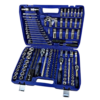
For most buyers, sockets and ratchets are the natural starting point. A well-chosen 1/4in, 3/8in or 1/2in drive set covers an enormous amount of vehicle work, from trim fasteners and hose clips through to brakes, wheels and heavier chassis fixings. The useful details are not always the headline number of pieces. Look at the actual size range, whether deep sockets are included, the number of ratchet teeth and whether the set includes extensions, universal joints and adaptor pieces you will genuinely use.
A 1/4in set earns its keep on interior work, motorcycles, small fixings and restricted spaces. The 3/8in drive is often the most versatile option for routine servicing and brake work. A 1/2in drive set is the proper choice for wheel nuts, larger brackets and stubborn fasteners, especially when paired with suitable impact-rated sockets.
Spanners are equally easy to underestimate. A good combination spanner set should give clean engagement on flats, a sensible spread of metric sizes and a finish that remains easy to wipe down after oily work. If you work on older vehicles, agricultural equipment or machinery with corroded fittings, consider whether a fuller size range is worth the extra cost. The small sizes often go missing first, but it is usually the larger 18mm, 19mm and 22mm spanners that save a job from becoming a delay.
Specialist automotive tools can offer the best value when they solve a repeated problem. Brake caliper wind-back kits, bearing separators, ball-joint splitters, oil filter tools and torque wrenches should be chosen by vehicle type and task rather than bought on impulse. Check the thread patterns, operating range and included adaptors before ordering. A kit with more pieces is only better if those pieces fit the vehicles you see.
Build a Kingtony tool kit around real jobs
Start with the jobs you complete every month. A mobile mechanic servicing cars needs a different setup from a garage fitting clutches, handling tyres and tackling suspension work all day. Buying by job reduces duplicate tools and keeps cash available for the pieces that make work faster.
For regular servicing, prioritise a metric socket set, combination spanners, screwdrivers, pliers, torque wrench and a dependable trolley jack with correctly rated axle stands. For brake and suspension work, add impact sockets, breaker bars, pry bars, brake service tools and a strong selection of hex and Torx bits. For engine work, invest in precision measuring and timing tools only where the vehicles you work on justify them.
Storage should be part of the decision from the beginning. A tool chest or roller cabinet is not just a tidy place to put equipment. It reduces wasted time, protects tools from damage and makes missing items obvious before a vehicle is reassembled. Drawers need to suit the weight and length of the tools they will carry. Deep drawers are useful for power tools and larger pullers; shallow drawers are better for sockets, bits and spanners laid out in order.
When buying a pre-filled cabinet, check whether the included tool selection matches your work. A full cabinet can look like a bargain but still leave gaps in impact sockets, long-reach pliers or specialist brake equipment. In some cases, a quality empty cabinet plus carefully selected sets is the stronger long-term purchase.
Check the specification, not just the badge
A tool brand can guide your choice, but specifications decide whether the tool will perform. Before adding Kingtony equipment to your basket, check these practical points:
- Drive size, socket profile and size range, including deep and impact options where needed.
- Tool material and finish, particularly where corrosion resistance or hard daily use matters.
- Torque range and calibration information for torque wrenches and other precision equipment.
- Load rating, lifting height and safety features for jacks, stands, cranes and lifting gear.
- Case, drawer or organiser layout, because transport and storage affect how useful a set remains.
For powered or air-operated equipment, the supporting workshop setup matters just as much. An air impact wrench needs adequate compressor output, hose size and couplings to deliver its stated performance. A large socket set is of limited use if the impact gun has insufficient torque. Check the whole system rather than replacing one part and expecting a different result.
The same approach applies to lifting equipment. Never choose a trolley jack or axle stand on price alone. Confirm the rated capacity, lift range and suitability for the vehicle, then use it on firm, level ground according to safe lifting practice. A jack lifts the vehicle; correctly rated stands support it. Those are different jobs, and neither should be compromised.
Value means buying once for the work you do
The cheapest tool can be expensive if it rounds fasteners, damages a job or has to be replaced after a few uses. Equally, buying the most expensive option available is not always sensible for a tool used twice a year. Kingtony is worth considering where you need equipment that feels workshop-ready but must still justify its cost against the work it will do.
For frequently used sockets, ratchets, spanners and pliers, spending for a reliable set usually pays back in speed and reduced frustration. For highly specialised items, buying only when the job is confirmed can be the better route. There is no value in filling a cabinet with tools that never leave their tray.
Look for complete sets where the included pieces remove the need for several separate purchases. At the same time, compare the contents carefully. A lower-priced set with every socket size you use is better value than a larger kit padded with duplicates or unusual fittings. Visible sale pricing and free delivery thresholds can make a worthwhile difference when building out a garage, especially for heavier cabinets and equipment.
Choosing the right Kingtony purchase
If you are replacing worn general-purpose tools, begin with the core hand-tool set that covers your normal vehicle work. If you are expanding a professional garage, identify the bottleneck first: slow wheel removal, poor tool storage, missing brake adaptors or inadequate lifting equipment. Buy to remove that bottleneck, then build out from there.
Irish Tools Shop customers should also consider delivery timing when a broken or missing tool is holding up booked work. Having a clear list of required sizes, drive types and vehicle applications avoids ordering the wrong kit and losing another day waiting for an exchange.
A good tool purchase should make the next job quicker, safer and easier to organise. Choose Kingtony tools by the work they need to handle, keep the specification in view, and spend where daily reliability genuinely matters.
