






A damaged thread can stop a repair that is otherwise ready to finish. Whether it is a seized suspension bolt, a rounded stud on an exhaust flange or a mounting hole that will not take a fastener, the right tap and die set lets you clean up threads instead of replacing costly parts.
For garages, mobile mechanics and serious DIY users, this is not a tool kit that should sit unopened at the back of a cabinet. A properly specified set saves time on common jobs, restores usable bolts and helps prevent cross-threading when parts go back together. The key is buying the right range, material and accessories for the work actually coming through your workshop.
What a Tap and Die Set Does
Taps and dies cut or restore screw threads. A tap is used inside a drilled hole to create an internal thread. A die is used around the outside of a bolt, stud or rod to create or tidy an external thread. Together, they cover the two sides of a threaded joint.
In day-to-day vehicle work, a tap is often used to chase dirt, corrosion and old thread-locking compound from a captive nut or threaded mounting point. A die is useful when the first few threads of a bolt or stud have been damaged during removal. Clean threads allow the fastener to seat correctly and achieve a more reliable torque reading.
There is a difference between chasing a thread and cutting a new one. Chasing removes light damage and contamination. Cutting removes material, so it should be done carefully and only where needed. If a thread is severely stripped, especially in aluminium, a thread repair insert may be the better option rather than simply cutting the hole larger.
Choose a Tap and Die Set by Thread Range
The most useful set is not automatically the largest box. It is the one that covers the thread sizes used on your vehicles, machinery or fabrication jobs.
For most modern cars and light commercial vehicles in Ireland and the UK, a metric tap and die set is the practical starting point. Common sizes such as M3, M4, M5, M6, M8, M10 and M12 cover a large share of brackets, covers, trim fittings, engine bay hardware and general workshop repairs. M14 and larger sizes can be valuable for more substantial applications, but check that the kit includes the pitches you are likely to encounter.
Thread diameter alone is not enough. Pitch matters. An M10 x 1.5 coarse thread is not interchangeable with an M10 x 1.25 fine thread. Fine-pitch fasteners are common in automotive work because they can offer stronger clamping control and suit thinner material, but they demand the exact matching tap, die and fastener. Forcing the wrong pitch will ruin the thread quickly.
Imperial threads still matter in some workshops. Classic British vehicles, older equipment, imported machinery and specialist applications may use UNC, UNF, BSW, BSF or Whitworth patterns. If this work is regular, buy a dedicated imperial kit rather than relying on a basic metric set. A mixed set can be convenient, but only if the markings are clear and the thread range is complete enough to be useful.
Coarse or Fine Threads?
Coarse threads are generally more tolerant of wear and contamination, making them a strong choice for general fastening. Fine threads have a shallower pitch and are often used where adjustment, holding strength or compact dimensions are needed. Neither is universally better. The correct choice is the thread specified by the part, bolt or manufacturer.
Before cutting anything, identify the thread with a thread pitch gauge or compare it with a known good bolt. This small check can prevent an expensive mistake, particularly on hubs, brake components, engine assemblies and suspension hardware.
Material Matters: Carbon Steel or HSS
Affordable carbon steel taps and dies are suitable for occasional use, softer materials and general thread cleaning. They represent good value for a home garage that needs common sizes on hand for routine repairs. Used with cutting fluid and reasonable care, they can handle plenty of useful work.
For regular garage use, harder materials and repeated thread cutting, high-speed steel (HSS) is the stronger choice. HSS taps retain their cutting edge better and are less likely to chip when used correctly on steel. They cost more, but that cost is easier to justify when a broken tap could turn a simple job into drilling, extraction and lost workshop time.
Do not expect any tap to survive abuse. A tap is hard but brittle. Side loading, poor alignment, excessive force or a blind hole packed with swarf can snap it. Quality material helps, but technique remains just as important.
Kit Contents That Make the Job Easier
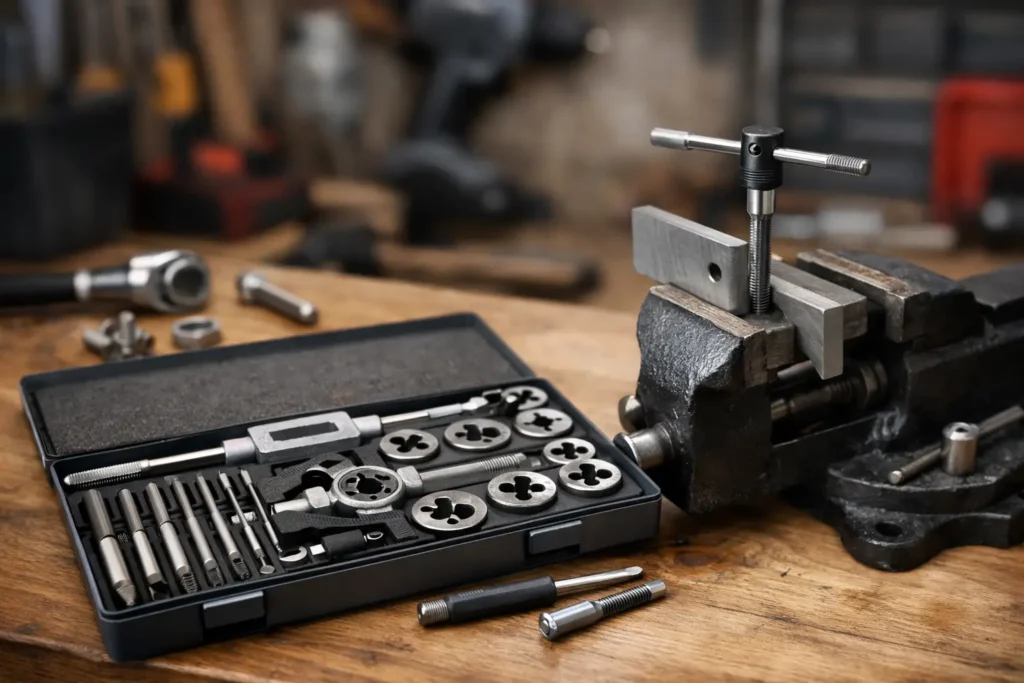
A useful tap and die set needs more than a tray full of cutters. Check what comes with it before buying. At a minimum, the kit should include a tap wrench for holding taps squarely and a die stock or die holder for turning dies around bolts and studs.
Look for clearly engraved size and pitch markings. Laser-marked or deeply stamped markings stay readable after workshop use far better than light surface printing. A solid storage case also matters. Loose taps are easily damaged, mixed up or lost, and an organised case makes it faster to identify the size you need at the bench.
Better kits may also include a thread pitch gauge, screw extractors, drill bits, a T-handle tap wrench and multiple tap styles. Taper taps start gradually and are helpful for beginning a new thread. Plug taps are widely used for general work. Bottoming taps cut closer to the base of a blind hole, although they should only be used after a thread has been started straight.
For workshop buyers, avoid judging a set by the number of pieces alone. A large piece count can include duplicate handles, less-used sizes or accessories that do not improve cutting quality. Clear specifications, sensible sizes and durable cutters offer better value than a headline number on the case.
How to Use Taps and Dies Without Damaging Parts
Preparation decides whether thread repair is quick or frustrating. Start by cleaning the hole, bolt or stud with a wire brush and solvent where appropriate. Inspect the existing thread closely. If it is only burred at the entrance, a thread file or light chasing may be enough. Do not cut deeper than the damage requires.
When tapping a new hole, drill the correct tapping size first. The drill size is not simply the diameter of the bolt. It depends on the thread diameter and pitch. Use a proper tap drill chart and measure twice before drilling. A hole that is too small overloads the tap, while one that is too large produces weak threads.
Keep the tap square to the workpiece from the first turn. On a flat surface, check alignment from two directions. Apply suitable cutting fluid, turn the tap forward slowly, then reverse it regularly to break the chip. On tougher steel, short controlled turns are safer than trying to force the tap through in one movement.
When using a die, chamfer the end of the bolt or rod lightly if needed and make sure the die starts square. Use cutting fluid and keep pressure even for the first few turns. If the die is adjustable, set it according to the job: slightly open for an initial cut or thread clean-up, then closer if a final sizing pass is required. Do not remove excessive material from a safety-critical fastener just to make it look tidy.
After cutting, remove all swarf and test the thread by hand with the matching nut or bolt. It should engage smoothly without binding. If it does not, stop and inspect rather than forcing the fastener home with an impact tool.
When a Thread Repair Kit Is the Better Choice
A tap and die set is ideal for restoring light-to-moderate damage and producing standard threads. It is not the answer to every stripped hole. If an internal thread has lost major material, particularly in an aluminium cylinder head, gearbox casing or engine block, a thread insert system can restore the original fastener size more reliably.
Likewise, bolts used in braking, steering, suspension, wheels and lifting equipment should be replaced if their threads are stretched, heavily corroded or badly cut. Chasing a minor blemish is one thing. Reusing a compromised safety-critical bolt is another. Always follow the vehicle manufacturer’s torque and replacement guidance.
Buy for the Jobs You Actually Do
A compact metric kit is a sensible value purchase for routine car maintenance, fabrication and home workshop repairs. A larger metric and imperial set suits a busy garage handling older vehicles, mixed machinery and varied customer work. If you regularly cut threads in steel, spend more on HSS cutters and a dependable tap wrench rather than replacing cheap broken taps.
Keep the set clean, dry and lightly protected from corrosion after use. Return every tap and die to its marked position, replace damaged pieces promptly and keep cutting fluid beside the case. When the next seized bolt or damaged mounting thread holds up a job, a correctly chosen set will earn its place in the toolbox within minutes.
