






A garage loses money every time a vehicle is left waiting for a tool, a lift or a part of the job that should have been straightforward. For buyers searching for garage tools Ireland, the priority is not flashy branding. It is dependable equipment that works under load, fits the job and arrives without a long delay.
Whether you run a busy repair bay, carry out mobile work, manage a fleet or maintain vehicles at home, buying the right tools pays back in faster turnaround, safer working and fewer replacement purchases. The best workshop setup is built around the work you actually do, not a catalogue full of equipment that rarely leaves the shelf.
Garage Tools Ireland Buyers Need First
A working garage needs a solid core before it needs specialist equipment. Start with tools used on nearly every service, inspection and repair: sockets, spanners, screwdrivers, pliers, torque tools, lifting equipment and organised storage. Buying cheap versions of these items repeatedly is rarely good value. Buying professional-grade tools at a sensible price is.
An impact socket set is a good example. It needs to withstand the repeated hammering delivered by an impact wrench, so standard chrome sockets are not a substitute. A quality set in common drive sizes, with both shallow and deep sockets, covers wheel removal, suspension work and routine mechanical repairs. Match it with an air or cordless impact wrench rated for the torque your work demands.
Hand tools still do most of the precise work. Combination spanners, ratchets, extension bars, breaker bars and a varied socket range should be selected for strength, fit and repeat use. Poorly fitting tools round fasteners, slow down the job and create a bigger repair. That is not a saving.
For garages completing regular brake work, a brake wind-back kit and brake caliper tools quickly earn their place. They reduce the risk of damaging pistons and make it easier to work across a broader range of vehicle makes. A dedicated diagnostic or service tool should be bought when it supports frequent work, not simply because it looks useful on a bench.
Buy Lifting Equipment by Capacity and Use
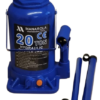
Vehicle lifting equipment is where specification matters most. A trolley jack needs enough lifting capacity for the vehicles you service, but capacity alone is not the whole answer. Consider the minimum saddle height for lower cars, the maximum lift height for SUVs and vans, wheel diameter for manoeuvrability and build quality around the hydraulic unit.
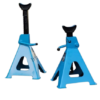
Never treat a trolley jack as a support. Once the vehicle is raised, axle stands with a suitable rated capacity are essential. Use them as a pair on level, hard ground, positioned at approved support points. For work underneath a vehicle, this basic discipline is non-negotiable.
A two-post lift, four-post lift, scissor lift or other workshop lifting system can transform productivity, but only if it suits the available space and work type. A small independent garage carrying out tyres, brakes, exhausts and servicing may gain most from a general-purpose vehicle lift. A body shop, alignment business or commercial workshop may need a different configuration, greater lifting height or a higher capacity rating.
Before committing to heavy equipment, check the building dimensions, floor condition, electrical supply, vehicle mix and installation requirements. A lift is a long-term workshop asset. Choosing the wrong one because it was the lowest ticket price can be more expensive than buying a properly specified unit from the beginning.
Air Tools and Compressors That Keep Up
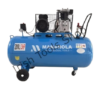
Air tools remain a practical choice for many Irish workshops. They are durable, powerful and particularly effective for wheel, suspension and fabrication work. Their performance, however, depends on the compressor supplying them.
Do not choose an air compressor on tank size alone. Look at its air delivery, working pressure and duty cycle, then compare those figures with the requirements of your highest-demand air tool. An impact wrench used intermittently has different needs from a spray gun, die grinder or continuous-use sanding tool.
For light occasional work, a smaller compressor may be enough. For professional use with multiple air tools, select a unit that can maintain pressure without constantly running at its limit. An undersized compressor causes poor tool performance, wasted time and unnecessary wear. Proper air hose fittings, a regulator and moisture control also make a noticeable difference, especially when painting or using precision pneumatic equipment.
Tool Storage Is Part of Workshop Efficiency
A tool chest is not merely somewhere to put tools away at the end of the day. Good storage keeps essential equipment visible, protected and close to the vehicle. It also reduces time wasted hunting through drawers, carrying loose sockets across the floor or replacing tools that have gone missing.
Choose a roller cabinet or tool chest based on drawer size, load capacity, locking security and mobility. Deep drawers are useful for power tools, larger sockets and specialist kits. Shallow drawers work well for spanners, pliers, screwdrivers and organised socket trays. Strong castors and a solid handle matter when the chest is moved regularly around a busy workshop.
There is a trade-off between buying a large empty cabinet and a pre-filled tool chest. A stocked chest gives a new garage an immediate working base and can offer strong value. An empty cabinet suits technicians who already own quality tools or want to build a precise set around their preferred brands and repair work. In either case, avoid overfilling drawers. Tools last longer and are easier to find when every item has a defined place.
Avoid False Savings on Everyday Garage Equipment
The lowest price is not always the best deal. A cheap trolley jack with poor stability, an underpowered impact wrench or a socket set that cracks under load can stop work at the worst possible time. The better approach is to compare the specifications that affect daily performance: material, drive size, torque rating, load capacity, dimensions, included accessories and warranty coverage.
That does not mean every tool needs the highest specification available. A serious DIY user may not need the same compressor output, lift capacity or industrial cabinet size as a full-time commercial garage. Equally, a professional technician should not buy domestic-grade equipment for tools used all day. Buy for the workload, then leave enough headroom for the heavier jobs that will come through the door.
Frequent-use equipment deserves the biggest share of the budget. Save money on tools that are genuinely occasional, but do not compromise on safety equipment, lifting gear, torque tools or the core hand tools used every day.
Build a Better Garage Setup in Stages
A complete workshop does not have to be purchased in one order. Start with the equipment that lets you carry out profitable, repeatable work safely. Then add specialist tools as customer demand proves the need.
For a new automotive workspace, the usual priority is a dependable trolley jack, axle stands, socket and spanner sets, impact sockets, a torque wrench, basic brake tools, a workbench and proper storage. From there, air tools, an air compressor, an engine crane, transmission equipment and vehicle lifting solutions can be added as the type and volume of work grows.
An engine crane is a prime example of a tool worth buying when engine removal, gearbox work or vehicle restoration is a regular part of the workload. Check its rated capacity at each boom position, not just its maximum headline capacity. A folding model can be a sensible choice where floor space is tight, while a heavier fixed unit may suit daily professional use.
Irish Tools Shop supplies affordable, reliable garage and workshop equipment for buyers who need practical specifications, strong value and fast delivery. Free shipping on qualifying orders can also make it easier to bundle the smaller essentials with larger workshop purchases.
Check These Details Before You Order
Before purchasing, confirm that the tool is suitable for the exact work in front of you. For lifting products, check rated capacity, lifting range and the vehicle weight. For sockets and impact tools, check drive size, torque requirements and whether impact-rated accessories are included. For storage, measure the available floor space and consider how the unit will move around the workshop.
It is also worth planning deliveries around urgent repairs and upcoming work. Keeping a small stock of high-use consumables and replacement essentials means a broken socket, worn air fitting or missing brake tool does not hold up a booked-in vehicle. Fast delivery is valuable, but a well-organised garage is the real protection against downtime.
Buy the tools that do the work, specify them properly and keep them where your team can reach them. That is how a garage stays productive without paying over the odds.
