









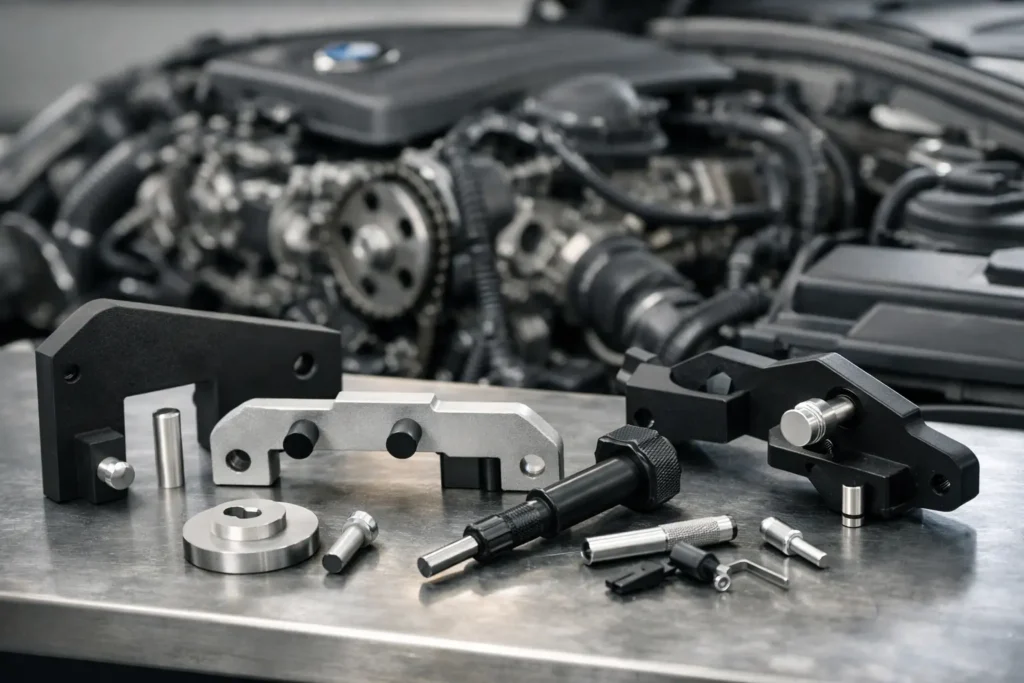
One tooth out can turn a straightforward repair into a no-start, poor-running engine or expensive internal damage. The US PRO BMW & Mini Camshaft & Crankshaft Timing Tools For B37 B47 are designed to give technicians and capable DIY mechanics a controlled, repeatable way to hold the engine in its specified timing position while timing work is carried out.
For a working garage, the value is simple: correct locking tools reduce guesswork. For the serious home mechanic, they make a job that should never be attempted by eye far more manageable. This is specialist engine tooling, not a universal socket-set extra, and it earns its place when the correct engine application is confirmed before work begins.
What B37 and B47 timing tools are for
BMW’s B37 and B47 diesel engine families are closely related modular designs, used across a range of BMW and MINI vehicles in different outputs and installations. The B37 is generally a three-cylinder diesel, while the B47 is generally a four-cylinder diesel. That shared family connection does not mean every engine has identical access, procedure or component arrangement.
Camshaft and crankshaft timing tools are used during work where valve timing must be checked or retained. Typical jobs include timing-chain service, cylinder-head work, camshaft removal, major strip-downs and engine rebuilding. The tools locate the crankshaft and camshaft or camshafts at the manufacturer-specified reference position, allowing the timing drive to be assembled and checked against the workshop procedure.
They are not a shortcut for diagnosis. If an engine has suffered a chain failure, has contacted valves, or arrived with unknown timing, the cause must be inspected properly. A locking kit helps establish timing during the repair. It cannot correct damaged valves, worn sprockets, a failed tensioner or an underlying oil-pressure issue.
Why dedicated camshaft and crankshaft locking matters
Modern diesel timing systems work to very fine tolerances. The crankshaft controls piston position, while the camshaft controls valve opening and closing. Their relationship must remain exact. On an interference engine, incorrect timing can allow piston-to-valve contact. Even where no contact occurs, a small error can bring difficult starting, fault codes, rough running, smoke, reduced power and a return visit nobody wants.
Paint marks are not an acceptable replacement for proper timing references. They can help identify original component positions during dismantling, but they do not account for chain stretch, previous incorrect work, sprocket design or the manufacturer’s specified locking point. Likewise, forcing drill bits, bolts or improvised bars into locating positions risks damage to the engine and produces no reliable result.
A correctly designed timing kit gives solid, accurately positioned tools for the relevant locking locations. That is especially useful when a job has to be completed efficiently and confidently in a busy workshop. The cost of dedicated timing tools is small beside the cost of removing a cylinder head twice.
Checking US PRO BMW and MINI B37 B47 fitment
The most important purchase check is not the vehicle badge. It is the exact engine code and the procedure being performed. BMW and MINI fit the same engine family across different model years, body styles and power outputs, and details can change between versions. Always identify the engine from the vehicle data, engine label or reliable workshop information before ordering or stripping the engine.
Before selecting a US PRO timing tool set, check that it is specified for the B37 or B47 engine variant in front of you. Confirm whether the job requires only camshaft and crankshaft locking or whether additional tools are called for, such as a tensioner locking pin, chain pre-tensioning tool, sprocket holding tool or crankshaft turning adaptor. A timing set may be exactly right for the main locking operation but not replace every tool named in the full repair procedure.
Access also matters. A transverse MINI installation may present a different working environment from a longitudinal BMW installation. Consider whether the engine remains in the vehicle, whether subframe or ancillary components need to move, and whether there is enough space to fit and remove the locking tools without loading them sideways.
If the application cannot be confirmed, stop before ordering or starting. “Looks similar” is not a fitment check. Correct identification saves time, avoids returns and prevents an engine repair becoming a costly recovery job.
Using the timing tools properly
Start with the vehicle manufacturer’s repair method for the exact engine. It provides the locking position, dismantling sequence, torque figures, tightening angles, replacement parts and any checks required before the engine is turned. The timing tools support that procedure. They do not replace it.
Bring the engine carefully to the specified position using the correct crankshaft turning method. Never turn it backwards unless the procedure expressly permits it, and do not use the starter motor to position the engine. Fit the crankshaft locking tool only when the reference position is reached, then fit the camshaft locking tool or tools without forcing them into place.
If a locking tool will not seat, do not pull it in with a bolt or lever it into position. Turn the engine only as directed, recheck the reference marks and confirm that the correct tool is being used. Forcing a timing tool can damage a locating hole, bend the tool or hide an incorrect engine position.
Once the engine is locked, follow the sequence for releasing chain tension and removing relevant components. Keep the timing chain supported where required. Never rotate the crankshaft and camshaft independently with the timing drive removed or slack unless the manufacturer’s method specifically directs it. That is where valve contact can happen quickly.
After reassembly, remove locking tools only at the correct stage, rotate the engine by hand through the required number of revolutions and return it to the timing position for a final check. If the tools do not re-enter cleanly, the timing is not proven. Investigate before starting the engine.
What to inspect before reassembly
Timing work is the right time to inspect the components that caused the repair or could cause the next failure. Reusing visibly worn parts simply moves the problem further down the road. Check the timing chain for elongation or damage, guides for wear or cracking, tensioner operation, sprocket condition and any signs of chain contact with covers.
Also check oil condition and service history. Timing-chain tensioners rely on correct oil supply. Sludge, blocked oilways, an incorrect lubricant or extended oil-change intervals can contribute to premature wear. Where a procedure requires one-use bolts, seals, stretch bolts or updated parts, fit them. Cutting costs on service parts during an engine-timing repair is rarely a saving.
Cleanliness is equally important. Keep dirt away from open timing covers, oil passages and sealing faces. Lay tools out in order and protect removed fasteners and components. A clean, organised job reduces the chance of fitting a guide, bolt or sensor incorrectly when the engine is ready to go back together.
Getting professional value from specialist timing tools
A specialist kit should be bought for repeatable accuracy, not because it is used every day. Independent garages see a wide range of BMW and MINI diesels, and having the correct timing equipment on the shelf means less reliance on borrowed tools, delayed repairs or risky improvisation. It also allows the technician to quote timing work with more confidence.
For serious DIY users, the decision comes down to the scale of the job and your ability to follow technical data. If you are replacing a failed chain or rebuilding an engine, proper locking tools are a sensible part of the job cost. If you are only carrying out routine servicing, they are unlikely to be needed. Buy tools that solve the work you actually do, rather than filling a drawer with single-use equipment that never matches your vehicles.
US PRO tools offer the practical balance many workshops look for: purpose-made equipment at a price that makes sense for professional and occasional specialist use. Irish Tools Shop supplies affordable, reliable workshop tooling for mechanics who need to get the job done without paying inflated distributor prices.
Care, storage and safe working
Timing tools are precision location tools, so treat them accordingly. Wipe off oil and debris after use, check pins and plates for distortion, and store the set together in its case. Do not use a camshaft locking plate as a holding tool against tightening torque unless the repair information specifically permits it. Its job is to locate the shaft, not to absorb force that should be held with a dedicated counterhold tool.
Use proper lighting, stable vehicle support and the correct hand tools around the engine bay. If the job involves removing mounts or lowering an engine, support the engine safely with suitable lifting equipment before undoing any structural fasteners. A timing kit protects engine accuracy, but safe workshop practice protects the person carrying out the repair.
The right B37 B47 timing tools give you one clear advantage: you can verify the engine position rather than hope it is right. Confirm the engine code, follow the specified method and never force a tool that does not fit. That is how timing work stays controlled, efficient and dependable.
