






One missed pin, one twisted chain or one uneven floor can turn a routine engine lift into a damaged vehicle, a bent crane or a serious injury. An engine crane safety checklist is not paperwork for the sake of it. It is a fast, practical way to catch the faults that cost time and money in a busy workshop.
If you are lifting engines regularly, the real risk is familiarity. When the job feels standard, shortcuts creep in. That is usually when a ram gets used with a slow leak, a load leveller is fitted badly, or the crane is pushed with the boom set longer than the weight allows. Good lifting practice is not complicated, but it does need to be consistent.
Why an engine crane safety checklist matters
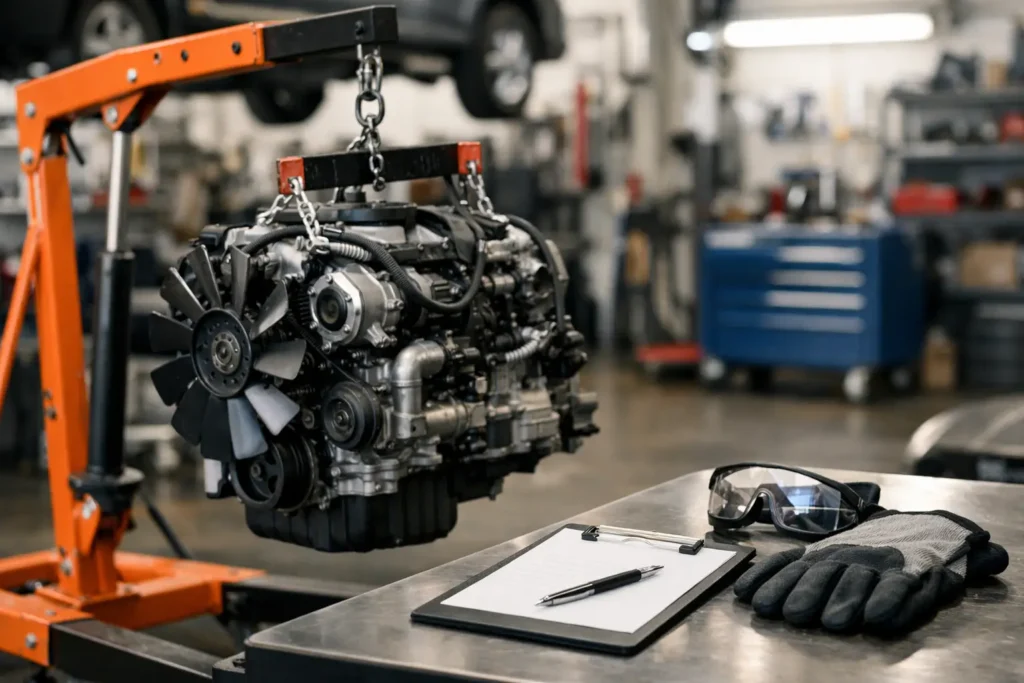
Engine cranes do a hard job in tight spaces. They are expected to lift heavy loads, roll across workshop floors, clear front panels and hold awkward weight distributions without drama. That only works when the crane, the lifting gear and the operator are all working within limits.
A proper engine crane safety checklist helps with three things. First, it reduces injury risk. Second, it protects expensive parts, bodywork and workshop equipment. Third, it prevents delays. A damaged castor, weak fixing bolt or sticking hydraulic ram can stop a job halfway through, and that is when costs start stacking up.
For garage owners and technicians, there is also the issue of equipment life. Affordable and reliable workshop tools still need basic checks if you want them to last. A crane that is inspected properly and used within rating will generally give far better service than one that is overloaded, dragged sideways and left outside.
2 Ton Engine Crane / Hoist For Lifting Engines, Machinery And Heavy Components
Pre-use engine crane safety checklist
Before any lift starts, the crane itself needs a quick but proper inspection. This should not take long, but it needs your full attention. Start with the rated capacity plate and boom positions. Make sure the markings are readable and that the planned lift matches the boom setting. Capacity drops as the boom extends, and that catches people out more often than it should.
Check the frame for cracks, bent sections or poor previous repairs. Pay close attention to the legs, upright mast, boom pivot points and welded joints. If anything looks distorted, stop there. Structural damage is not something to work around.
The hydraulic ram should lift smoothly and hold pressure without creeping down. A small leak around seals or fittings is enough reason to pull the crane from use until it is sorted. If the ram has to be pumped excessively to raise a normal load, or if it drops under load, it is not fit for the job.
Castors and wheels need the same level of scrutiny. They should rotate freely, sit square and show no serious wear or flat spotting. A crane can only move safely if the floor and the wheels work together. If one castor binds, the load can swing or the crane can twist under strain.
Pins, clips and bolts are easy to ignore because they are small, but they are critical. Confirm that all securing pins are present, correctly fitted and locked. Missing retaining clips are a common workshop problem, especially on folding cranes that are moved or stored frequently.
Chains, hooks and lifting points must also be checked. Look for stretch, twist, gouges, damaged threads or signs of side loading. The safety latch on the hook should work properly. If you are using a load leveller, inspect the adjustment screw, side plates and attachment points as closely as the crane itself.
The load matters as much as the crane
A safe lift depends on knowing what you are lifting. Guessing the engine weight is poor practice, especially with modern units where attached components can add more than expected. Confirm the load weight and include ancillaries, gearbox if fitted, and any fluids still present. It is better to spend two minutes checking than to find out halfway up that the boom setting is wrong.
Balance is the next issue. Engines are rarely neat, centred loads. Some sit nose-heavy, others tilt sharply once free of mounts. That is why proper attachment points matter. Use manufacturer-approved lifting eyes where possible. Wrapping a chain around whatever looks solid is risky and usually leads to bad balance, slipping or component damage.
Clear the engine bay before lifting. Hoses, wiring, earth straps, shafts and mounts should all be disconnected fully. A surprising number of awkward lifts are caused by one missed connection rather than a problem with the crane itself. If the engine resists coming free, stop and check. Do not use the crane to force the issue.
Floor conditions and workspace checks
Even a heavy-duty crane has limits if the floor is poor. The work area should be level, clean and strong enough to support the crane and load. Oil spills, loose debris, drain covers and cracked concrete all increase risk. Engine cranes are designed to roll under load, but only on suitable surfaces.
Space matters as well. Plan the route before the lift begins. You need enough room to extend the legs, move the crane cleanly and lower the engine onto a stand, pallet or bench without turns that tighten the angle of the load. Tight workshops often create the temptation to shuffle sideways with the engine suspended. That is exactly the sort of movement that causes instability.
Lighting should be good enough to see attachment points and floor hazards clearly. If two people are involved, agree signals before lifting. A quiet, simple instruction set is better than both people trying to make decisions mid-lift.
2 Ton Engine Crane / Hoist For Lifting Engines, Machinery And Heavy Components
Safe lifting technique in the workshop
Once the crane and load are checked, lift slowly. Raise the engine just enough to test balance first. This short trial lift shows whether the chains are equal, the load leveller needs adjustment or the engine is catching on something still attached.
Keep the boom centred over the load as much as possible. Side pulling is a bad habit that puts strain into the crane frame and hook. If alignment is off, lower the load and reposition the crane rather than trying to drag the engine into place with the ram.
No one should stand under the load, and hands should stay clear of pinch points between engine, bodywork and subframe. It sounds obvious, but in cramped bays people tend to guide by hand too closely. Use controlled movement, not brute force.
Move the crane only when necessary and only with the load kept low. A suspended engine does not need extra height unless you are clearing a panel or crossmember. The higher the load, the more unstable the whole setup becomes. Slow, straight movement is the safe option.
If the crane starts to feel unstable, if a wheel catches, or if the load swings, lower it immediately and reset. Pushing on with a bad setup usually ends in damage. In a professional workshop, speed comes from doing the lift right the first time, not from rushing through warning signs.
Common mistakes that cause engine crane accidents
Most problems come from routine shortcuts rather than major failures. Overloading is an obvious one, but partial overloading is just as common. People see a two-tonne crane and assume it will lift anything near that figure, forgetting the reduced rating at longer boom positions.
Poor storage is another issue. Folding cranes are useful for saving space, but if they are thrown back into a corner with missing pins, damp on the ram and dirt in the wheels, reliability drops fast. Maintenance gets delayed, and the next operator inherits the risk.
Improvised lifting gear causes plenty of trouble as well. Unrated chains, worn shackles and generic fixings have no place in an engine lift. A cheap part that fails under load is not value. It is a workshop stoppage waiting to happen.
There is also the question of operator skill. Even experienced mechanics can have blind spots if they have used the same crane for years without formal checks. A checklist works because it removes guesswork and makes the standard clear for everyone in the workshop.
Maintenance and inspection between jobs
An engine crane safety checklist should not stop at pre-use checks. Ongoing maintenance is what keeps lifting equipment dependable. Clean the crane after use, especially around the ram, wheels and pivots. Dirt and metal debris shorten service life and hide defects.
Lubricate moving parts as required, tighten loose fixings and replace worn components with the correct parts. Hydraulic oil levels and ram condition should be checked in line with the manufacturer guidance. If the crane has had a heavy shock load or has been knocked over, inspect it before it goes back into service.
For workshops handling regular engine work, keeping a written record of defects and repairs is simply good business. It helps you spot recurring issues, plan replacements and avoid wasting labour on unreliable equipment. That matters whether you are running a busy garage or upgrading a serious home setup.
At Irish Tools Shop, the appeal of affordable professional-grade lifting gear is obvious, but value only holds if the equipment is used properly. A solid crane, matched with proper lifting accessories and a consistent inspection routine, gives you safer lifts and fewer interruptions.
A good engine lift should feel controlled from start to finish. If anything about the setup feels uncertain, stop, lower the load and sort it before carrying on. That habit saves more time than any shortcut ever will.
2 Ton Engine Crane / Hoist For Lifting Engines, Machinery And Heavy Components
