







A snapped bit halfway through a seized bracket or a polished hole in a timber panel that will not take a screw both waste time. Knowing how to select drill bits starts with one rule: buy the bit for the material, not simply the diameter you need. The right bit cuts cleanly, stays sharp longer and puts less strain on your drill, whether you are fitting a shelf or repairing a vehicle in the workshop.
How to Select Drill Bits by Material
The workpiece decides the bit type. Drill bits may look similar in a case, but their point geometry, flute design and steel grade are made for very different jobs. Using a general-purpose bit on hard steel can overheat it in seconds. Using a metal bit in masonry will blunt the cutting edge and leave you with a slow, untidy hole.
Metal: HSS, cobalt and step bits
For mild steel, aluminium, copper and most automotive brackets, a high-speed steel (HSS) twist bit is the dependable everyday choice. A good HSS set covers routine drilling in body panels, mounting plates, workbench steel and light fabrication. It is affordable, versatile and easy to replace when a size is worn out.
Cobalt bits cost more, but earn their place when drilling stainless steel, high-tensile bolts, cast iron or tougher steel components. Cobalt resists heat better than standard HSS, helping the edge hold up during demanding work. It is not a reason to drill at full trigger speed, though. Hard metal still needs a controlled speed, firm pressure and cutting fluid.
For thin sheet metal, electrical boxes and cleanly enlarging existing holes, a step bit is often the quicker option. One bit covers several diameters and produces round holes without constantly changing bits. Choose a step bit with clearly marked sizes and a quality coating if it will see regular garage use.
Wood: brad point, auger and flat bits
Standard twist bits can drill timber, but they are not always the best finish choice. Brad point bits have a sharp centre point that stops the bit wandering, making them ideal for accurate holes in softwood, hardwood, MDF and laminated board. They leave a cleaner entry hole, particularly where the finished surface will be visible.
For deep, larger holes in timber, use an auger bit. Its screw tip pulls the bit through the wood, while deep flutes clear chips efficiently. Flat wood bits, often called spade bits, are a cost-effective choice for rough holes for pipework, cables and general site work. They drill quickly but can tear the exit side of the material, so use a backing board where appearance matters.
Masonry: carbide-tipped bits
Brick, block and concrete require a masonry bit with a tungsten carbide tip. The tip is designed to crush abrasive material rather than cut it like a metal bit. For brick and block, a standard carbide-tipped bit used with hammer action is normally sufficient.
Dense concrete, reinforced concrete and repeated professional use demand an SDS masonry bit and a compatible SDS drill. The SDS shank transfers hammer force more effectively than a standard chuck-mounted bit. Do not force a normal masonry bit into a heavy concrete job just because it is the right size. It will be slow, hard on the drill and unlikely to last.
Tiles, glass and porcelain
Ceramic tiles need a spear-point tile and glass bit at low speed, with light pressure. Start without hammer action and keep the bit from overheating. Porcelain is harder and more brittle, so a diamond tile bit is usually the safer choice. Once through the tile, change to the correct masonry bit for the wall behind it.
Match the Bit Shank to Your Drill
Before choosing a set, check how your drill holds bits. Most cordless drills and corded combi drills use a three-jaw chuck and accept round or hex shanks. A hex shank gives better grip and makes quick changes easier in a hex bit holder, which is useful for repeated drilling and fastening work.
SDS-Plus and SDS-Max bits only fit their respective rotary hammers. They are not interchangeable with a conventional chuck. Small-diameter drill bits can also have reduced shanks, allowing a larger cutting diameter to fit a standard chuck. This is useful, but confirm your drill has enough power and low-speed control for the hole size.
A cheap drill bit set is poor value if half the bits do not suit your drill or the jobs you carry out. Garage users are often better served by a strong HSS set, a separate cobalt selection and a dedicated masonry set than by one oversized mixed box full of rarely used pieces.
Choose the Correct Diameter and Length
Bit size is more than the final hole diameter. If you are fitting a bolt, measure the bolt shank and choose a clearance hole that allows it to pass without forcing. For a thread cut with a tap, use the correct tapping drill size, which is smaller than the finished thread diameter. Guessing here leads to weak threads or a broken tap.
When drilling pilot holes for screws, match the bit to the screw’s solid core rather than the outside of the threads. In hardwood, a properly sized pilot hole reduces the chance of splitting the timber or shearing the screw head. In softwood, you can often use a slightly smaller pilot hole for better grip.
Length matters too. A long bit can reach deep into a chassis rail or through a thick timber section, but it flexes more easily than a short bit. Use the shortest bit that reaches the required depth. It will be more accurate, less likely to wander and less likely to snap under side load.
Look at Coatings and Bit Quality
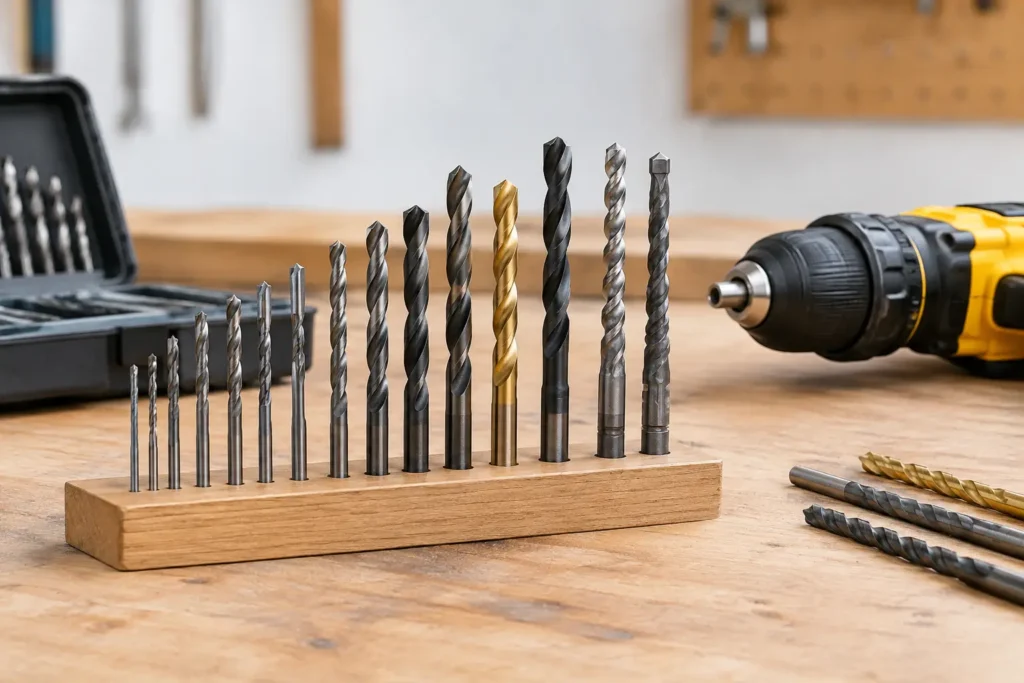
Coatings can extend bit life, but they do not turn an unsuitable bit into the right one. Black oxide HSS bits offer improved heat resistance and corrosion protection over plain bright HSS. Titanium nitride coated bits are often a good value option for repeated drilling in metal, although the coating wears away when a bit is sharpened.
Cobalt is not merely a surface coating. The alloy is present through the bit, which is why cobalt bits remain a stronger option for hard metals after careful sharpening. For masonry, focus on the quality and shape of the carbide tip rather than marketing claims on the flute finish.
Check that the bit has sharp, evenly ground cutting edges and clearly marked sizes. Cheap bits with inconsistent grinding can wander at the start, drill oversized holes and generate excess heat. Affordable professional-grade tooling should still give reliable dimensions and repeatable results.
Use the Right Speed to Protect the Bit
A quality bit can still fail early if it is run too fast. As the drill diameter increases, reduce the speed. Large metal bits create more friction and need slower rotation. Let the cutting edge remove material with steady pressure rather than polishing the surface at high revs.
For steel, apply suitable cutting fluid to reduce heat and help clear swarf. Pause occasionally on deep holes to withdraw the bit and clear chips. This prevents the flutes packing up, which can seize the bit or damage the workpiece. Aluminium can clog cutting edges, so keep the bit clean and avoid excessive speed.
Secure the job before drilling. A loose bracket can spin sharply when the bit breaks through, while a hand-held workpiece invites injury and an off-centre hole. Clamp it firmly, centre-punch metal before starting where accuracy matters, and wear suitable eye protection. Chips from drilling are sharp and travel further than expected.
When a Drill Bit Set Makes Sense
A set is the practical starting point when you regularly handle varied repair and installation work. Choose a set with the common sizes you actually use, clear case markings and room to return each bit after use. For automotive and workshop work, small metric HSS sizes are especially useful for pilot holes, brackets and fastener repairs.
Individual bits make more sense for high-use sizes and specialist materials. If you drill 6 mm holes in steel every week, keep several quality 6 mm cobalt bits on hand rather than relying on one bit from a mixed set. The same applies to frequently used masonry diameters for fixings and anchors.
At Irish Tools Shop, the sensible approach is to build a working selection around the jobs in your bay, shed or garage: dependable HSS for everyday use, cobalt for stubborn metal, carbide masonry bits for fixings, and specialist bits only where the work demands them.
Keep bits clean, dry and sorted by type after each job. Selecting the correct drill bit takes a minute at the bench, but it saves damaged materials, burnt-out drills and wasted workshop time when the work is under way.
