






A seized wheel nut can turn a straightforward brake job into an hour of wasted labour. A corroded track-rod end, exhaust clamp or suspension bolt can be worse. This induction heater review looks at whether these machines genuinely earn their bench space, what separates a useful unit from a frustrating one, and who should spend the money.
For busy garages, the appeal is simple: apply concentrated heat to the metal part that needs to move, without putting a flame beside fuel lines, underseal, wiring looms or painted panels. It is not a replacement for every workshop heating job, but on rusted automotive fixings it can save serious time.
Induction Heater Review: What the Tool Actually Does
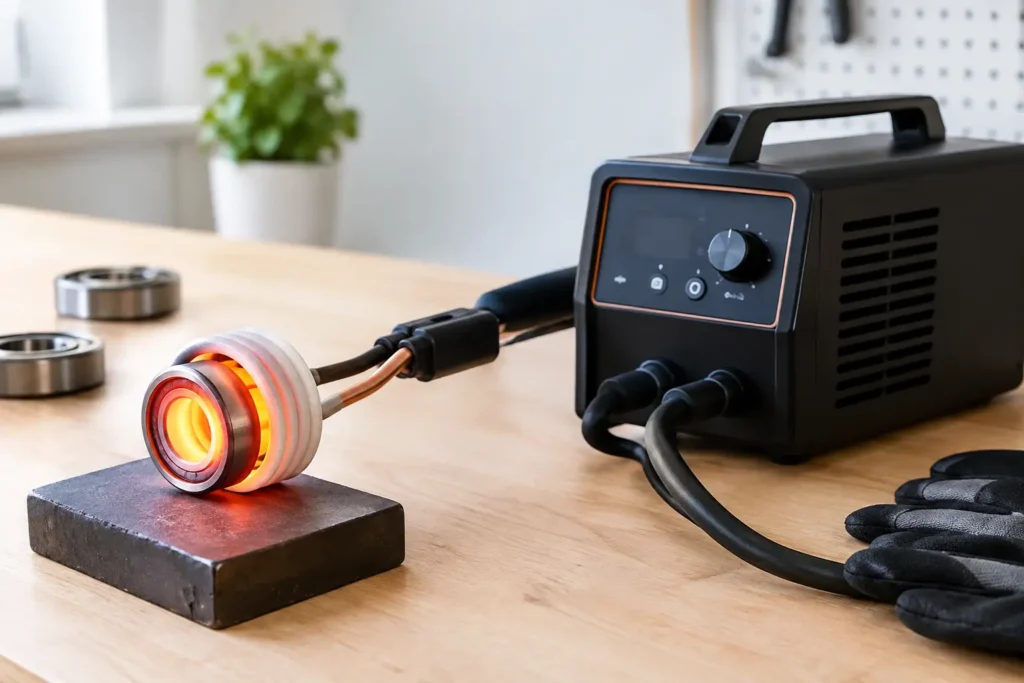
An induction heater uses an electromagnetic field to heat ferrous metal. Place the coil around a steel nut, bolt, bracket or exhaust component, press the trigger, and the part heats rapidly. The heat expands the metal, helping to break the grip of rust, thread lock and corrosion.
The important point is that the workpiece is heated directly. With a gas torch, heat spreads across the surrounding area and demands constant attention. With an induction heater, the heat is more localised and more controllable. That makes it particularly useful around wheel arches, engine bays and underbody components where a naked flame would be a poor choice.
It does have limits. Aluminium, copper and non-magnetic stainless steel will not respond like ordinary steel. A heavily shielded or inaccessible fastener may not leave enough room to position the coil. And if a bolt is already stretched, rounded or structurally unsound, heat alone will not make it serviceable. The tool improves the odds – it does not perform miracles.
Where an Induction Heater Pays for Itself
The strongest case for buying is repeated seized-fastener work. A technician dealing with older cars, vans and 4x4s will see the benefit far sooner than someone changing oil and filters at home twice a year. Exhaust hardware, suspension fixings, brake fittings, steering components and seized studs are the usual jobs.
It also has a clear safety advantage in the right setting. Removing a fuel tank strap, working close to plastic trims or freeing a corroded bolt near a rubber bush can make an open flame unacceptable. An induction heater still creates extreme heat, so it is not risk-free, but it removes the flame and reduces how much of the nearby area is heated.
For a working garage, speed matters as much as convenience. Less time spent setting up heat shields, moving combustible material and waiting for a large area to cool can mean a cleaner repair process. On a difficult job, avoiding one snapped bolt or one damaged sensor lead can justify a sizeable part of the tool cost.
For serious DIY users, the value depends on the work undertaken. If you restore vehicles, maintain several family cars or regularly tackle underbody repairs, it is a practical upgrade. If your tool kit is mainly for occasional servicing, that money may be better spent first on a quality impact wrench, impact sockets, axle stands and a reliable trolley jack.
Power Ratings Matter, but Coil Choice Matters Too
Do not buy solely on the highest wattage figure. More power generally means quicker heating, but coil size, lead quality, duty cycle and control layout all affect real workshop use. A well-built mid-range unit with useful coils is often a better purchase than a high-claimed output machine supplied with poor accessories.
Check the supplied coil selection before ordering. A standard flexible coil is useful for wrapping around awkward shapes. Pre-formed coils suit common nut and bolt sizes, while larger diameter coils are helpful for exhaust sections and bigger fittings. If replacement coils are available, that is a worthwhile sign that the machine is designed for continued use rather than occasional novelty use.
Look at cable length as well. Short leads are irritating when the vehicle is on a lift and the power unit must sit safely away from the work area. A solid handle, clear trigger action and sensible ventilation are not glamorous features, but they affect whether the machine feels dependable after repeated jobs.
A decent unit should also have thermal protection. Induction heating places a heavy demand on the machine, particularly when used continuously on stubborn components. Overheat protection will not prevent downtime if the tool is pushed too hard, but it can protect the unit from damage and give the operator a clear reason to pause.
What to Check Before You Buy
A practical purchase check should cover the following points:
- Input power and plug type: Make sure it suits the workshop supply and that extension leads are rated correctly for the load.
- Duty cycle: This tells you how long the heater can run before it needs a rest. It matters more in trade use than occasional DIY work.
- Coils included: Buy for the fasteners and components you actually encounter, not for a headline specification alone.
- Protection and build quality: Thermal cut-out, insulated handles, secure connectors and a durable case all count in a working environment.
- Warranty and parts support: Affordable equipment should still be backed by clear cover and the ability to replace consumable coils.
Price is naturally part of the decision. The cheapest induction heater can be tempting, particularly for a one-off job, but poor cable insulation, weak coil connections and vague duty-cycle claims soon become expensive when a tool fails halfway through a repair. Affordable and reliable is the target, not simply cheap.
Real-World Use: Faster, Not Careless
An induction heater is easy to operate badly because the heating action is so quick. Start with the coil positioned close to, but not touching, the target where possible. Use short bursts and watch the component. The goal is to expand the seized part, not turn every surrounding item red hot.
On a nut and bolt, heat the nut rather than the bolt where access permits. This encourages the nut to expand away from the threads. Follow with a correctly sized socket or spanner while the component is at the right temperature. If the fastener does not move, do not keep applying force until it rounds off. Let it cool, reassess access and use penetrating fluid only once the component is cool enough for it to be safe.
Keep the work area clear of flammable liquids, aerosol cleaners, rags and loose debris. Wear gloves and eye protection, and remember that heat remains after the trigger is released. Nearby rubber, plastic and paint can still be damaged if the coil is held in the wrong place or the metal is overheated.
The tool is particularly effective when combined with good removal practice: wire-brush exposed threads, use six-point impact sockets on damaged fasteners, support the vehicle correctly and avoid loading suspension parts unnecessarily. The induction heater handles the heat; sound workshop technique finishes the job.
Is an Induction Heater Better Than a Blowtorch?
Neither tool wins every time. A blowtorch remains useful for broad heating, cutting work and jobs where there is plenty of open space. It is inexpensive, familiar and versatile. But it carries an open flame and spreads heat widely, which can make it unsuitable around modern vehicle components.
An induction heater is better for precise, repeatable heating of steel fasteners and fittings. It is cleaner, usually faster on seized nuts, and more practical where flames are prohibited or simply unwise. The trade-off is initial cost and the fact that it cannot heat every material or reach every hidden component.
For garages carrying out regular repair work, keeping both is sensible. Use the induction heater as the first choice for seized steel fixings near sensitive areas, and keep traditional heat equipment for jobs that need wider coverage.
The Verdict for Garage and Workshop Buyers
A good induction heater is not a gimmick. It is a time-saving workshop tool that earns its place when corrosion is a regular part of the job. Buy one for the quality of its coils, duty cycle, protection features and warranty, rather than chasing an impressive-looking power figure.
Irish Tools Shop customers who work on older vehicles, fleet maintenance or frequent suspension and exhaust repairs will get the clearest return. For occasional home servicing, it is a useful luxury rather than an essential first purchase. Choose the right unit, use it with care, and the next seized fastener may be a short delay instead of the job that ruins the afternoon.
