







A cutting disc that catches, a loose workpiece, or one spark landing in the wrong place can turn a five-minute job into an expensive injury or fire. Knowing how to cut metal safely is not about slowing the job down. It is about setting up properly, choosing the correct tool and finishing the cut without damaging yourself, the vehicle or the workshop.
For mechanics, fabricators and serious DIY users, metal cutting is routine. Exhaust clamps, seized bolts, box section, sheet steel and brackets all need cutting at some point. The risk comes when routine becomes casual. Treat every cut as a job that needs the right disc, a stable workpiece and a clear area.
How to Cut Metal Safely Before Switching On
Start by checking the material. Identify what you are cutting, how thick it is, where it is supported and what is behind it. A thin steel panel needs a different approach from heavy plate or a rusted suspension component. If you are cutting on a vehicle, check both sides of the panel or bracket first. Fuel lines, brake pipes, wiring looms, rubber bushes and underseal can all sit closer than expected.
Clear the immediate area of petrol, solvents, aerosol cans, oily rags, cardboard and sawdust. Sparks from a grinder travel farther than most people expect and can smoulder unnoticed. Keep a suitable fire extinguisher close by, and do not cut near a battery or fuel system unless those risks have been properly isolated.
Your workpiece must be held securely. Use a bench vice for bar, tube and smaller sections, or heavy-duty clamps on a stable workbench for sheet and longer lengths. Never hold metal with one hand while cutting with the other. The material can twist, vibrate or drop as the cut opens, pulling the tool off line.
Support both sides of a long cut. If one end is left hanging, the weight can pinch the disc near the end of the cut. This is a common cause of kickback, broken discs and rough results. Set trestles or stands to support the offcut, but position them so the metal cannot close tightly on the blade.
Wear PPE That Matches the Job
A basic pair of safety glasses is not enough for abrasive cutting. Use safety spectacles underneath a full-face shield. The spectacles protect your eyes if debris comes around the edge of the shield, while the shield protects your face from sparks and fragments.
Wear hearing protection, especially when using an angle grinder, cut-off saw or air-powered cutter. Good work gloves protect against sharp edges and hot metal, but they must fit properly. Loose gloves can catch on rotating equipment. Wear close-fitting, non-flammable workwear and sturdy safety footwear. Synthetic clothing can melt when hit by hot sparks, so cotton or flame-resistant workwear is the better choice.
Respiratory protection depends on the material and the process. Cutting rusty steel creates fine dust. Galvanised steel can produce zinc-containing fumes when heated, while painted or coated metal may release harmful particles and fumes. Work in a well-ventilated space and use suitable respiratory protection where dust or fumes cannot be controlled. Never cut unknown coated material in a confined garage without extraction.
36V Brushless Cordless Angle Grinder Set (115mm) | 2 x 5Ah Battery
Choose the Right Metal Cutting Tool
The fastest tool is not always the safest or cleanest option. Choose according to the material, thickness, access and finish required.
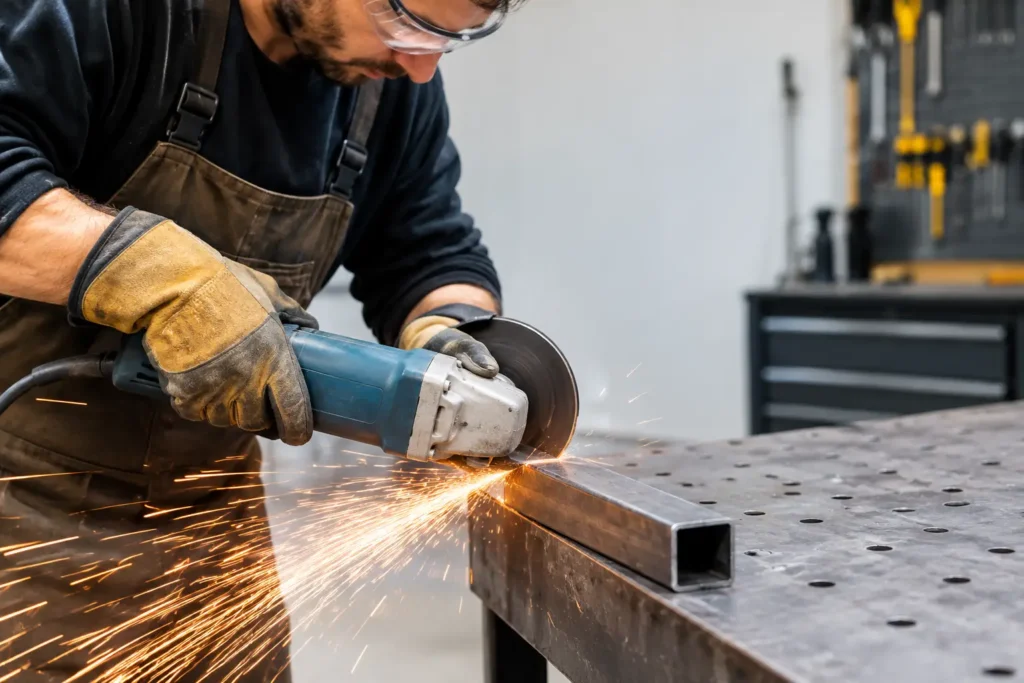
An angle grinder with a thin cutting disc is a dependable choice for bolts, steel bar, brackets, exhaust sections and general fabrication. It is portable and versatile, but it produces a heavy spark stream and demands good control. A 1 mm or 1.2 mm disc generally cuts quickly with less heat, though it is less forgiving of side pressure.
A metal cut-off saw gives square, repeatable cuts in tube, angle iron and box section. It is a strong option when preparing multiple pieces for welding. The material still needs clamping, and the saw must be allowed to reach full speed before it enters the metal.
A reciprocating saw is useful where access is restricted, such as removing corroded exhausts or cutting fasteners beneath a vehicle. It produces fewer sparks than a grinder, although vibration is higher and the cut is usually less precise. Use a blade rated for the thickness and type of metal, and keep the shoe firmly against the work.
For thin sheet metal, aviation snips, a nibbler or an electric shear can be safer than an abrasive disc. These options reduce sparks and heat, which matters around vehicle panels, trim and painted surfaces. They can, however, distort the edge if the sheet is unsupported.
Whatever tool you use, check that every guard is fitted and correctly positioned. A guard is not optional equipment. On an angle grinder, turn it so it sits between you and the disc, directing sparks away from your body and away from nearby hazards.
15 Piece Angle Air Die Grinder Kit 1/4” BSP 4.0 CFM 22000RPM
Check Discs, Blades and Power Supplies
Before fitting a cutting disc, inspect it under good light. Do not use a disc that is chipped, cracked, damp, badly worn or has been dropped. Abrasive discs can fail at high speed, and the results are serious. Check the disc label for its maximum RPM and make sure it meets or exceeds the grinder’s no-load speed.
Fit the correct disc diameter and bore size for the machine. Do not force a disc to fit, remove flanges, use damaged locking nuts or fit a saw blade to an angle grinder. Cutting discs are designed for straight cutting only. Grinding sideways with a thin cut-off disc can break it.
For corded tools, inspect the cable, plug and extension lead. Keep leads away from the cutting path, sparks and puddles. In a busy garage, route the cable where nobody can trip over it or drag it across hot metal. For cordless tools, make sure the battery is secure and that you have enough charge to complete the cut without rushing.
Make the Cut With Control
Mark the line clearly with a scriber, marker or soapstone. If accuracy matters, measure twice and leave a small allowance for finishing. A cutting disc removes material, so cutting directly on the final line can make a bracket or tube too short.
Stand with balanced footing and keep both hands on the tool where the design allows it. For an angle grinder, let the disc reach full speed before touching the metal. Bring it into the work gently, then use steady, light pressure. Forcing the disc creates heat, wears it quickly and increases the chance of binding.
Keep the disc square to the material and follow the line with smooth movement. Do not twist the grinder to widen the cut. If the cut begins to close, stop, release the trigger and adjust the support. Never try to lever the metal apart with the disc still turning.
Position yourself out of the line of fire. If a disc breaks or the tool kicks back, you do not want your body directly behind it. Direct sparks away from glass, tyres, paintwork, gas cylinders and other people. In shared workshops, let others know before starting a noisy or spark-producing cut.
When cutting vehicle components, avoid putting heat into areas that contain bearings, seals, rubber hoses or pressurised parts. A grinder may remove a seized bolt quickly, but heat and sparks can damage surrounding components. Sometimes a reciprocating saw, nut splitter or penetrating oil and hand tools are the safer choice.
After the Cut: Treat the Edge as Hot and Sharp
Do not grab a freshly cut piece. Metal retains heat, especially after abrasive cutting, and the offcut may have a razor-sharp edge. Let it cool in a safe place where it cannot burn a bench surface, tyre or cable.
Deburr the edge with a flap disc, file or deburring tool. This takes little time and prevents sliced gloves, damaged wiring and injuries during assembly. If the part is being welded, remove paint, rust and galvanising from the weld area using appropriate extraction and respiratory protection.
Before leaving the job, inspect the floor and nearby surfaces for sparks or smouldering debris. This matters most after cutting near timber benches, stored materials or vehicles. Keep checking the area for several minutes after hot work has finished.
A safe cut is usually the quicker cut because it avoids snapped discs, ruined parts and avoidable downtime. Set up the job properly, use dependable equipment and replace worn consumables before they become a problem. Irish Tools Shop stocks workshop-ready cutting tools, PPE and the practical equipment needed to keep everyday garage work moving safely.
