








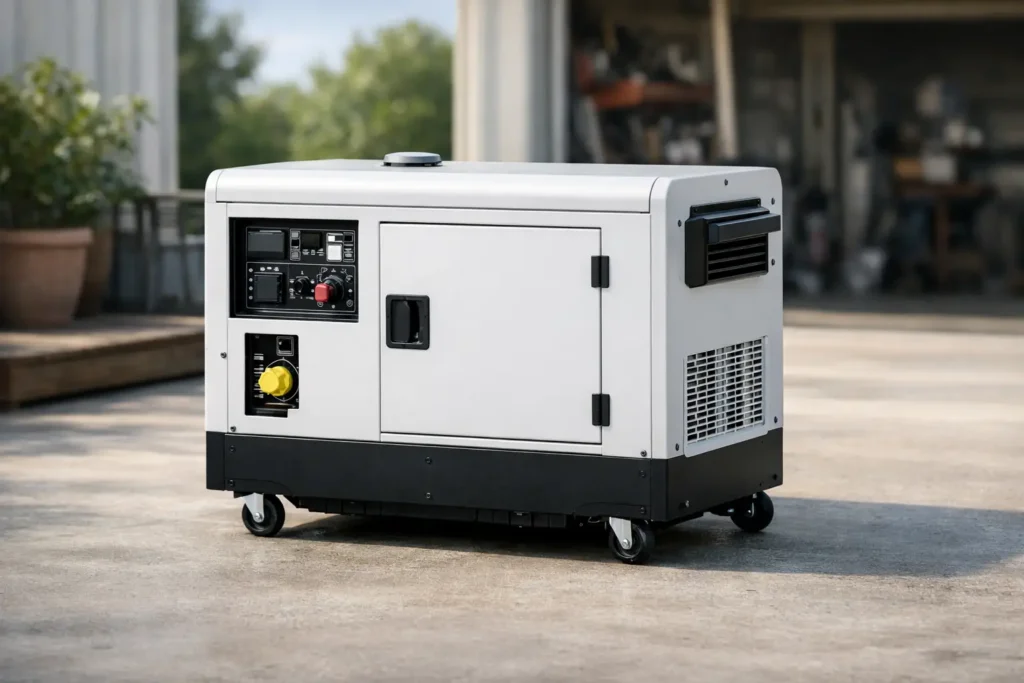
A generator that cannot start the equipment you need is not a bargain, whatever the ticket price says. The Manarola 5.0KW 7KVA Silent Diesel Generator 10HP is aimed at buyers who need portable diesel power for workshop jobs, mobile trade work and sensible backup use without stepping into the cost of a large site generator.
For mechanics, garage owners and serious DIY users, the key question is not simply whether it has enough headline power. It is whether the generator suits the load you will actually place on it, the space where it will run, and the way your equipment starts. Get those three points right and a diesel generator can be a hard-working part of the kit. Get them wrong and even a 7KVA unit can trip, struggle or become an expensive item left in the corner.
What the Manarola 5.0KW 7KVA Silent Diesel Generator 10HP offers
The product name gives the main buying information upfront: 5.0KW, 7KVA, a 10HP diesel engine and a silent-style enclosure. These figures matter, but they describe different parts of the machine.
Kilowatts are the useful real-power figure. This is the number to focus on when adding up heaters, chargers, lighting, compressors and many ordinary power tools. KVA is apparent power, which becomes especially relevant with motors, transformers and equipment that has a less favourable power factor. The difference between the two ratings is normal. It is not an extra 2KVA of power you can treat as a free reserve for any tool you plug in.
A 10HP diesel engine is intended to provide the torque and durability expected from a compact work generator. Diesel is a sensible choice for buyers who value fuel efficiency under steady loads and want a machine suited to regular practical use. It is not automatically the best answer for every household or occasional job, however. A small petrol inverter generator may be easier to move and quieter at light loads, while this type of diesel unit is more relevant where dependable output and working economy are the priority.
The word ‘silent’ also needs a realistic reading. It normally indicates an enclosed or sound-reduced design compared with an open-frame generator. It does not mean silent enough to run beside an occupied office, in a terraced garden late at night or inside a garage. Diesel engines, cooling systems and loaded alternators still make noise. Check the stated decibel figure, measured distance and operating load on the product specification before deciding whether it suits a residential setting.
Size the generator for your real working load
A 5.0KW generator can handle a useful range of equipment, but it should not be selected by adding only the wattage written on the tool labels. Tools with electric motors often require a higher surge when they start. Air compressors, pumps, refrigeration equipment and some older machinery can be particularly demanding.
For example, LED site lighting and battery chargers are modest loads. A grinder or drill is usually manageable when used one at a time. The calculation changes when a compressor starts while a heater, extraction fan and chargers are already running. A generator that appears adequate on paper may dip in output or trip protection at that moment.
Allow operating headroom rather than planning to use every available watt. For regular use, keeping the continuous load comfortably below the rated 5.0KW output is a more sensible approach than running flat out for hours. That margin gives the engine room to deal with motor starts, prevents constant high-load running and reduces the chance of nuisance shutdowns.
Before buying, make a quick list of the equipment likely to run together. Include the highest-starting-load item, not just the items used most often. If your work depends on a large compressor, welder, vehicle lift, plasma cutter or heavy-duty pump, verify the machine’s starting current and generator requirement first. A generator is not a substitute for correct electrical planning.
Where this generator makes practical sense
This size of diesel generator can be a useful fit for mobile technicians, agricultural maintenance, garages needing emergency power for selected circuits, and tradespeople working where mains electricity is unavailable. It can also suit a van-based operation where lighting, chargers and moderate power-tool use need to be covered during the day.
For a workshop, it is usually better suited to keeping essential equipment operational than attempting to run every circuit in the building. Think task lighting, diagnostic equipment, battery support, a small compressor or selected hand tools. Large three-phase machinery, whole-building heating and several high-draw tools used simultaneously require a properly assessed larger installation.
It can provide valuable backup during an outage, but backup power must be connected correctly. Never use improvised leads to feed a consumer unit. If you want to supply fixed circuits, use a suitably rated changeover arrangement installed by a qualified electrician. This prevents dangerous back-feeding into the electricity network and protects people working on the supply.
Check the specification before committing
A product name is a useful starting point, not the full specification. For a generator purchase, the details decide whether it is right for the job. Confirm the rated running output and maximum output, then establish whether the figure is quoted in kilowatts, KVA or both. Check socket types and ratings as well. A generator may have the power capacity you need but lack the outlet required for a particular machine.
Also look at the fuel-tank capacity and stated running time at a defined load. Runtime claims are only meaningful when the load percentage is shown. A unit powering a few lights will use fuel differently from one operating close to its continuous limit all day.
The following checks are worth making before the generator reaches site:
- Confirm voltage, frequency and socket configuration match your equipment and location.
- Check whether output regulation is suitable for sensitive electronics, diagnostic machines and battery chargers.
- Review the starting method, battery arrangement and any low-oil or overload protection listed.
- Measure the storage area and access route, including the room needed for exhaust clearance and service access.
- Confirm the supplied warranty terms, spare-parts availability and what routine servicing is expected.
Weight matters too. A diesel generator with sound attenuation is rarely a one-person lift, even when it is described as portable. Wheels and handles make movement easier across a flat yard, but steps, loose gravel and loading into a van are different jobs. Plan the handling method before delivery day rather than after it arrives.
Safe operation is part of the purchase
Carbon monoxide is the non-negotiable risk. Run a diesel generator outdoors only, well away from doors, windows, vents and enclosed work areas. Opening a garage door is not adequate ventilation. Exhaust fumes can build up quickly and travel into nearby spaces.
Set the generator on level, firm ground, protect it from standing water and keep it clear of combustible materials. Let it cool before refuelling, and use suitable outdoor-rated leads that are undamaged and correctly sized for the load. A cheap, undersized extension lead can overheat and waste the power you paid for.
Earthing requirements can vary with the generator arrangement, the application and the equipment connected. Follow the manufacturer’s instructions and obtain electrical advice for fixed, site or backup installations. Do not assume that a portable generator can be treated like an ordinary wall socket.
Running costs and maintenance in the real world
Diesel generators reward basic routine care. Check engine oil, fuel level and visible leaks before use. Keep the air intake clear, drain or manage fuel storage properly, and follow the service intervals for oil, filters and the battery. A generator that sits unused for months should still be test-run under a sensible load according to the manufacturer’s guidance.
For a business, downtime is often dearer than the service parts. Keep the correct oil and filters on hand if the generator supports regular work, and make sure more than one person knows the starting and shutdown procedure. That is particularly useful for garages relying on temporary power during an unexpected outage.
Is it the right value choice?
The Manarola 5.0KW 7KVA Silent Diesel Generator 10HP is worth considering where a buyer needs meaningful portable output, diesel running characteristics and a less exposed, sound-reduced format. Its best value comes from matching it to a defined load plan rather than buying on the largest number in the title.
For everyday workshop and mobile trade use, choose the generator with enough continuous capacity, the right sockets and a practical margin for starting loads. Check the listed specification carefully, plan safe outdoor operation, and you will be buying power that can earn its space in the garage or van.
