







A timing belt replacement can become an expensive engine repair if the crankshaft or camshaft moves even slightly out of position. That is why timing tools for car engines are not an optional extra for serious servicing work. The correct locking kit holds critical components at their factory timing positions, helping you fit a belt, chain, tensioner or water pump accurately and with confidence.
For a busy garage, the right kit saves time on every compatible vehicle. For a capable DIY mechanic, it removes guesswork from a job where guesswork does not belong. The key is buying for the engine you are working on, not simply choosing the cheapest case labelled as a universal timing set.
What timing tools for car engines actually do
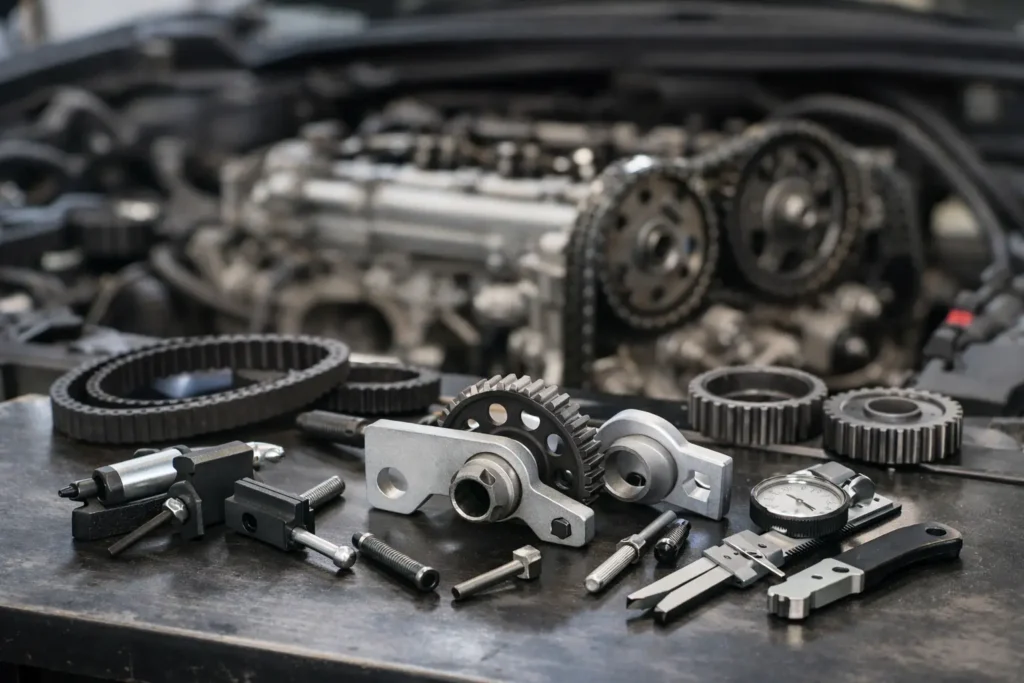
Engine timing tools are designed to lock, locate or align parts of the valve train while timing components are removed and replaced. Depending on the engine design, the kit may include crankshaft locking pins, camshaft locking plates, flywheel locking tools, tensioner retaining pins and setting gauges.
Their job is straightforward: maintain the relationship between the crankshaft and camshafts while the timing belt or chain is slack. On interference engines, incorrect timing can allow pistons and valves to make contact. Bent valves, damaged pistons and a stripped cylinder head are far more costly than using a proper engine-specific kit.
A timing kit does not repair worn sprockets, stretched chains or a failed variable valve timing system. It gives you the correct reference positions during assembly. You still need to follow the vehicle manufacturer’s timing procedure, tightening sequence and torque figures.
Start with the engine code, not the registration
Vehicle registration details are useful, but they are not enough on their own when selecting a timing kit. A single model can be fitted with several petrol or diesel engines across different years, and even the same engine family can use different locking arrangements.
Check the engine code first. It is usually found on the vehicle data sticker, service record, engine block or diagnostic information. Then confirm the engine capacity, fuel type, production year and, where possible, the original equipment part references listed for the timing procedure.
This matters particularly with popular European vehicles. A kit that works on one 1.6 diesel may not fit another 1.6 diesel from the same manufacturer. The locking pin diameter, camshaft plate profile and crankshaft access point can all differ. Buying by broad vehicle make alone is how workshops end up with a kit that is nearly right but cannot safely be used.
Check the kit application list carefully
A proper product listing should state the makes, models, engine codes and production ranges covered. Treat this list as the starting point rather than a guarantee. Compare it against the vehicle in front of you and verify that the kit contains every required tool for the job.
For example, some engines need only a crank pin and cam locking bar. Others require a camshaft alignment plate, high-pressure fuel pump pin, tensioner gauge and a specific holding tool for the crank pulley. If a kit lacks one essential item, stopping halfway through a timing job wastes valuable ramp time.
Choose the right type of timing kit
There is no single best timing kit for every workshop. The sensible choice depends on the vehicles you service most often and whether you need a dedicated solution or broader coverage.
Engine-specific timing kits
An engine-specific kit is the best choice when you regularly work on a particular engine family. It normally includes only the tools required for that application, keeping the case compact and the procedure clear. This is a strong option for garages that see frequent repeat work on common Ford, VAG, BMW, Renault, Peugeot, Citroën or Fiat engine ranges.
The trade-off is limited flexibility. A dedicated kit may be excellent value for repeated jobs but will sit unused if the vehicle mix changes.
Manufacturer or engine-family kits
These kits cover several engines from one vehicle group or closely related engine family. They are a practical middle ground for independent garages, mobile mechanics and specialists. You get wider coverage without carrying a huge collection of individual cases.
Before buying, look at the exact engine codes included. A larger kit is only better value if it covers work you genuinely carry out.
Universal timing tool sets
Universal sets often include a broad selection of pins, locking bars and tensioning tools. They can be useful for general workshop work, especially where the job calls for common pin sizes or simple cam locking arrangements. However, universal does not mean suitable for every engine.
Avoid forcing a near-match pin into an engine. A tool that looks close can damage a locating hole or fail to hold the engine accurately. When the manufacturer specifies a shaped plate, a particular diameter pin or a dedicated setting gauge, use that tool.
Build quality matters where accuracy matters
Timing tools are not cutting tools, but they must be made accurately. Poorly machined pins, thin locking plates or weak welds can create play at the exact point where you need precise positioning.
Look for hardened steel pins, solid steel plates, cleanly machined ends and a durable protective finish. Components should fit without excessive looseness, burrs or rough edges. A well-made blow-moulded case is also worth having because timing tools are often small, easy to misplace and needed quickly during a job.
Colour coding and etched part markings are useful in a busy workshop. They help identify the right component quickly and reduce the risk of returning tools to the wrong section of the case. This is not a substitute for checking the procedure, but it makes day-to-day work more efficient.
Do not confuse a locking tool with a high-torque holding tool. Some camshaft and crankshaft locking pins are designed only to establish timing position. They must not be used to resist the torque of a crank bolt unless the procedure specifically says so. Use the correct counterhold tool and a suitable breaker bar, impact tool or torque wrench for fasteners.
What else you need for a proper timing job
Timing tools are central to the job, but they work alongside standard workshop equipment. A quality torque wrench is essential for tensioners, engine mounts, covers and pulley bolts. A socket set with the correct profiles, extensions and wobble bars will save time around restricted engine bays.
You may also need an engine support beam or engine crane when an engine mounting has to come off. Safe lifting equipment and axle stands are required if access is from underneath. On some vehicles, a diagnostic tool is needed to place an electronically controlled tensioner or variable valve timing system into service mode.
Replace single-use stretch bolts where specified. Reusing them to save a few pounds is false economy, especially on crankshaft pulley bolts and engine mounting hardware. When fitting a belt kit, it is normally sensible to inspect or replace related components such as the tensioner, idler pulleys and water pump according to the service schedule and repair procedure.
Avoid the costly mistakes
The most common mistake is turning an engine by hand or with the starter while locking tools are still installed. Remove every pin, plate and bar before rotating the crankshaft through its final checks. Turn the engine manually in the correct direction, usually two full revolutions, then recheck that the timing positions line up as specified.
Another mistake is relying on paint marks alone. Paint marks can be helpful as an additional reference, but they are not a replacement for factory timing points. A new belt can have a different tooth count or printed marking position, and worn components may already have moved from their correct setting.
Keep the work area clean. Dirt inside a timing cover, a loose bolt behind a pulley or oil contamination on a belt can cause trouble after the vehicle has left the workshop. Take photographs before dismantling, label disconnected hoses and connectors, and lay removed fixings out in order.
Buy for the work you do most
For occasional repairs, an affordable engine-specific kit is often the best purchase. It gives accurate fitment for the immediate job without paying for dozens of unused pieces. For a garage handling a wide range of vehicles, a selection of high-use manufacturer kits can deliver better long-term value than one oversized generic set.
Irish Tools Shop focuses on affordable, reliable workshop equipment for mechanics and serious DIY users who need tools that earn their place in the garage. When comparing timing kits, prioritise clear application coverage, solid construction and the tools needed for the full procedure rather than the biggest piece count on the box.
The right timing kit should make a difficult service job controlled and repeatable. Confirm the engine code, check the procedure before dismantling, and choose tools that fit the application exactly. That is how you protect the engine, protect your working time and send the vehicle out with confidence.
