






Manarola 3 Ton Low Profile Full Rise Scissor Lift – Pneumatic Release | Single Phase
A 2 post lift can make or break the pace of a busy workshop. Buy the right one and you get faster access, cleaner underbody work and less time wasted shuffling jacks and stands around the bay. Buy the wrong one and you end up fighting ceiling height, door clearance or weight limits every day.
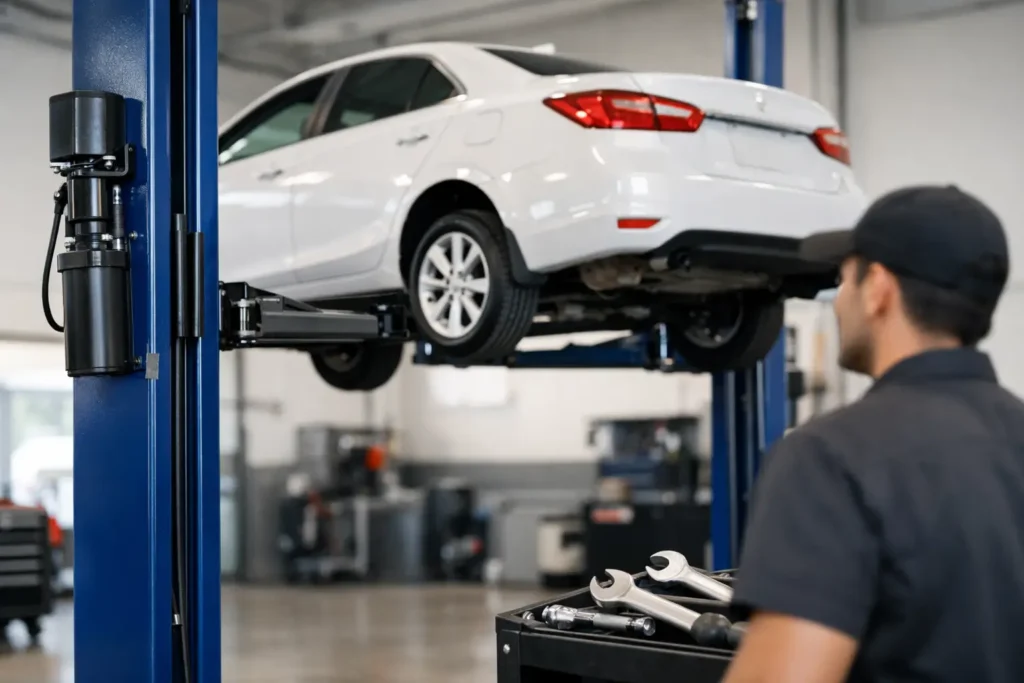
For garages, mobile repair units with fixed premises, and serious home mechanics, a 2 post lift is often the most practical all-round option. It gives proper access to wheels, suspension, brakes, exhausts and the underside of the vehicle without taking up the same footprint or budget as larger commercial lifting systems. That makes it a strong choice when value matters just as much as performance.
Why a 2 post lift still makes sense
There is a reason this design remains standard in so many workshops. A 2 post lift keeps the chassis supported at designated lifting points while leaving most of the vehicle clear. That matters for tyre work, brake jobs, transmission access and inspections where a platform would get in the way.
It is also a sensible step up from floor jacks and axle stands if your job volume is increasing. You save time on setup, reduce clutter on the floor and create a more professional working bay. For a growing garage, that efficiency turns into money quickly.
That said, it is not the answer for every site. If you mainly handle alignment work, heavy vans beyond the lift rating, or low-ceiling spaces with awkward roof trusses, another setup may suit better. The right decision depends on the vehicles you see every week, not just the best deal on the page.
Manarola 4 Ton 2 Post Car Lift With Electric Lock Release / Auto Lock | Single Phase
What to check before buying a 2 post lift
The first thing is lifting capacity. This sounds obvious, but many buyers look at the maximum figure and stop there. In practice, you want headroom above your usual workload. If most of the vehicles are standard cars and light commercial vehicles, a lower-capacity unit may be enough. If your bays regularly see larger SUVs, loaded vans or heavier fleet work, stepping up in capacity gives more flexibility and less strain on the equipment over time.
Ceiling height comes next, and it catches out plenty of buyers. Overall lift height, vehicle roof height when raised and top-bar clearance all need checking against the building. A lift that looks perfect on paper is no bargain if it cannot be installed safely in the space. Measure properly, then measure again.
Floor condition matters just as much. A 2 post lift relies on solid anchoring and correct concrete thickness. If the base is poor, cracked or below spec, installation becomes more complicated and more expensive. This is one area where cutting corners is false economy.
Arm configuration is another point that affects daily use. You need the arms to reach the proper lifting points across the range of vehicles you work on. Too short or awkwardly positioned, and the lift becomes a nuisance instead of a time-saver. If your workshop sees a mix of saloons, estates, SUVs and vans, versatility in arm design is worth paying attention to.
2 post lift layout and workshop fit
Not all workshops are built the same, so lift layout matters. Two-post systems generally come in floor plate or overhead configurations. The best option depends on your space and how you work.
An overhead design keeps the floor clearer between the posts, which many mechanics prefer for moving transmission jacks, oil drains and creepers around the bay. It can feel cleaner and more open in use. The trade-off is height. If your roof is limited, overhead clearance can become the deciding factor.
A floor plate setup can suit lower buildings, but you need to accept the plate across the floor area. That may not be a problem in some bays, while in others it becomes an everyday obstacle. There is no universal winner here. It depends on ceiling height, workflow and the kinds of jobs you are doing.
Vehicle width and door opening space should also be part of the check. A lift that technically fits in the building can still be awkward if drivers cannot position vehicles easily or if doors cannot open far enough for regular access. Good bay planning is just as important as lift spec.
Manarola 4 Ton 2 Post Car Lift With 12 Months Warranty | Single Phase
Safety features worth paying for
A cheap lift is only cheap once. After that, poor build quality, weak components or unreliable locking systems start costing time and confidence. For workshop lifting equipment, safety is not an upgrade feature. It is the whole point.
Look for dependable locking positions, stable arm restraints and solid construction throughout the frame and carriage assemblies. Hydraulic components and cables need to be built for regular use, not occasional hobby work dressed up as trade-grade equipment. If the lift will be earning its keep every day, it needs workshop-level durability.
You should also consider parts support and warranty. Lifts are not disposable tools. If a switch, pad, cable or hydraulic component needs replacing, availability matters. Waiting weeks on an essential part can put a bay out of action and leave money on the floor.
Regular inspection and servicing remain part of ownership, even with a well-built model. A good lift reduces risk when installed and maintained correctly. It does not remove the need for sensible use.
Choosing for daily work, not showroom appeal
A glossy finish and bold capacity label may catch the eye, but the real test is how the lift performs on a wet Tuesday when the bay is full and the schedule is tight. That is when practical details matter more than marketing.
Think about the kinds of jobs that actually pay your bills. Brake and suspension work benefits from wheel-free access. Exhaust and underbody repairs benefit from open space under the vehicle. General servicing becomes quicker when the vehicle can be raised and lowered without constant repositioning. A 2 post lift suits this kind of day-to-day workshop work very well.
If you are fitting out a first unit or adding another bay, buying affordable and reliable equipment makes more sense than overspending on a brand name alone. The right lift should balance price, performance and long-term dependability. That is where value sits – not in the cheapest listing, and not in paying over the odds for capacity or features you will never use.
Manarola 3 Ton Mid Rise Scissor Lift – Electric Release | Single Phase
Who should buy a 2 post lift?
For independent garages, MOT prep workshops, tyre and brake specialists, and experienced home users with the right space, a 2 post lift is often the strongest all-round investment. It gives access where it matters and handles a wide range of jobs without demanding the larger footprint of a four-post system.
It can also suit expanding businesses that want to improve throughput without committing to a full workshop refit. One properly chosen lift can change how quickly jobs move through the day.
Where it may be less suitable is in buildings with poor concrete, low headroom, or work profiles focused on very heavy commercial vehicles. In those cases, another lifting solution may be the better call. There is no point forcing a 2 post lift into a role it is not built for.
Getting the best value from your purchase
Price matters, but downtime matters more. The strongest buying decision usually sits in the middle ground: a lift with the right capacity, proper safety features, sensible dimensions and dependable build quality at a competitive price. That gives you a tool you can actually use hard without paying inflated distributor pricing.
Fast availability is worth factoring in as well. When you need to open a new bay or replace failed workshop equipment, long lead times are more than an inconvenience. They slow jobs, reduce earning capacity and frustrate customers. That is why buyers across Ireland and the UK often look for suppliers that can combine realistic pricing with quick fulfilment and clear stock availability. Irish Tools Shop is built around exactly that kind of straightforward value.
Before you buy, check the spec sheet carefully, confirm your floor and ceiling measurements, and match the lift to your real workload rather than your occasional one-off job. A 2 post lift is not a decorative piece of workshop kit. It is a working asset, and when it is chosen properly, it earns its space every single day.
If your current setup is slowing down servicing, brake work or underbody repairs, the right lift is not a luxury purchase – it is one of the simplest ways to make the workshop safer, quicker and more profitable.
Manarola 4 Ton 2 Post Car Lift With 12 Months Warranty | Single Phase
